
Do Acropolis Tickets Include the Museum in Athens?
The Acropolis archaeological site and Acropolis Museum use separate tickets and clocks. Plan an October visit around both official schedules and entry rules.
Guides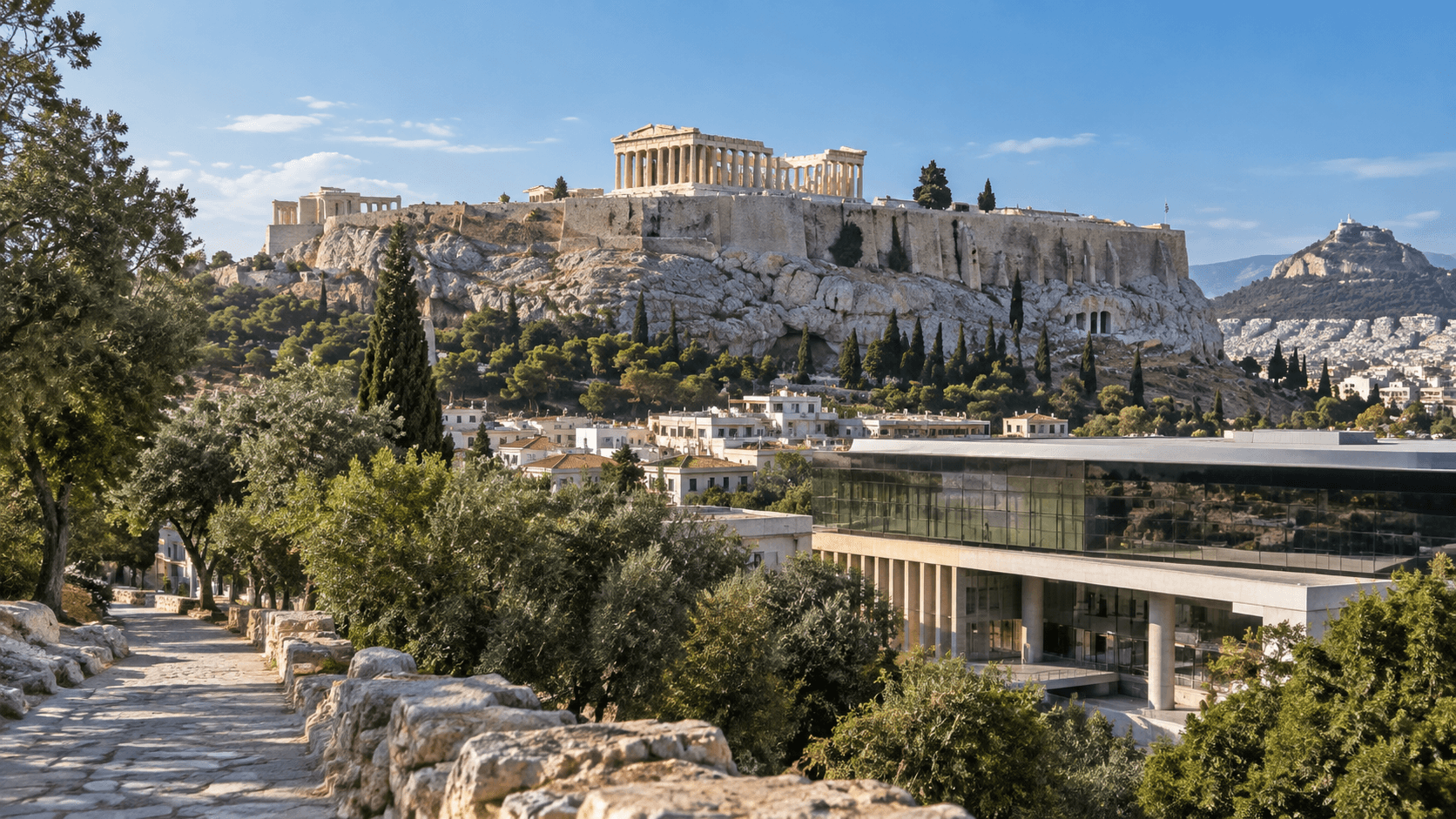
At a glance
- Admission
- Separate site and museum tickets
- Site from 16 October
- 08:00-18:00
- Museum ticket
- Includes excavation beneath museum
- Museum reduced entry
- Claim at ticket desk with documents
Acropolis of Athens — Acropolis of Athens · Acropolis Museum
From 16 October, the Acropolis archaeological site's published closing time moves earlier, while the museum continues on its own timetable. That makes a common Athens ticket mistake more consequential: a booking for the ancient hill is not a booking for the Acropolis Museum. The museum's official ticket FAQ says its admission is independent of the archaeological site, and Hellenic Heritage's site page lists the site's separate hours and ticket channel. If both are on your itinerary, plan two admissions and compare two closing times before choosing an order.
What does each ticket cover?
The archaeological-site ticket is for the Acropolis hill and the ancient monuments there. The museum is a modern building nearby that interprets and displays objects associated with the Acropolis. It is administered and ticketed separately. The museum explicitly answers its combined-ticket question by saying its ticket is independent from the ticket to the Acropolis and other associated archaeological sites. A name on a reseller page that sounds like an all-in-one Athens pass should therefore be checked against its exact inclusions; the official museum ticket alone does not unlock the hill, and the official hill ticket alone does not unlock the galleries.
There is one useful inclusion within the museum ticket. The museum says admission covers all its exhibition areas and the archaeological excavation beneath the Museum. The excavation is accessed from the museum entrance courtyard. This is easy to confuse with the hilltop archaeological site: the under-building remains form part of the museum visit, while the Acropolis itself is a separate destination. If your only interest is the museum galleries and the excavation beneath them, one museum admission addresses that plan. If you also want to walk up to the Parthenon and other monuments, arrange the site ticket separately.
Why 16 October changes the order of a visit
Hellenic Heritage publishes 08:00-18:00 for the Acropolis site from 16 through 31 October, compared with a later closing in the first half of the month. Its page says last admission is twenty minutes before closing. From 1 November to 31 March it lists 08:00-17:00. The museum keeps a separate seasonal schedule: its visitor page lists hours by weekday and season, including a later Friday evening opening. Do not copy one venue's closing hour into the other venue's plan. The museum may remain available after the site has stopped admitting visitors.
The most robust order for a visitor who can start early is usually the outdoor site first, followed by the museum. That protects the part of the day most constrained by daylight and the site's shorter October hours. It also lets the galleries add context after seeing the surviving structures in place. This is an itinerary suggestion, not a timed-entry instruction from either operator. If your museum visit must come first because of mobility, heat, weather, or a prebooked activity, reverse the order but leave enough time to reach and enter the site before its last admission. A site ticket in your inbox is of little use if you arrive after the gate stops admitting people.
For a worked Friday example, start by checking the live archaeological-site calendar and buying the site admission through the official channel linked on the Hellenic Heritage page. Arrange your museum admission separately. Visit the hill in the morning without scheduling the museum immediately afterward; walking, entry control and time spent studying the monuments vary by visitor. Take a rest and then enter the museum later in the day, using its Friday schedule for flexibility. The result is two meaningful visits instead of a rushed transfer based on an assumed shared ticket or a guessed queue time.
Where to buy, and what to bring
Hellenic Heritage links its official site purchase from the Acropolis destination page. The museum's site links its own electronic ticketing service for general admission, and also permits general admission at the museum desk. Use those official pages as the starting point, because an advertisement or search result may lead to a third-party guided product with different inclusions. Read the product description and the issued confirmation: check the venue name, visit date and any selected time before paying. A guide's service can be valuable, but it should be a deliberate purchase rather than a substitute for checking which entrance the underlying ticket covers.
The museum gives a stricter instruction for reduced and free admission: visitors claiming those categories must obtain the ticket at its desk and present the required eligibility documents. Do not assume that seeing a reduced category mentioned online means you can complete the claim through its general e-ticket service. The museum's concession rules depend on the visitor's eligibility, so check the current official conditions for your own age, residence or status rather than treating a companion's price as yours. Hellenic Heritage's separate site page presents its own full and reduced categories. Eligibility at one venue should not be transferred automatically to the other.
Free days require two checks too
October 28 is listed as a free-admission day by both the archaeological-site page and the museum visitor page, but that overlap should not be taken as proof of a permanent shared policy. The site also lists other free days, including a winter Sunday pattern; the museum has its own free-day list. Check each official calendar for your actual travel date and read how admission is issued on that day. A free price is still a venue-specific access arrangement, and a special event or operational notice can alter how visitors enter. If you are planning specifically to avoid admission cost, do that check before fixing a tight onward train or flight.
The site also lists several closure days; the museum lists its own closures and special holiday hours. The difference is another reason to keep both official pages handy. Suppose a traveler plans to use a winter free Sunday for the hill and assumes the museum will be free too. The site's winter Sunday policy does not say that. They may still enjoy a worthwhile combined day, but should budget for the museum according to its own rules. Conversely, a museum free day does not silently extend the site's hours.
Access and pace for different travelers
The hill is an outdoor archaeological site with a fixed final admission; the museum is an indoor building with galleries and facilities. A traveler with limited stamina may prefer to choose the site as the essential visit and treat the museum as an optional second stop, rather than buying both and trying to race a clock. A family may benefit from the museum's family resources, which the museum lists on its visitor page. The site page describes an elevator for visitors with mobility impairments and eligibility conditions for its use. Anyone relying on step-free access should check those current arrangements directly with the operator before departure, because access logistics matter more than a general promise that a site is accessible.
Allow for security and baggage rules as well. The museum says all exhibition visitors use ground-floor ticket validation, asks visitors to leave bulky bags in the cloakroom, and notes a security check at the entrance. Those are practical reasons to avoid scheduling a museum booking at the exact moment you expect to leave the hill. The museum also prohibits photography in its Archaic Acropolis Gallery, so a camera plan should follow gallery signage rather than the rules for an outdoor walk. These details shape the experience even though they do not change the basic two-ticket answer.
Keep the two confirmations usable on the move
Save both official confirmations with recognisable filenames and offline copies before leaving your accommodation. Mobile data can help you reopen tickets, check changed hours and navigate between the site and museum, but signal and battery are not entrance guarantees. A visitor arriving from abroad can compare travel data plans by destination after checking their handset and itinerary. The useful purpose of that connection is practical: seeing official notices and retrieving the correct ticket at the correct gate. It cannot turn one admission into two.
Frequently Asked Questions
Does my Acropolis site ticket admit me to the museum?
No. The Acropolis Museum explicitly states that its ticket is independent from the archaeological-site ticket. Plan each admission separately.
Does the museum ticket include the excavation below the building?
Yes. The museum says its ticket covers exhibition areas and the archaeological excavation beneath the museum. That excavation is distinct from the Acropolis hill.
Can I claim a museum reduced or free ticket online?
The museum says reduced and free admission tickets are issued exclusively at its ticket desk after the required eligibility documents are shown. Check the current concession rules before the visit.
Keep reading

Fiery Furnace at Arches: Do You Need a Separate Permit?
Arches has no park-wide timed entry in 2026, but Fiery Furnace still requires a ranger hike or a separate permit. Here is how to book and collect one.
Read more
Journey Behind the Falls: Timed or Anytime Ticket?
Niagara Parks offers timed and Anytime tickets for Journey Behind the Falls. Learn what the timed window means and how a Falls Pass changes the steps.
Read more
Kilmainham Gaol Tickets: The 28-Day Booking Plan
Kilmainham Gaol tours release 28 days ahead. Learn the Irish-time clock, same-day cancellation window, official seller and practical visit conditions.
Read more