
Grand Palace or Wat Pho: Which Bangkok Visit Fits?
The Grand Palace and Wat Pho need separate tickets. Compare their admission, visiting windows and dress rules to plan a realistic Bangkok half-day trip.
Travel tips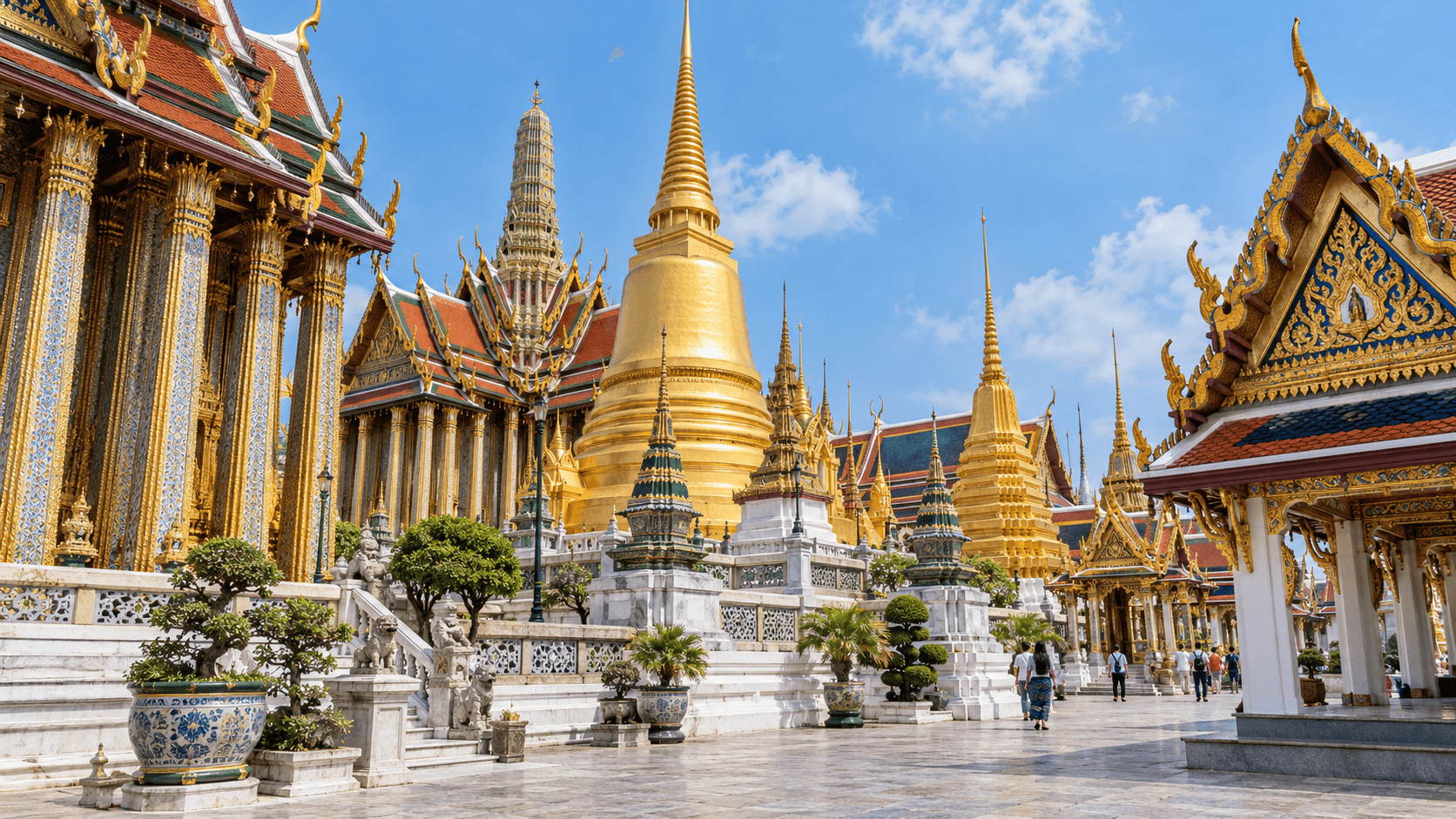
At a glance
- Palace admission
- 500 baht
- Wat Pho admission
- 300 baht
- Palace ticket cutoff
- 3:30 p.m.
Planning Bangkok's old-city sights for the late-October travel season? The Grand Palace and Wat Pho sit beside each other, but they are separate admissions with different visiting windows and different reasons to go. A recent entry on the Grand Palace's official calendar even showed an early closure on 24 October 2026, a reminder to check your own date rather than assuming the standard daily hours always apply. If you have only a half-day, the useful question is which site you most want to experience and whether you can still enter it after allowing for transport, security and a respectful visit.
The two tickets do different jobs
The Grand Palace's practical information says its foreign-visitor ticket costs 500 baht and includes Wat Phra Kaew, the Temple of the Emerald Buddha, and the Queen Sirikit Museum of Textile within the palace compound. Wat Pho is not listed as part of that palace ticket. The Tourism Authority of Thailand's Wat Pho page lists a separate 300-baht foreign admission. The combined published admission for a foreign adult visiting both is therefore 800 baht, before transport or other spending. Using the European Central Bank's 23 October 2026 reference rates, that is approximately US$14.83 for the palace, US$8.90 for Wat Pho, or US$23.73 for both. The dollar amounts are illustrations, not checkout prices; your payment conversion may differ.
The admission distinction solves a common itinerary mistake. “Temple of the Emerald Buddha” belongs to the Grand Palace compound and is covered by its ticket. “Wat Pho” is the neighboring temple site with its own admission. A map can make them look like one precinct, but the ticket rules do not. If the Emerald Buddha is the reason for your visit, choose the palace ticket. If your focus is Wat Pho's temple complex and traditional-medicine heritage, a palace ticket is not necessary for that goal. If both matter, plan two separate entrances and two separate payments.
Choose by your actual time window
The Grand Palace site lists general opening as 8:30 a.m. to 4:30 p.m. and tickets sold from 8:30 a.m. to 3:30 p.m. Another palace FAQ line abbreviates the visit window as 8:30 a.m. to 3:30 p.m.; treat 3:30 p.m. as the conservative ticket cutoff, not a promise that arriving at that minute allows a full visit. The official schedule calendar can add closures or shortened hours, and explicitly warns that dates may change. Check it on the day you make plans and again close to travel. A temple ceremony or official event can matter more than the generic daily line.
The Tourism Authority of Thailand lists Wat Pho as open from 8:30 a.m. to 8:00 p.m., with last entry at 7:30 p.m. For a late-afternoon decision, that last-entry time is much later than the palace ticket sale. Check for a current venue notice before relying on the full evening window; a general schedule is not a guarantee for every date. Wat Pho is therefore the more realistic standalone visit after a delayed arrival, provided it remains open on your actual date.
If you can begin in the morning and want both, put the Grand Palace first. Its earlier ticket cutoff and changeable calendar create the greater scheduling risk. You can then walk to Wat Pho if it is still open and you still have attention for another religious site. Reversing that order can work if a palace closure is already announced or if Wat Pho is your priority, but it leaves less room for the palace's cutoff. The choice is about available time and the character of the visit, not about which site wins a generic ranking.
Dress once for both sacred sites
The Grand Palace publishes a specific list of clothing it does not accept: sleeveless shirts, vests, short or see-through tops, short trousers, torn or tight trousers, miniskirts and related clothing. The site explains that the palace is a place of reverence. At Wat Pho, choose similarly respectful clothing and follow the instructions posted at each religious building, including where to remove shoes. Read the palace dress code before leaving your hotel, and follow posted directions at Wat Pho.
For a two-site day, the safe practical choice is a modest top with covered shoulders and loose long trousers or a suitable long skirt, plus shoes you can remove easily where required. Do not rely on a rumor that any scarf or rental garment will always solve a rejected outfit; the official instructions describe the standard, not a guaranteed workaround. This matters especially if you arrive after a long flight or in hot weather and planned to change clothes later. Dress correctly from the start so that an otherwise workable time window is not lost at an entrance.
Booking and entrance details that affect the decision
The palace says you can buy at its entrance ticket office or online. Its FAQ says online tickets can be bought up to one month ahead, and online purchases cannot be refunded or amended to another date or time. This is a genuine trade-off for someone whose flight or tour schedule is uncertain. An advance palace ticket may settle the admission step, but the site's schedule can still change; verify the current calendar and the booking terms before committing to a fixed visit. The FAQ says children under 120 cm are free. Do not generalize that height rule to every attraction in Bangkok.
The palace FAQ also says the visitor entrance changed to Mani Noppharat Gate from January 2024. Check current entry instructions rather than heading to an older gate named in a saved guide. The palace's visitor page suggests river approaches and identifies the nearby Wat Pho walk, but exact pier services can change. If you are using a navigation app, set the entrance or ticket office as the destination rather than just the center of the palace grounds. A pin in the middle of a walled compound can send you toward the wrong side.
Wat Pho's own material describes it as adjacent to the Grand Palace along Sanam Chai and Maharaj roads. That makes a combined visit geographically sensible, yet it does not eliminate queueing, heat or the concentration needed to appreciate two temple sites. Allocate a pause between them. A traveler with mobility constraints should inspect the approaches and ask the venues about current access arrangements; proximity on a map is not a guarantee of a step-free route. Neither site's admission should be bought merely because the other is next door.
Three worked half-day plans
Suppose you have an early start and your main interest is Wat Phra Kaew. Check the palace schedule first. If it shows normal access, go to the palace before the ticket cutoff with compliant clothing. Decide after the visit whether your time and energy still justify a separate Wat Pho ticket. This plan protects the site with the earlier cutoff while keeping the second stop optional.
Suppose your train, flight or meeting brings you into the area in late afternoon. Check current notices, but do not assume the palace ticket office will still sell a ticket after 3:30 p.m. Wat Pho's published later closing makes it the candidate to investigate. If you cannot visit respectfully without rushing, save both for another day. The fees are meaningful enough that entering in the last available minutes may be poor value even when a gate is technically open.
Suppose a family with a young child wants one focused stop. The palace FAQ's under-120-cm free admission can help the cost calculation, but confirm Wat Pho's current child rule directly before budgeting for that separate ticket. The adult tickets still differ. Ask which site the child will actually enjoy and tolerate. The palace compound and Wat Pho each demand walking and observance. A shorter, unrushed single visit can be better than using adjacency as a reason to buy both.
Before you leave the hotel
Check the palace calendar for your exact date, the current Wat Pho page, the admission conditions and your intended entrance. Save the two official pages for reference and leave enough battery for maps or a ride home. A travel eSIM may help you check changes and navigate; compare Thailand eSIM plans against your device and trip length, while keeping the address offline in case mobile coverage is poor. The editorial choice remains straightforward: buy the palace for the Emerald Buddha and compound, Wat Pho for its own temple visit, or both only when your schedule supports two distinct experiences.
Frequently Asked Questions
Does the Grand Palace ticket include Wat Pho?
No. The palace lists Wat Phra Kaew and the Queen Sirikit Museum of Textile as included; Wat Pho publishes a separate foreign-visitor admission.
Which should I visit first if I want both?
On a normal morning, check the official schedule and put the palace first because its published ticket sales end earlier. Reassess Wat Pho afterward.
Can I rely on normal palace hours every day?
No. The palace maintains a date-specific schedule and says entries can change. Check it close to your visit, especially around ceremonies or public events.
Approximate US-dollar comparisons above use the ECB's 23 October 2026 euro-dollar and euro-baht reference rates.
Keep reading

KLIA Ekspres or Transit: Which Train Fits in 2027?
Both airport rail services reach KL Sentral, but only Transit serves the intermediate stations. Compare today's fares with the announced January 2027 change.
Read more
Taoyuan Airport MRT: Express or Commuter to Taipei?
The purple express and blue commuter trains serve different stops. Choose the right Taoyuan Airport MRT for Taipei Main, New Taipei or the high-speed rail.
Read more
Istanbul Airport to Sultanahmet: M11 or Havaist Bus?
The M11 now runs across Istanbul via the airport, while Havaist again serves Sultanahmet. Compare the real transfer, luggage and late-arrival trade-offs.
Read more