
Mount Olympus UNESCO Listing: What Changes for Hikers in 2026
Greece's highest peak was UNESCO-listed on 25 Jul 2026. Real 2026 refuge prices, the Class III summit scramble, and an easier gorge walk for everyone else.
Destinations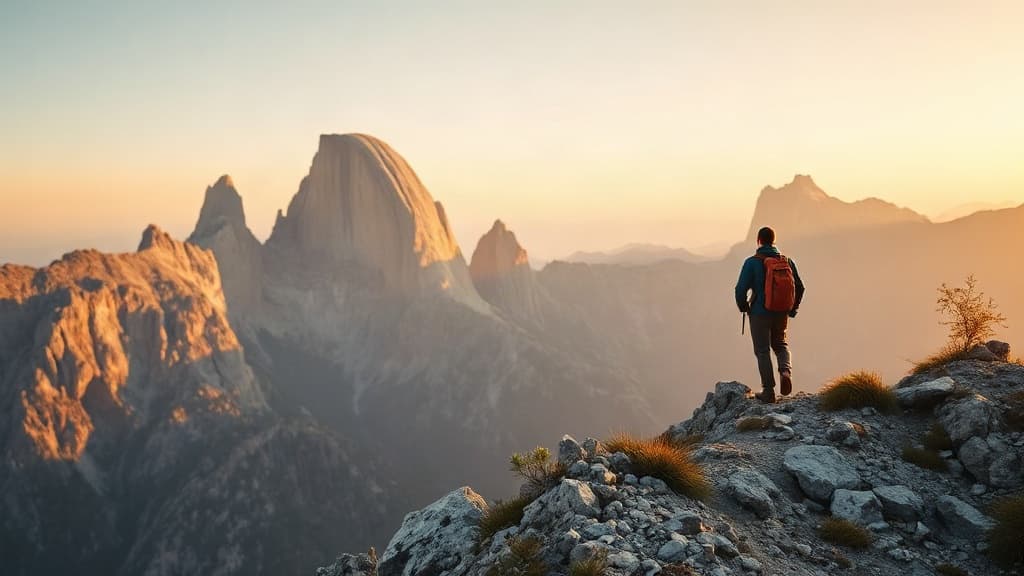
At a glance
- UNESCO status
- Listed 25 Jul 2026, mixed site
- Highest peak
- Mytikas, 2,918 m
- Park entry fee
- None — access is free
- Best season
- Jun-Sep, driest trails
- Refuge bed (unguided)
- From about EUR 13/night
- Guided 2-3 day ascent
- EUR 250-600 per person
Mytikas, Mount Olympus — Mytikas, Mount Olympus · Litochoro · Prionia trailhead · Thessaloniki Airport (SKG)
On 25 July 2026, the World Heritage Committee meeting in Busan unanimously inscribed "The Wider Area of Mount Olympus" on the UNESCO World Heritage List — a mixed cultural and natural property covering 18,938 hectares under Criteria (vi) and (x), the same session that added the D-Day beaches of Normandy. Greece's highest mountain, home of the Twelve Olympian Gods in Hesiod and Homer, was already the country's first national park (established 1938) and a UNESCO Biosphere Reserve since 1981. The new listing is a status upgrade for a place people have quietly been hiking for decades, and it lands right as the late-summer planning window for autumn trips opens.
What the listing actually changes
Nothing about access has changed yet. There is no new entrance fee and no timed-ticket system — Olympus National Park remains free to enter, unlike the paid-entry regime now standard at national parks in the United States or the fee reforms hitting parks in Australia and Canada. What the UNESCO listing does change is attention: expect refuge beds and guided slots to book up faster for the 2026/27 season than in past years, simply because the mountain now has a global headline attached to it. If you're planning a trip for September or October, book the refuge before the flight, not after.
Why the listing took this long
Olympus was inscribed as a mixed property — one of only a handful worldwide that qualifies on both cultural and natural grounds, according to the official UNESCO listing record. The cultural case (Criterion vi) rests on the mountain's role as the seat of the Twelve Olympian Gods in Hesiod and Homer, a reference point for Greek mythology for roughly three thousand years. The natural case (Criterion x) is about biodiversity: the mountain's proximity to the sea combined with its abrupt 2,918-metre rise produces a microclimate that packs an unusual range of terrain and vegetation zones into a small area, acting as a glacial-era refuge for plant species found nowhere else nearby. The same 48th World Heritage Committee session in Busan also inscribed the D-Day landing beaches in Normandy, France, part of a batch of 25 new sites reported the same week (Euronews). Olympus had been a national park since 1938 and a UNESCO Biosphere Reserve since 1981 long before this — the July 2026 vote recognizes what was already protected, rather than protecting something new.
Two very different ways to see it
Most visitors to Olympus never touch the summit, and that's fine — the mountain rewards a half-day effort almost as much as a three-day one.
The easy option is the Enipeas Gorge trail, part of the long-distance European E4 path, running about 12 km from Litochoro (320 m) up to the Prionia trailhead (1,100 m) where the road-accessible mountain huts begin. It passes a 38-metre waterfall, the ruined 16th-century Monastery of Agios Dionysios, and the saint's cave-chapel, and the trailhead sign quotes 4.5-5 hours one way. No permit, no fee, no technical skill required — just sturdy shoes and enough water, since shade and refill points thin out toward Prionia.
The other option is the summit push to Mytikas, at 2,918 m the highest of Olympus's peaks. This is a genuine multi-day trek: hike to a refuge around 2,000-2,700 m on day one, then tackle the final approach, which guide operator Explore-Share rates as a Class III rock scramble with real exposure near the top — not a technical climb, but not a stroll either. Attempting it without acclimatization or in poor visibility is how people get hurt on Olympus every season.
The last stretch to Mytikas is loose rock with drop-offs on both sides. Afternoon thunderstorms are common in July and August specifically on this section — start early, and turn back if cloud rolls in before the final scramble.
What it actually costs
Unguided refuge beds start at roughly EUR 13 per night at facilities like Spilios Agapitos (Refuge A, 2,060 m, open May-October, 110 beds) — meals and drinks are extra and paid on-site, and refuges set their own current rates, so confirm the exact figure when you call to book. If you'd rather not navigate route-finding and refuge logistics yourself, guided 2-3 day ascents run roughly EUR 250-600 per person depending on group size and what's included. Either way, book refuge beds in advance: Spilios Agapitos and the higher Giosos Apostolidis hut (2,697 m, on the Muses Plateau, open June-October) both take reservation requests by phone or email, and a request is not a confirmed bed until the refuge replies and a deposit is in.
Getting there and when to go
The closest airport is Thessaloniki (SKG). From there, a local bus (line 78, about EUR 0.90) connects to Thessaloniki's train station, with hourly trains to Litochoro station for around EUR 9 — though that station sits about 6 km outside town, meaning a roughly EUR 8 taxi to finish the trip. A direct KTEL bus from the airport is the other public option; a private taxi the whole way runs EUR 120-130. Litochoro itself, at the mountain's foot, is where almost everyone bases their trip.
June through September is the reliable window: trails are snow-free and temperatures workable, with July and August the busiest and most thunderstorm-prone, and September favored by experienced hikers for milder temperatures, clearer skies, and thinner crowds. Even in summer, pack layers — the summit runs roughly 20degC cooler than Thessaloniki at sea level, and weather on Olympus changes fast enough that a clear morning is no guarantee of a clear afternoon.
Entry rules and staying connected
Greece is a full Schengen member, so the standard 90-days-in-any-180-days visa-free rule applies to passport holders from the US, UK, Canada, Australia, and most of the rest of Europe; everyone else should check their national requirement before booking. The EU's ETIAS travel authorization for visa-exempt visitors is still slated for the fourth quarter of 2026 and has slipped before, so don't assume it's live without checking closer to your trip.
One local quirk worth knowing before you land: Greece has required ID registration for every prepaid SIM card since legislation passed in 2009, with anonymous SIMs blocked from the market after July 2010 — buying a local SIM at the airport means handing over your passport on the spot. A pre-installed Greece eSIM sidesteps that entirely, and matters more than usual here: cell coverage from Litochoro upward is patchy at best, so having data sorted before you start climbing — to check the weather forecast, confirm a refuge booking, or share your route — beats discovering there's no signal once you're on the mountain. Check your device supports eSIM on our compatibility page before you travel.
Frequently Asked Questions
Do I need a permit to hike Mount Olympus?
No. The national park has no entrance fee and no permit system as of this UNESCO listing. Refuge beds need advance booking directly with each hut, but the trails themselves are open access.
Can a beginner hike Mount Olympus?
A beginner in good physical condition can comfortably do the Enipeas Gorge day walk from Litochoro to Prionia. Reaching Mytikas summit is a different matter — it involves a genuine Class III rock scramble with exposure near the top, and is better attempted with a guide or with prior scrambling experience.
What's the best month to climb Mount Olympus?
June through September is the snow-free window. September is generally considered the best trade-off: mild temperatures, clearer skies, and fewer crowds than the July-August peak, which also brings more frequent afternoon thunderstorms.
Is there phone signal on Mount Olympus?
Coverage is patchy above Litochoro and largely absent near the refuges and summit approach. Arrange connectivity, download offline maps, and confirm refuge bookings before you start climbing rather than counting on a signal partway up.
Keep reading
Santorini and Mykonos Now Charge Cruise Visitors EUR20 to Dock
Every cruise passenger stepping off in Santorini or Mykonos this summer pays a landing fee — what it costs by season, and how ferry and flight arrivals skip it.
Read more
Lucerne, Switzerland: What the 2026 Tourist Tax Really Costs
Canton Lucerne's overnight tax rose to CHF 1.10 in 2026. Here's what that adds up to, plus the real Pilatus and Rigi ticket prices for planning an autumn trip.
Read more
Helsinki's New UNESCO Trail: Alvar Aalto's Architecture in 2026
Five of Alvar Aalto's newly UNESCO-listed buildings sit inside Helsinki, all bookable this year — real tour prices, booking links, and how to reach them.
Read more