
Perito Moreno and El Chaltén 2026: Patagonia Park Fees
Argentina raised national park fees 1 June 2026, and El Chaltén's free Fitz Roy trails start charging around 1 October — what a Patagonia trip really costs in 2026.
Guides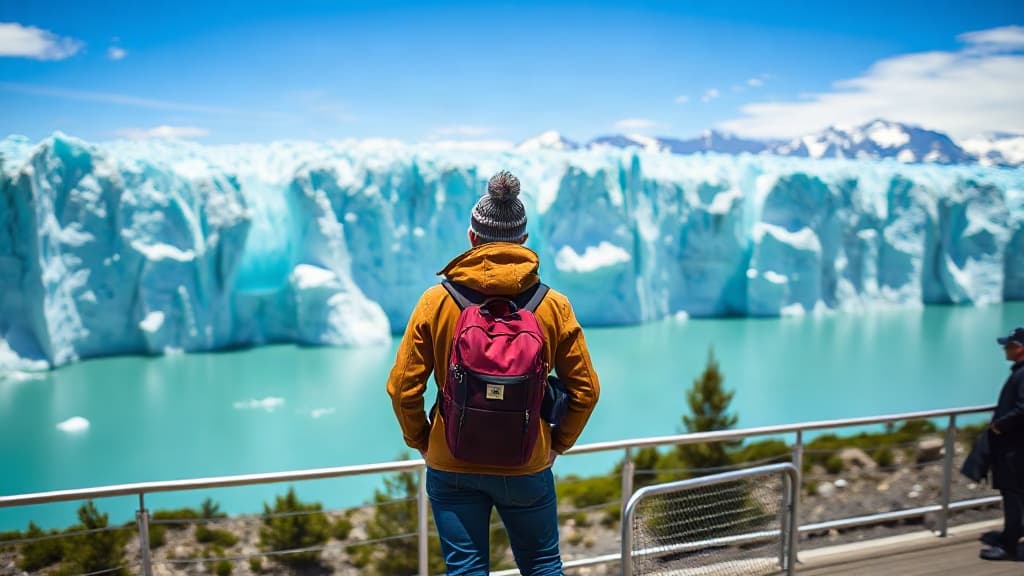
At a glance
- Foreign park entry
- AR$50,000/day (~US$33) since 1 Jun 2026
- El Chaltén trekking
- Free now, fee resumes around 1 Oct
- Big Ice glacier trek
- US$545/person from 15 Sep 2026
- Gateway airport
- El Calafate (FTE), ~49 flights/week
- Visa-free stay
- 90 days for 90+ nationalities
- Local SIM rule
- Passport required to register (ENACOM 263/2023)
Perito Moreno Glacier — Perito Moreno Glacier · El Calafate (FTE gateway airport) · El Chaltén · Laguna de los Tres / Mount Fitz Roy
Right now, walking to Laguna de los Tres under Mount Fitz Roy costs nothing. That changes around 1 October 2026, when Los Glaciares National Park reinstates its entrance charge for the El Chaltén trekking sector for the 2026-27 season — the same seasonal on/off switch it has used since the rule first took effect in October 2024. If you're booking a Patagonia trip for the Southern Hemisphere summer (peak season runs November to March), the September-October planning window is also the window in which the park's cost structure itself is about to shift.
What Los Glaciares National Park costs since 1 June 2026
Argentina's National Parks Administration (Administracion de Parques Nacionales, APN) raised entrance fees across the country's national parks under Resolution 132/2026, effective 1 June 2026. At Los Glaciares — the park that contains both the Perito Moreno Glacier near El Calafate and the Fitz Roy/Cerro Torre trekking area near El Chaltén — the current, official rates (published on Argentina's national parks site) are:
- Foreign visitors: AR$50,000/day (roughly US$33 at the mid-September 2026 exchange rate of about AR$1,507 per US dollar)
- Argentine nationals: AR$25,000
- Santa Cruz provincial residents: AR$8,000
- Students at Argentine institutions: AR$15,000
That's an 11% rise for foreign visitors (up from AR$45,000) but a much steeper jump for Argentine nationals, whose rate rose 66% from AR$15,000. A 50% discount applies to a second consecutive day of entry within 72 hours of the first. Tickets are sold only online through the park's own portal, ventaweb.apn.gob.ar, or by scanning a QR code at the access gate — cash isn't accepted at either sector.
El Chaltén's free window is about to close
The Fitz Roy/Cerro Torre trekking network around El Chaltén sits in Los Glaciares' North Zone, and it runs on a different clock from the glacier itself. Under Resolution RESFC-2024-228-APN-D#APNAC, the North Zone only charges entry seasonally: the fee is collected roughly from 1 October through 30 April or 1 May, then suspended over the Southern Hemisphere winter. This will be the sector's third season under the charge, and it applies the same AR$50,000/AR$25,000/AR$8,000/AR$15,000 table as the glacier side, checked at three access portals — Los Condores, Base Fitz Roy and Rio Electrico — covering trails to Laguna de los Tres, Laguna Torre, Chorrillo del Salto and Piedra del Fraile. Children under six enter free at either sector, at any time of year.
If your itinerary has any flexibility, hiking the Fitz Roy trails in the back half of September still falls inside the free window — the fee typically restarts with the start of high season around 1 October, though the exact date depends on the park's seasonal announcement each year.
Beyond the ticket: what a glacier trek actually adds
The park entrance fee only gets you to the viewing platforms and trailheads — walking on the Perito Moreno ice itself is a separate, licensed tour booked through one of the park's concession operators. Two standard options, priced directly by the operators for the 2026-27 season: Mini Trek (about 1.5 hours on the ice plus a short forest walk) runs around US$270 per adult, while Big Ice (roughly 3 hours on the glacier plus a moraine hike) rose to US$545 per person from 15 September 2026, up from US$475 through April. Both include hotel pickup, the boat crossing of Brazo Rico, and crampon/helmet gear, but neither includes the park's own entrance ticket, which is billed separately.
Getting there: El Calafate is the only way in
Comandante Armando Tola International Airport (FTE) in El Calafate handles essentially all tourist traffic bound for Perito Moreno and El Chaltén — El Chaltén itself has no commercial airport and is reached by a roughly 3-hour road transfer from El Calafate. As of September 2026, five airlines serve FTE from eight airports, with Buenos Aires, Ushuaia and Bariloche the busiest routes and around 49 flights a week in total. Capacity is seasonal on both ends: Flybondi suspends the route entirely from late April to early September, so the airport's schedule is only just filling back out as spring travel planning begins.
Visa rules and getting connected
Citizens of more than 90 countries, including the US, UK, EU member states, Canada and Australia, can enter Argentina visa-free for up to 90 days as a "Type 24H" tourist entry; travellers from countries outside that list need an Electronic Travel Authorization (AVE) or a visa arranged in advance, since Argentina does not issue visas on arrival. A passport valid at least six months beyond your entry date, with at least one blank page, is standard practice at the border.
Once you land, buying a local prepaid SIM means handing over your passport at the point of sale: under ENACOM Resolution 263/2023, Argentina's telecom regulator requires every mobile provider — Claro, Movistar and Personal alike — to collect and validate identity documents for every prepaid line, including a passport or travel document from non-resident foreigners, as part of an anti-SIM-swap fraud rule. A foreign-issued travel eSIM for Argentina is never registered against your passport in the first place, since the line itself is issued outside the country — worth knowing if you'd rather not queue at a carrier counter in El Calafate before a trek. Check your handset's eSIM compatibility on our device compatibility page before you fly, since not every phone supports it.
When to actually go
Patagonia's high season runs the opposite months to the Northern Hemisphere's: December through February, when El Calafate's daily highs sit around 15-19°C (59-66°F) and daylight stretches past 16 hours, is peak summer and the busiest, most expensive stretch for flights and lodging. September through November is the shoulder season on the way in — average highs climb from roughly 5°C (41°F) in September to 11°C (52°F) by November — which is also exactly the window in which El Chaltén's trekking fee flips back on and airline capacity into El Calafate is still ramping back up from its winter low. Booking a November trip now, in September, means locking in flights before the summer crunch and still catching El Chaltén's trails before or right as the season's paid-access window opens.
Frequently Asked Questions
Do I need to pay separately to see Perito Moreno and to hike near El Chaltén?
Yes. Los Glaciares National Park's South Zone (Perito Moreno, near El Calafate) and North Zone (Fitz Roy/Cerro Torre trails, near El Chaltén) each charge their own entrance fee, both currently AR$50,000 (about US$33) per day for foreign visitors since the 1 June 2026 fee update. They're billed as separate tickets even though both sectors belong to the same national park.
Is trekking around El Chaltén really free right now?
As of this writing in September 2026, yes — the North Zone's entrance charge is seasonal and has been suspended since around 1 May 2026. It's expected to resume around 1 October 2026 for the 2026-27 high season, based on the same pattern the park has followed since the seasonal fee began in October 2024.
What's the difference between Mini Trek and Big Ice on the glacier?
Mini Trek is a shorter outing — about 1.5 hours walking on the ice plus a 30-minute forest hike, priced around US$270 per adult. Big Ice is a longer, more physically demanding version with roughly 3 hours on the glacier and an additional moraine hike, priced at US$545 per person from 15 September 2026. Both are booked as add-on tours separate from the park's own entrance ticket.
Do I need a visa to visit Argentina for a Patagonia trip?
Travellers from more than 90 countries, including the US, UK, EU, Canada and Australia, can enter visa-free for up to 90 days. If your nationality isn't on that list, Argentina requires an Electronic Travel Authorization (AVE) or a visa arranged before arrival, since there's no visa-on-arrival option at the border.
Keep reading
Iguazu Falls 2026: Devil's Throat Shut for Flood Safety
Argentina shut Iguazu's Devil's Throat walkway on 5 Aug 2026, its first-ever preventive flood closure. What's still open, entry fees, and reopening odds.
Read more
Great Wall Golden Week 2026: Badaling's Booking Window, Explained
China's Oct 1-7 Golden Week floods Badaling to its 65,000-visitor cap daily. Here's the 10-day booking window, the real crowd numbers, and where to go instead.
Read more
UK ETA 2026: Fee Rises to GBP 20 as Boarding Enforcement Bites
The UK's Electronic Travel Authorisation is now enforced at boarding, and the fee just rose to GBP20. Who needs one, what it costs, and how long it lasts.
Read more