
Rome Ticket Prices in 2026: What the Pantheon Hike Changed
Rome's Pantheon ticket rose from EUR 5 to EUR 7 in July 2026. Here is what changed, and what the Colosseum and Vatican Museums actually cost now, too.
Guides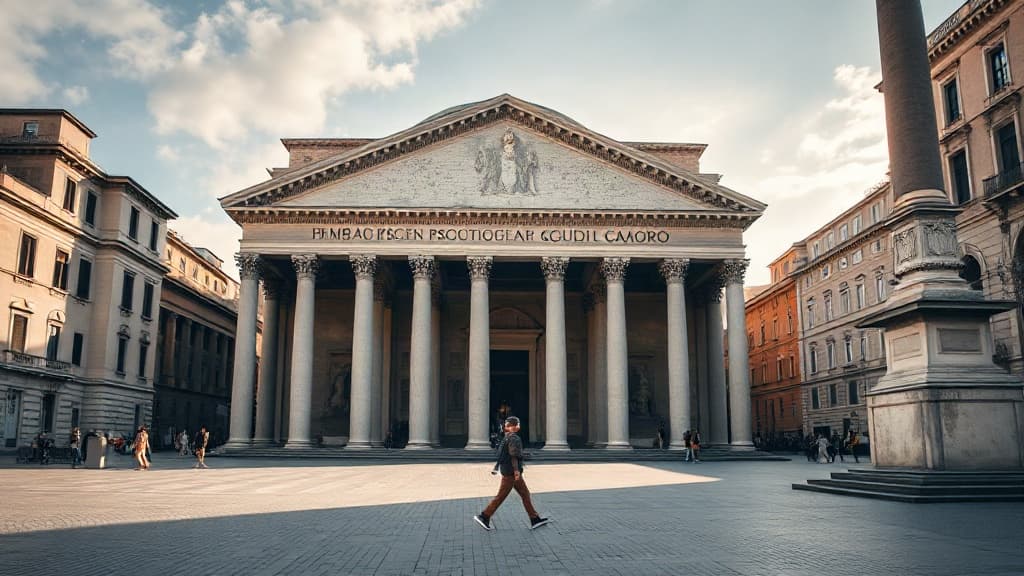
At a glance
- Pantheon ticket since Jul 2026
- EUR 7 (up from EUR 5)
- Pantheon free entry
- First Sunday of every month
- Colosseum + Forum + Palatine
- EUR 18 standard, EUR 2 for EU citizens 18-24
- Vatican Museums full ticket
- EUR 20 + EUR 5 online booking fee
- Pantheon revenue goes to
- A national library/culture fund
- Buying a Rome prepaid SIM
- Passport/ID registration required by law
Pantheon — Pantheon · Colosseum · Vatican Museums · Rome Fiumicino Airport
The Pantheon's entry ticket went up 40% on 1 July 2026, from EUR 5 to EUR 7, under a new agreement between Italy's Ministry of Culture and the Diocese of Rome. It's a small change in isolation, but it lands in the middle of a wider reshuffle of what Rome's biggest sights actually cost this year — and the numbers floating around online are inconsistent enough that it's worth checking against the official pages before you budget a day of sightseeing.
The Pantheon: what changed and why
The increase was set by a formal convention signed at Italy's Ministry of Culture between the Ministry and the Diocese of Rome, which jointly govern the Pantheon — formally the Basilica of Santa Maria ad Martyres — reported directly by RomaToday and confirmed by La Repubblica's Rome desk. The new EUR 7 rate applies to non-resident visitors; Rome residents, under-18s and worshippers attending Mass remain exempt, and the first Sunday of every month is still free for everyone, per Romeing's coverage of the same change. The Ministry has stated the additional revenue is earmarked for the "Piano Olivetti per la Cultura," a fund supporting libraries and cultural access outside major cities — not for the Pantheon's own upkeep.
The Colosseum, Roman Forum and Palatine Hill
The standard combined ticket — valid 24 hours for the Colosseum's first and second levels plus same-day entry to the Roman Forum and Palatine Hill — is EUR 18 for a full-price adult ticket. EU citizens aged 18 to 24 pay a reduced EUR 2, and anyone under 18 enters free (a reservation is still required even for the free ticket). That pricing, listed on the Parco Archeologico del Colosseo's own English ticket page, is corroborated across multiple independent 2026 booking guides, including Through Eternity's and Carpe Diem Tours' own 2026 breakdowns, after the official site itself proved unreachable to automated fetch on repeated attempts this run. It's a separate, more expensive ticket if you want arena-floor or underground access — those "Full Experience" upgrades run to roughly EUR 24 and are sold on a different validity window (two consecutive days rather than the standard 24 hours).
Vatican Museums and the Sistine Chapel
The Vatican Museums' own pricing page lists the standard "Skip the Line" full ticket at EUR 20, plus a mandatory EUR 5 fee for online reservation — EUR 25 all-in if you book ahead, which is effectively required given how far in advance timed slots sell out. A reduced pilgrimage rate of EUR 10 exists for organized religious groups, without the online-booking premium. Third-party resellers routinely quote higher bundled prices for guided-tour packages; the museum's own reservation page is the one to check before assuming a markup is the base price.
Booking around the crowds
None of these three sights operate on walk-up tickets during peak season — the Colosseum and Vatican Museums both require timed-entry reservations well in advance from spring through early autumn, and the Pantheon, while smaller in scale, still draws long lines without a booked slot. If Rome is part of a wider Italy trip, budgeting EUR 7 (Pantheon) plus EUR 18 (Colosseum/Forum/Palatine) plus EUR 25 (Vatican Museums, with the booking fee) gets a single visitor to all three major sights for around EUR 50 — before any guided tour or skip-the-line upgrade.
Getting between the three sights
The Pantheon and the Colosseum sit roughly 2 km apart in central Rome — an easy 20-25 minute walk through the historic center, or a short hop on Rome's bus and tram network. The Vatican Museums are a separate trip across the river, far enough that walking isn't realistic for most visitors; the metro's Line A to Ottaviano-San Pietro station, followed by a 10-minute walk, is the standard route. Trying to fit all three into one day means picking a realistic order — Vatican Museums first thing in the morning when timed-entry slots are least crowded, then crossing back to the Pantheon and Colosseum in the afternoon, works better than the reverse.
Does a Roma Pass actually save money?
Rome's official city card, the Roma Pass, is priced at EUR 38 for 48 hours or EUR 62.90 for 72 hours, per multiple 2026 pricing breakdowns including ArtVisitGuide's own math. The 48-hour card includes one free entry to a partner site plus unlimited public transport and reduced admission at 45-plus museums; the 72-hour version doubles the free entries to two. Because the Colosseum, Forum and Palatine count as a single combined entry, using the pass's one free slot there and then paying reduced or standard rates for the Pantheon and Vatican Museums separately is usually the better math for a one-or-two day visit — the pass earns its price mainly on public transport and a third or fourth paid site, not on these three tickets alone. Note that the free-entry slot still has to be reserved through the Roma Pass's own booking system for sites with timed entry, including the Colosseum area, so buying the card doesn't skip the advance-booking step — it changes who you book through, not whether you book at all, so leave the same lead time you'd give a direct booking.
Staying connected between sights
Buying a prepaid SIM in Italy means showing a passport or ID card at the point of sale, a legal requirement confirmed by a 2026 buyer's guide and cross-checked against an independent SIM-registration reference. That's a queue most travelers would rather skip on the first day of a short Rome trip. An Italy eSIM activates before you land, so the only line you're standing in at Fiumicino is passport control.
Prices above are the standard, full-rate adult tickets as listed on each site's own English pricing page in September 2026. Reduced and free-entry categories (residents, under-18s, EU youth, pilgrims) are noted where each source specifies them.
Frequently Asked Questions
How much does it cost to visit the Pantheon in 2026?
EUR 7 for a standard adult ticket since 1 July 2026, up from EUR 5, following a new Ministry of Culture-Diocese of Rome agreement. Under-18s, Rome residents and worshippers attending Mass remain exempt, and entry is free for everyone on the first Sunday of each month.
Is the Colosseum ticket the same price as the Roman Forum ticket?
Yes — the standard EUR 18 ticket covers the Colosseum's first and second levels, the Roman Forum and the Palatine Hill together, valid for 24 hours. EU citizens aged 18-24 pay a reduced EUR 2; visitors under 18 enter free with a reservation.
Do I need to book the Vatican Museums in advance?
It isn't legally mandatory, but the museum's own online booking carries a EUR 5 fee on top of the EUR 20 base ticket, and in-person timed slots sell out during peak season. Booking ahead is the practical default for anyone visiting spring through early autumn.
Why did the Pantheon's ticket price go up?
Italy's Ministry of Culture and the Diocese of Rome, which jointly manage the site, signed a new convention raising the non-resident ticket from EUR 5 to EUR 7 effective 1 July 2026. The Ministry has said the added revenue funds a national library and cultural-access program, not Pantheon-specific maintenance.
Keep reading
Driving the Amalfi Coast in 2026: The Daily Plate Rule Explained
From 1 Aug through 30 Sep 2026, the SS163 enforces an odd/even plate rule every day. How it works, what it costs to skip driving, and how to still reach Positano.
Read more
Borghese Membership: Can You Visit Without Booking?
Borghese members can collect a free ticket at the desk without advance booking, unlike ordinary visitors. Here is the current card process and its limits.
Read more
Fiumicino to Rome: Leonardo Express or FL1 Train?
Choose the right Fiumicino train for your Rome address. Compare Termini and FL1 stations, current fares, family rules, ticket validity and last-mile transfers.
Read more