
Stonehenge Shuttle or Walk: Plan the Route to the Stones
The Stonehenge visitor centre is separate from the circle. Compare the frequent shuttle with the landscape walk, then leave enough time to get back before closing.
Guides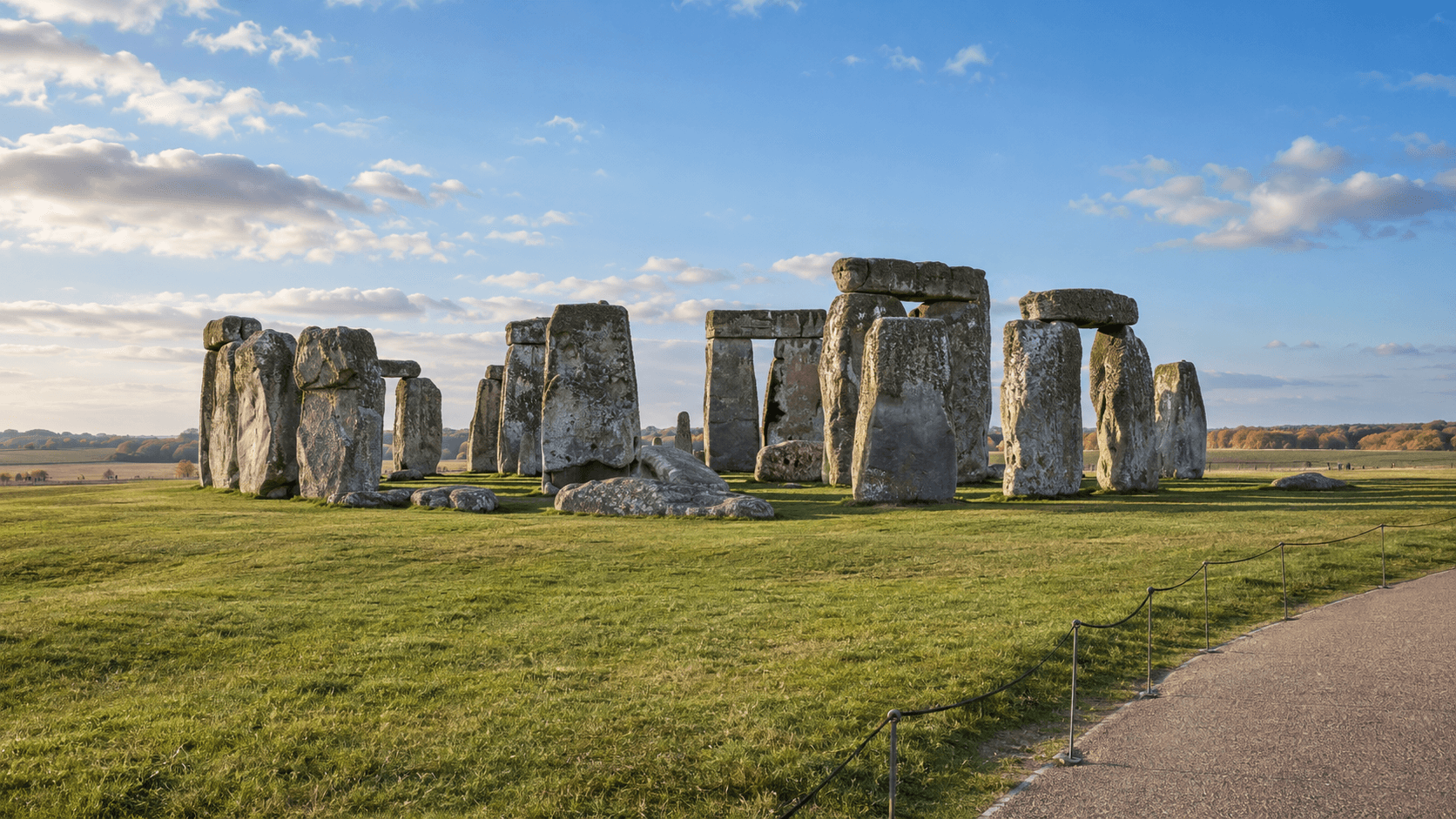
At a glance
- Shuttle ride
- Around 5–10 minutes on board
- Walk each way
- About 25–40 minutes
- Normal admission
- Visitor path around the stones
Stonehenge — Stonehenge · Stonehenge Visitor Centre
Autumn visits to Stonehenge need a little more transport planning than a photograph of the stones suggests. Your arrival point is the visitor centre, while the stone circle sits across the landscape. The English Heritage visitor FAQ says the shuttle buses run frequently and a booking time is not a reserved bus departure. You may also walk. The useful choice is therefore how much time and mobility you want to spend between the visitor centre and the monument.
What your ticket controls
Start at the visitor centre admissions point with your booking confirmation. English Heritage says it can be shown on paper or a mobile device and that visitors without the confirmation cannot be admitted. The prices and opening page currently says tickets are valid for the day within opening hours, and recommends booking online by midnight the previous day for a discount. The visitor FAQ still discusses time slots and delays. Because booking displays can change, follow the conditions attached to the ticket you actually receive and allow for capacity if you arrive late. Neither description turns the shuttle into a reserved seat.
A ticket for ordinary admission gives access to the normal visitor path around the stones, not a walk inside the circle. The FAQ explains that entry inside the circle is for small groups with a separate Stone Circle Experience ticket at designated times. This matters when comparing photographs or tour adverts: an image taken among the stones may describe a different product. Before buying a third-party tour, read whether it includes English Heritage admission, coach transfer, or the special inner-circle experience. Do not infer one from another.
Shuttle, full walk or a mixed route
The ordinary visitor bus goes from the visitor centre toward the stone circle and takes around five to ten minutes once aboard, according to the FAQ. The same page says buses run frequently. That is an onboard estimate, not a door-to-door guarantee: admissions, the walk to the stop, boarding and the final path all add time. For a traveler with a short schedule, the shuttle limits the distance on foot and leaves more of the visit for the exhibition and circle. It is also a sensible default when the weather makes open paths uncomfortable.
The marked walking route passes through National Trust landscape with interpretation panels and burial mounds. English Heritage gives a one-way walking estimate of 25 to 40 minutes, depending on pace. It describes the walk from visitor centre to stones and back as approximately 2.6 miles, or 4 km, much of it on fields and unmade paths. That is a real walking commitment, especially after rain or with limited daylight. Sturdy shoes, water and weather-appropriate clothing are more useful than an exact minute-by-minute plan. Keep to the designated walker lane on the return route where it runs beside the bus route.
You can choose one mode outward and another back if conditions permit. English Heritage describes both the shuttle and the marked walking route, so you can decide after seeing the weather and the group's energy. Its accessible visitor guidance confirms step-free access to the bus for wheelchair users. A mixed route is flexibility, not a promise that everyone in a group will want the same pace. If rain begins after you leave the centre, choosing the bus back is a reasonable way to protect the rest of your day.
Work a visit backwards from closing
Imagine arriving at the visitor centre with two hours available before the advertised closing time. The FAQ's one-way walk estimate alone could consume 25 to 40 minutes outbound and similar time back, before looking at the stones or exhibition. In that situation, use the shuttle at least one way and decide whether the exhibition can fit. The calculation is a planning example rather than a timetable: bus queues, weather and your pace vary. English Heritage asks visitors to leave enough time to get back to the visitor centre before closing, and its FAQ lists a final ticket-sale time earlier than closing. Check the specific day's hours before starting from Salisbury or another departure point.
Now imagine a traveler who has most of the day. They could explore the visitor centre first, walk through the landscape to the circle, spend time on the path and use the shuttle back. The visitor-centre page describes the exhibition, reconstructed Neolithic houses, café and facilities. This sequence gives context before the monument. A visitor who prizes the light or a quieter moment at the circle may reverse it, heading to the stones first and returning for the exhibition. The FAQ explicitly presents either order on arrival.
Accessibility and weather can decide the route
English Heritage says the visitor bus is step-free and wheelchair accessible. The main visitor areas use tarmac and grass paths, with the grass around the circle dependent on weather. The access page says the wider landscape is not accessible to standard wheelchairs, so the full countryside walk should not be assumed to be an equivalent accessible route. The shuttle reaches the stones, but there is still a final path from its stop; if you need a precise route, contact English Heritage before travel and ask about current surface conditions.
The circle is exposed and has no shelter, according to the FAQ. Some portions of the visitor path are grass, which English Heritage may close after very wet weather. A dry forecast does not guarantee the ground is dry. Consider the range of people in your party: a child who enjoys the outward walk may be tired on the return, while a visitor using a mobility aid may need the bus from the start. The visitor centre has accessible toilets; the access guidance identifies an emergency-only accessible toilet near the stones. Planning a facilities stop before boarding avoids rushing at the monument.
English Heritage says assistance dogs may accompany visitors across the site, while other dogs are restricted from the monument field and shuttle. If a dog is part of your trip, read the operator's current pet rules before booking rather than assuming an outdoor attraction is automatically dog-friendly. The FAQ also says there is no cloakroom or left-luggage service. A suitcase can turn an otherwise simple walk into a problem, so arrange storage elsewhere before coming to the visitor centre.
Tickets, arrival and the data backup
Advance booking is recommended, and English Heritage says buying online before the visit can be cheaper than paying on the day. Admission and parking are separate issues: the FAQ lists a parking charge for non-members, so a driver should inspect the checkout and parking instructions as well as the admission ticket. English Heritage and National Trust England membership rules are specific; a membership from another country's similarly named organisation does not automatically qualify. Bring the relevant card and booking confirmation if claiming an entitlement.
Save your admission confirmation offline before leaving your lodging. Data can help you check a route or a change in opening conditions, but the site itself is an open landscape and mobile service can vary. If you need travel data in the UK, compare Roameo's destination plans with your existing roaming option, then verify your phone's eSIM compatibility before purchase. This keeps connectivity in its proper role: useful for planning and updates, not a substitute for a confirmed ticket or suitable walking plan.
Frequently Asked Questions
Is my Stonehenge booking time a shuttle departure?
No. English Heritage says the visitor buses run frequently and a booking time does not correspond to a particular bus. Allow time at the visitor centre before boarding.
How long is the walk from the visitor centre?
English Heritage estimates 25 to 40 minutes one way, depending on pace, and roughly 2.6 miles or 4 km for the outward and return walk together. Much of the route uses fields and unmade paths.
Can ordinary admission take me inside the circle?
No. Normal visitors follow the path around the monument. Entering the circle is a separate Stone Circle Experience offered to small groups at designated times.
Keep reading

Edinburgh Castle: Plan a Visit for the One o'Clock Gun
The One o'Clock Gun fires at 13:00 on eligible days. See how October castle hours, guided tours and accessibility affect your arrival time and ticket choice.
Read more
Alhambra Nasrid Palaces: Plan Around Your Entry Time
The Alhambra General ticket lasts all day, but the Nasrid Palaces have a fixed entry time. Plan the winter route, bring ID and avoid missing the slot.
Read more
Ghibli Park Standard or Premium: Which Pass Fits?
Compare Ghibli Park Standard and Premium passes by included areas, building access, timed entry and price before reserving your Aichi visit in late 2026.
Read more