
Taroko Gorge in 2026: What's Open Now, and Taiwan's New Park Fee
Most of Taroko Gorge has reopened since the 2024 earthquake, and Taiwan just confirmed a fee is coming to its alpine parks — for now, entry is still free.
Destinations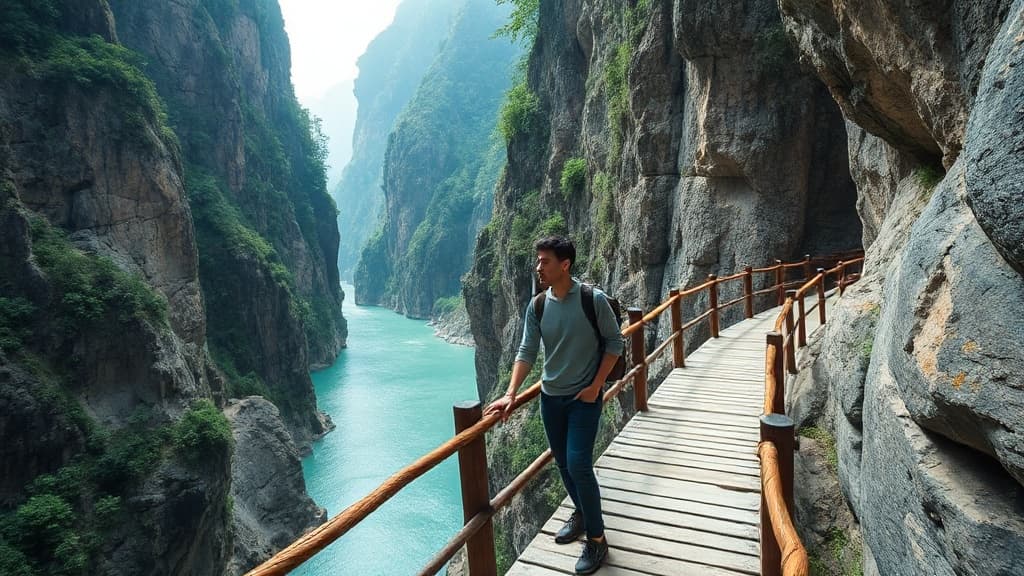
At a glance
- Fee status
- Drafting only; amount not yet set
- Announced
- 4 August 2026 by the National Park Service
- Parks in scope
- Taroko, Yushan and Shei-Pa
- Restoration budget
- NT$3 billion (~US$94.7 million)
- Damage from
- Magnitude 7.2 quake, 3 April 2024
Taroko Gorge — Taroko Gorge · Hualien
On 4 August 2026, Taiwan News reported that the National Park Service is drafting the country's first-ever entry fee for its three alpine parks — Taroko, Yushan and Shei-Pa. Right now, a permit to hike inside Taroko Gorge costs nothing: it's a free online application, and authorities process hundreds of thousands of them a year. That's about to change, but not this year, and not next year either. If Taroko Gorge is on your list, the window to see it under the old free-entry system runs at least through 2026 and probably into 2027.
The gorge itself is still only partway back from the magnitude 7.2 earthquake that struck Hualien County on 3 April 2024, which damaged Provincial Highway No. 8 at 13 separate points and buried several of Taroko's best-known trails under landslides. Two years on, some sections are open, some reopened only this year, and a few won't reopen before 2031. Here's what actually stands in 2026.
What's open in Taroko Gorge right now
The visitor's center, Taroko Terrace Trail, Tianxiang Recreation Area, Dacingshui Recreation Area, Chongde Trail, and the Dali-Datong and Liwushan/Cianyanlishan hiking trails have all resumed normal access. The Lushui Trail is open for its first roughly 250-metre stretch, up to the suspension bridge — an easy, scenic stop rather than the full route. Premier Cho Jung-tai visited the park in March 2026 to inspect restoration progress and confirmed the phased reopening is continuing on schedule.
What's still closed — and for how long
The headline closures are the ones postcards are usually taken of. Shakadang Trail, Yanzikou (Swallow's Grotto), the Tunnel of Nine Turns, and Baiyang Trail will not reopen until 2031 — the rock faces above them need more extensive stabilization work than the sections that have already reopened. Changchun Shrine Trail is targeted for 2029 at the earliest: engineers need a 28-month construction window to address rockfall risk around the shrine itself, which currently can only be viewed from a distance on the drive out of the gorge. Buluowan Terrace and its suspension bridge are due for partial reopening later in 2026, though the adjoining Taroko Village Hotel may not reopen at all. Zhuilu Old Road, the cliff-edge trail popular with more serious hikers, remains permit-only and separate from the general park pass.
Taiwan has allocated NT$3 billion (roughly US$94.7 million) to the restoration effort — a number that gives some sense of why a full reopening is measured in years, not months.
The permit is free — for now
Taroko, along with Yushan and Shei-Pa, together hold 76 of Taiwan's "100 Peaks" and more than ten long-distance trekking routes; the three parks pulled in around 200,000 permit applications last year. Every one of those applications is free today — hikers apply online, and only ancillary services like parking, bookstores, and mountain huts currently charge anything, with that revenue going to the national treasury rather than to park upkeep.
That's the system the National Park Service wants to change. Deputy Director Chang Wei-chuan told reporters on 4 August 2026 that the agency hasn't yet decided how much visitors would be charged, only that consultations with stakeholders are underway before the proposal goes to the Ministry of the Interior for legal review. A separate Taipei Times report from the same week put the wider timeline on the record: a ministry review in October 2026, submission to the Executive Yuan in early 2027, and a possible rollout by the end of 2027. The same push would also bring fees to Kenting and Yangmingshan National Parks and Shoushan National Nature Park, alongside the three alpine parks. Officials quoted in the reporting note it isn't unusual for national parks elsewhere to charge entry — Taiwan is one of the later adopters, not an outlier once the fee lands.
None of this affects a visit booked for 2026. But if you've been putting off Taroko for "next year," the honest answer is that next year is probably still fine — the year after might not be free.
Why the fee is coming at all
Taroko, Yushan and Shei-Pa aren't ordinary parks by Taiwanese standards — between them they hold 76 of the "100 Peaks of Taiwan," a mountaineering checklist that draws serious hikers as well as day-trippers. Right now, upkeep on those trails is funded out of general treasury revenue rather than anything visitors pay directly, and the roughly 200,000 permit applications a year cost the system nothing to process for the applicant. Experts quoted in the Taipei Times coverage of the 4 August 2026 announcement point out that Taiwan is arguably late to this: charging for entry to alpine parks is standard practice in many countries, and one researcher, Professor Huang Cheng-tsung, suggested the eventual rates could vary by region based on how many visitors each park already draws. None of that is settled yet — the National Park Service says explicitly it hasn't started discussing actual numbers — but the direction of travel is now on the public record, which is more certainty than Taroko's permit system has had in years.
Getting there and staying connected
Hualien is the usual gateway: direct trains run from Taipei in about two hours, and Highway 8 (Central Cross-Island Highway) carries most of the traffic into the gorge from there, with local buses and taxis covering the stretch between Hualien and Tianxiang. Because the reopened sites are scattered rather than continuous — Chongde sits near the coastal entrance, Tianxiang is well inland, and the Dali-Datong trail branches off a separate access road — most visitors are better off treating a Taroko day as a point-to-point drive with several stops than a single linear walk, which is worth building into how long you block out for the trip. Because the reopened sections are spread across a long, winding gorge road with patchy signal in the deeper canyon stretches, it's worth having your data sorted before you arrive rather than hunting for a local SIM counter at the train station. A prepaid Taiwan eSIM installs before you fly and gives you a working data connection from the moment you land in Hualien or Taipei, without committing to a local contract for a week-long trip — check device compatibility before you go, since eSIM support varies by phone model and carrier lock status.
Frequently Asked Questions
Do I need a permit to visit Taroko Gorge in 2026?
The general recreation areas — the visitor's center, Tianxiang, Dacingshui, Chongde and the currently open trails — don't require a permit. A separate, free online permit is required specifically for the higher-risk routes like Zhuilu Old Road, which is managed apart from general park access.
When will the Tunnel of Nine Turns and Shakadang Trail reopen?
Both are currently projected to reopen in 2031, along with Swallow's Grotto (Yanzikou) and Baiyang Trail, due to the scale of rockfall stabilization work still needed on those sections after the April 2024 earthquake.
Will Taroko Gorge start charging an entry fee?
Taiwan's National Park Service confirmed on 4 August 2026 that it is drafting a fee plan for Taroko, Yushan and Shei-Pa, but the fee amount hasn't been set, and the earliest realistic rollout — after ministry review, Executive Yuan submission and legislative deliberation — is the end of 2027.
Is Highway 8 fully open through Taroko Gorge?
Access has been progressively restored to the sections serving the currently open recreation areas and trails, but some stretches tied to the still-closed trail sections remain restricted as restoration work continues.
Keep reading

Angkor Wat in 2026: Costs, Passes and the Closed Land Border
Cambodia's land border with Thailand is still shut in 2026, but flights to Siem Reap run as normal. What an Angkor Pass, e-visa and side temples actually cost.
Read more
Plitvice Lakes 2026: Ticket Prices Drop 43% After September
Croatia's Plitvice Lakes charges EUR 40 a day through September, then EUR 23 from October 1 — here's the official 2026 season pricing and how to book.
Read more
Bali's 2026 Entry Fees: What Uluwatu and the Levy Now Cost
Bali raised entry fees at Uluwatu, Pandawa Beach and Taman Ayun in January 2026, and the tourist levy is under active inspection. Here's what it now costs.
Read more