
Vietnam Now Wants a QR Code at Ho Chi Minh City Arrivals
Since April, arriving in Ho Chi Minh City on a visa means filing an online declaration first and showing a QR code at the desk. Here is what that involves.
Guides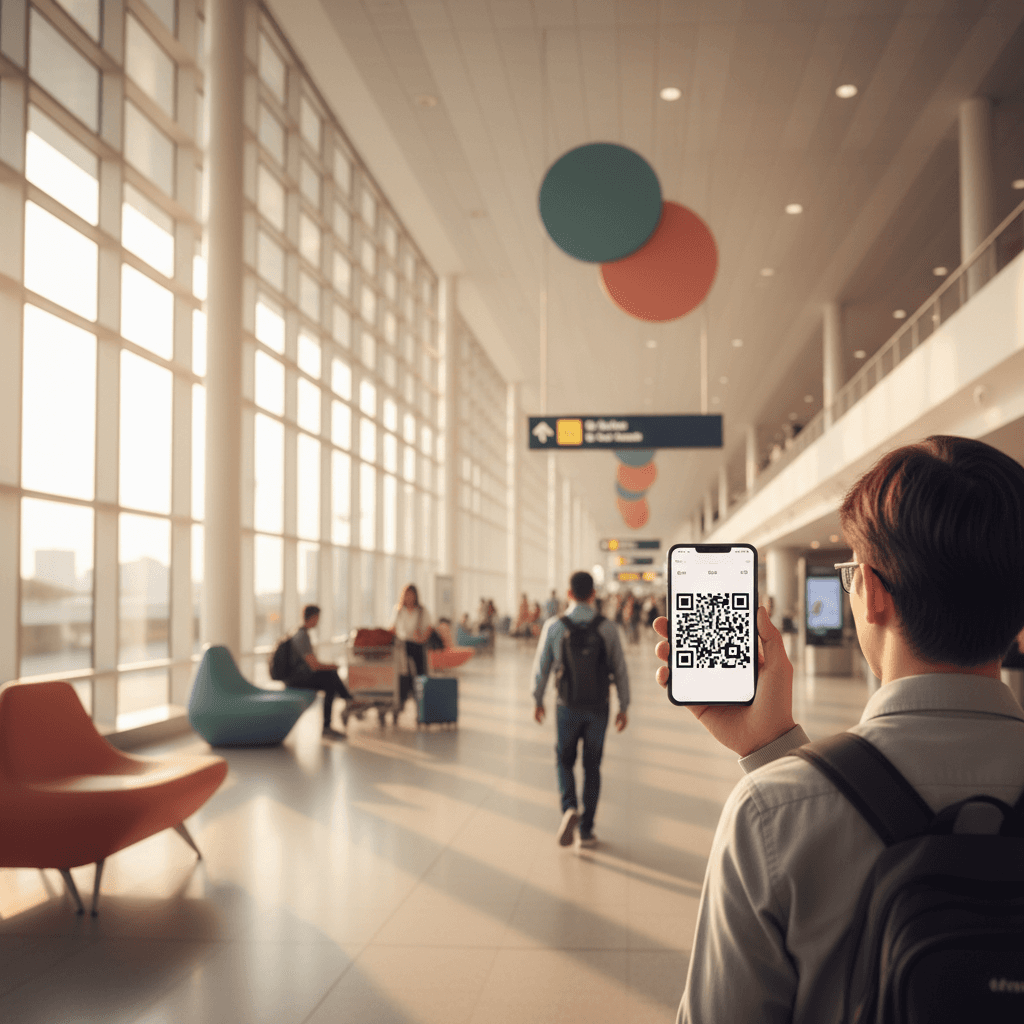
At a glance
- QR declaration from
- 15 April 2026, Tan Son Nhat arrivals
- Applies to
- Foreign nationals entering on a visa
- E-visa
- US$25 single, US$50 multiple, up to 90 days
- Phu Quoc
- Visa-free 30 days, arriving direct from abroad
- New immigration law
- In force 1 July 2026
Ho Chi Minh City — Ho Chi Minh City · Tan Son Nhat International Airport · Hanoi · Phu Quoc
Vietnam has quietly added a step to the busiest border crossing in the country. Since 15 April 2026, foreign nationals and overseas Vietnamese arriving at Tan Son Nhat International Airport in Ho Chi Minh City on a visa have been required to complete an online declaration before they travel, receive a QR code, and present that code during immigration processing. The stated purpose is to cut queueing time at a terminal that handles the largest share of Vietnam's international arrivals. The practical effect, if you have not heard about it, is that you reach the desk without something the officer is now expecting to see.
What actually changed on 15 April 2026
The requirement is a pre-arrival declaration filed online, which returns a QR code. You show that code at the immigration counter alongside your passport and visa. VietnamNet's English service, reporting on the country's 2026 entry rules, describes the measure as applying to "all foreign nationals as well as overseas Vietnamese entering Vietnam via Tan Son Nhat International Airport using a visa," and frames it as an efficiency measure rather than a new screening layer.
It is worth being precise about the scope, because a lot of the secondhand coverage is not. Three things are true at once: the rule is specific to Tan Son Nhat rather than nationwide, it attaches to travellers entering on a visa, and it does not replace the visa itself. It is an additional document, not an alternative one.
A second, larger change follows it. A revised immigration law takes effect on 1 July 2026, updating how Vietnam handles residency management and data integration, and introducing new visa categories aimed at high-tech professionals and specialist workers. For an ordinary tourist that law is mostly background — but it is the reason to expect the declaration system to be extended rather than rolled back, and a reason to re-check the rule for your specific airport close to departure rather than trusting a guide written earlier in the year.
Because this is an airport-specific rule introduced mid-year, the single most reliable thing you can do is check your own arrival airport's current requirement in the week before you fly. A rule that applies at Ho Chi Minh City today is the kind that arrives at Hanoi and Da Nang later.
Who this does not apply to
If you are entering visa-free, the declaration requirement as reported attaches to visa holders, so it does not describe your entry. Vietnam runs several exemption tracks, and which one you fall under changes what you need to carry.
Twelve European countries — Belgium, Bulgaria, Croatia, the Czech Republic, Hungary, Luxembourg, the Netherlands, Poland, Romania, Slovakia, Slovenia and Switzerland — have had visa-free tourist entry for up to 45 days since 15 August 2025, under an arrangement currently scheduled to run to 14 August 2028. Phu Quoc operates separately again: arriving on the island directly from abroad allows a stay of up to 30 days with no visa, no application and no fee, provided you do not route through the mainland on the way in.
That Phu Quoc carve-out is genuinely useful and genuinely narrow. The exemption is tied to arriving direct and staying on the island. A domestic hop to Ho Chi Minh City or Hanoi during the same trip is not covered by it, and that is where travellers most often get the rule wrong.
The e-visa route, and what it costs
For everyone else, the e-visa is the default. Citizens of all countries and territories have been eligible to apply since the programme's 2023 expansion, it is valid for up to 90 days in either single- or multiple-entry form, and it is accepted at a large number of air, land and sea ports rather than only at the major airports.
On price: commercial visa trackers surveyed in August 2026 put the government fee at US$25 for single entry and US$50 for multiple entry, unchanged going into 2026. Treat that as the figure to verify rather than the figure to budget against — these are agency sites, not the Vietnamese government, and their business model is charging a service fee on top. Apply through the official portal and the fee you pay is the fee the state sets.
Vietnam e-visa applications attract an unusually large number of lookalike sites that rank well in search and add a markup to the government fee. Reach the portal by typing the official government address directly rather than through an ad or a search result, and compare the total against the US$25 / US$50 figures before you pay.
Why your phone matters more at this border than it used to
A QR code is only useful if you can display it. That sounds trivial until you picture the actual moment: you have been in the air for six hours, your phone has been in flight mode, the terminal Wi-Fi wants an SMS confirmation to a number that does not roam, and the document the officer wants lives in an email you have not downloaded.
Two habits solve most of this. Screenshot the QR code and save it to your photo library the moment you receive it, so it is available with no connection at all. And carry a second, independent way to get online that does not depend on finding a counter after you land.
Save the QR code as an image, not just as a link in an email. A screenshot opens instantly in airplane mode; a hosted page does not.
The connectivity point has a specific Vietnamese wrinkle. Buying a local prepaid SIM in Vietnam has required passport registration since 2023 — the seller photographs your passport and registers the line to your name in a national database. It is not onerous, but it happens after immigration, which is exactly the wrong side of the desk if the thing you need connectivity for is clearing immigration.
A travel eSIM inverts that order. It is installed over Wi-Fi before you leave home and roams on a partner network on arrival, so it is not issued as a Vietnamese subscriber line and does not route through the local registration counter. You land with data already working, which means the declaration page, your booking confirmations and your ride to the city are all reachable before you have spoken to anyone. Roameo's Vietnam eSIM plans start at US$3.49, and if you are not certain your handset supports eSIM at all, check it on the compatibility page before you buy — coverage and speed on any eSIM depend on the local network you attach to and where you are standing, so treat a city-centre experience and a Ha Giang mountain pass as different propositions.
A sensible order of operations
Working backwards from the desk at Tan Son Nhat, the sequence that avoids every avoidable problem looks like this. Confirm which entry track you are on — e-visa, exemption, or Phu Quoc direct — because it determines whether the declaration applies to you at all. If you need an e-visa, apply through the official portal early enough to absorb a processing delay. File the online declaration once your travel details are fixed, and screenshot the QR code. Install and test your eSIM at home on Wi-Fi, before you are relying on it. Then land, open the screenshot, and walk to the counter.
None of these steps is difficult. The failure mode is not complexity, it is finding out about step three while standing in the queue.
Frequently Asked Questions
Does the QR code replace my Vietnam visa?
No. It is an additional pre-arrival declaration presented alongside your passport and visa, not a substitute for either. You still need a valid e-visa or a qualifying exemption to enter.
Does the declaration apply at Hanoi or Da Nang?
As reported, the requirement was introduced specifically for arrivals at Tan Son Nhat International Airport in Ho Chi Minh City. Given the revised immigration law taking effect on 1 July 2026, check your own arrival airport's current rule shortly before you fly rather than assuming it does or does not apply.
What does a Vietnam e-visa cost in 2026?
Commercial visa trackers surveyed in August 2026 list US$25 for a single-entry e-visa and US$50 for multiple entry, valid for up to 90 days. Confirm the current amount on the official government portal before paying, as agency sites add their own service charge on top.
Can I visit Phu Quoc without a visa?
Yes, for stays of up to 30 days if you arrive on the island directly from abroad and remain there. Routing through the mainland on the way in, or travelling on to Ho Chi Minh City or Hanoi during the trip, falls outside the exemption.
Do I need a passport to use an eSIM in Vietnam?
Registering a local Vietnamese prepaid SIM has required passport verification since 2023. A travel eSIM roams on a partner network rather than being issued as a Vietnamese subscriber line, so it is set up before departure and does not go through that counter.
Keep reading

Ha Long Bay 2026: How to Book a Cruise That Passed a Safety Check
A storm capsized a Ha Long Bay tour boat in 2025, killing 39. Here's what changed before you book a 2026 dry-season cruise, and what to check before you pay.
Read more
Ha Long Bay and Sapa in 2026: Vietnam Just Widened Its E-Visa Net
Vietnam added 41 e-visa entry points on 5 August 2026 and opened its 90-day multi-entry e-visa to every nationality. What that means for Ha Long Bay and Sapa.
Read more
Son Doong Cave Is Booked Through 2027 — How to See Phong Nha Now
Vietnam's Son Doong expedition sold out through 2027 after a CBS report went viral. Here's what's still bookable in Phong Nha-Ke Bang this year, and what it costs.
Read more