
Bolivia Is Visa-Free Now — Here's How to Reach Salar de Uyuni
Bolivia dropped its visa and $160 fee for US, UK, EU and Canadian travellers on 1 December 2025. Here's the SIGEMIG paperwork and real Salar de Uyuni tour costs.
Destinations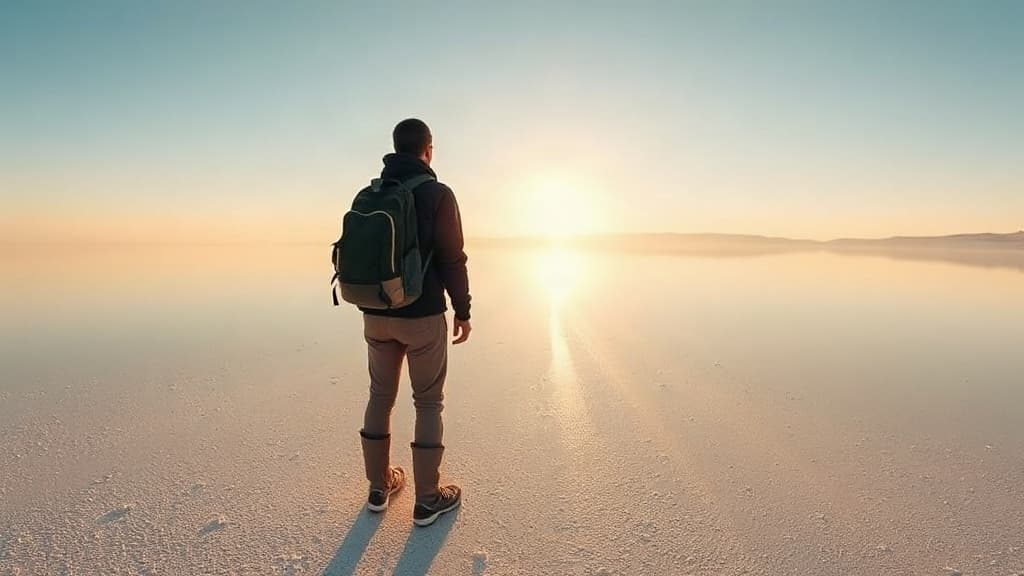
At a glance
- Visa-free since
- 1 December 2025, 90 days, no fee
- Old reciprocity fee
- US$160, now waived
- Mandatory registration
- SIGEMIG, free, before travel
- Uyuni altitude
- ~3,656m — altitude sickness is common
- 1-day tour from
- US$59 per person, ex-Uyuni
- Mirror-effect season
- Dec–Apr wet season
Salar de Uyuni — Salar de Uyuni · Uyuni town · El Alto International Airport, La Paz · Incahuasi Island
Bolivia dropped its tourist visa on 1 December 2025 for citizens of the United States, United Kingdom, the European Union, Canada, Australia, New Zealand, Japan, South Korea and most of Latin America, according to a detailed nationality-by-nationality breakdown from Bolivian travel-visa specialist LOVEBOLIVIA. For US citizens specifically, the change also erased the US$160 reciprocity fee that had applied for decades — the single biggest line item that used to sit between an American traveller and the Salar de Uyuni, the 10,582 sq km salt flat that is the reason most people fly to Bolivia in the first place. The waiver runs for stays of up to 90 days. It does not remove the paperwork entirely, though, and skipping the part that's still mandatory can mean a fine on the way out.
SIGEMIG: the form that replaced the visa stamp
Every visitor to Bolivia — visa-free or not — must now complete SIGEMIG (Sistema de Gestión Migratoria), a free online pre-registration that generates a QR code checked at the border. LOVEBOLIVIA's SIGEMIG walkthrough describes it as "a mandatory online entry form that takes about 8 to 10 minutes" and warns that travellers who skip it "may be subject to a fine when you exit Bolivia." The only official channel is the government's own domain, migracion.gob.bo, with the live form at sistemas.migracion.gob.bo/sigemig — Bolivia Hop's visa guide repeats the same warning against paying a third-party site for what is a free government form. Do it a few days before departure, once flights and your first night's accommodation are booked, since the form asks for both.
SIGEMIG is not the visa waiver — it's a separate, mandatory step for every nationality, including the ones that no longer need a visa. Bring a screenshot or printout of the QR code; don't rely on phone signal at the border.
Altitude comes before the salt flat
Most itineraries land in La Paz, and El Alto International Airport sits above 4,000m — higher than La Paz itself at roughly 3,600m. Uyuni, the gateway town for the salt flat, is at about 3,656m. All three clear the 2,400m (8,000ft) threshold the CDC cites as where altitude illness becomes a real risk, and the standard CDC advice cited by Wanderwallet's La Paz altitude guide is not to jump from low elevation straight past 2,700m (9,000ft) in a single day where it can be avoided. In practice that means spending your first 24 hours in La Paz doing as little as possible before adding a multi-day salt-flat trip on top. LatAm Travellers' 2026 safety rundown lists altitude sickness alongside petty theft and occasional road blockades from political protests as the main practical risks — not things that should cancel a trip, but worth planning around rather than discovering on day one.
What a Salar de Uyuni tour actually costs
Tours run from Uyuni town, and Bolivia Hop's Salar de Uyuni guide prices a one-day tour (roughly 10am–5pm) from US$59 per person, with the more popular three-day, two-night circuit — which adds the Eduardo Avaroa reserve's coloured lagoons and flamingos further south — running higher depending on operator and vehicle group size. Worldly Adventurer's 2026 visitor guide puts group three-day tours from around US$180 per person when starting and finishing in Uyuni. Book through an established operator with recent reviews rather than the cheapest tout at the bus terminal — Bolivia Hop's guide flags "unsafe driving practices" as the recurring complaint against bottom-tier operators, not a fringe risk.
Timing changes what you see. The reflective "mirror effect" that makes Uyuni a photography pilgrimage only happens when a shallow layer of rainwater sits on the salt, which is a wet-season phenomenon running roughly December to April — though heavy rain can also close off parts of the flat, including Incahuasi Island. The dry season, May to October, trades the mirror for clear skies and the flat's hexagonal salt-crust pattern underfoot, which is the better choice if you want to walk the crust itself rather than photograph reflections.
Reaching Uyuni without flying into La Paz first
La Paz isn't the only way in. Worldly Adventurer's visitor guide lists San Pedro de Atacama in Chile as the other common starting point, running three- or four-day tours that cross the Bolivian border partway through and finish in Uyuni town rather than starting there — a route travellers based in Chile or arriving via Santiago often prefer over the extra domestic leg to La Paz. Travellers coming up from Peru have a third option: cross-border buses, including the Peru Hop network, run from Cusco or Puno down to La Paz, from where the Uyuni tours depart the same way as if you'd flown in. Whichever direction you approach from, book the Uyuni leg itself once you're within a few days of the actual departure date — tour operators fill vehicles based on real-time group sizes, and the salt flat's own tiny Joya Andina Airport has a limited schedule of domestic flights, so most visitors still arrive overland or via La Paz rather than flying directly into Uyuni.
Staying connected without a Bolivian SIM queue
Bolivia isn't yet one of the destinations Roameo sells a dedicated local eSIM for, so check current Roameo destinations before you fly, and plan on a Bolivian SIM or hotel Wi-Fi for connectivity inside the country itself — useful in any case for pulling up your SIGEMIG QR code and confirming your tour pickup without hunting for a signal at altitude.
What to pack beyond the usual salt-flat photos
Daytime temperatures on the salt flat itself can feel mild in direct sun, but nights on a three-day tour through the Eduardo Avaroa reserve — which climbs even higher than Uyuni town toward the Chilean border — regularly drop well below freezing, and most budget tour vehicles and refuges have limited heating. Layer for a swing of several tens of degrees between midday and 3am, bring sunglasses and high-SPF sunscreen for the salt flat's reflected glare, and carry a paper map or downloaded offline map, as phone signal is intermittent once you're out on the flat itself and at the reserve's coloured lagoons further south. Coca tea and coca leaves, sold openly and legally in Bolivia, are the standard local remedy travellers reach for during the first day or two of altitude adjustment, alongside straightforward hydration and a slower first day than you'd plan at sea level.
Frequently Asked Questions
Do I still need anything besides SIGEMIG if my nationality is visa-free?
A valid passport with at least six months' validity and your SIGEMIG QR code are the two documents to have ready at the border, on top of standard onward-travel and accommodation proof immigration officers can ask for anywhere.
How much altitude sickness risk is there just visiting Uyuni without going to La Paz?
Uyuni itself sits at roughly 3,656m, well above the altitude where the CDC flags a real risk of altitude illness, so the same acclimatisation advice applies even on a La Paz-free itinerary that flies or buses in more gradually.
Is the $160 fee gone for everyone, or just US citizens?
The reciprocity fee that's been eliminated was specific to US passport holders; other visa-free nationalities such as UK, EU, Canadian, Australian and New Zealand citizens were not paying that particular fee before the December 2025 change either — the change for them is the visa requirement itself, not a fee.
Keep reading
Fiji's New 5% Tourism Tax Started September 2026: What It Costs
Fiji's 5% Tourism Services Tax began 1 September 2026 after two delays — here's who pays it, what it covers, and why booking dates matter more than usual right now.
Read more
Komodo National Park 2026: The New 1,000-a-Day Cap, Explained
Komodo National Park now caps entry at 1,000 visitors a day, booked through the SiORA app months ahead. Here's what that means for a peak-season Flores trip.
Read more
Victoria Falls 2026: New Entry Fees, the KAZA Univisa Explained
Zimbabwe's side of Victoria Falls just got US$8 more expensive per visit, and Devil's Pool is open again. Here's what a 2026 trip actually costs on both sides.
Read more