
Victoria Falls 2026: New Entry Fees, the KAZA Univisa Explained
Zimbabwe's side of Victoria Falls just got US$8 more expensive per visit, and Devil's Pool is open again. Here's what a 2026 trip actually costs on both sides.
Destinations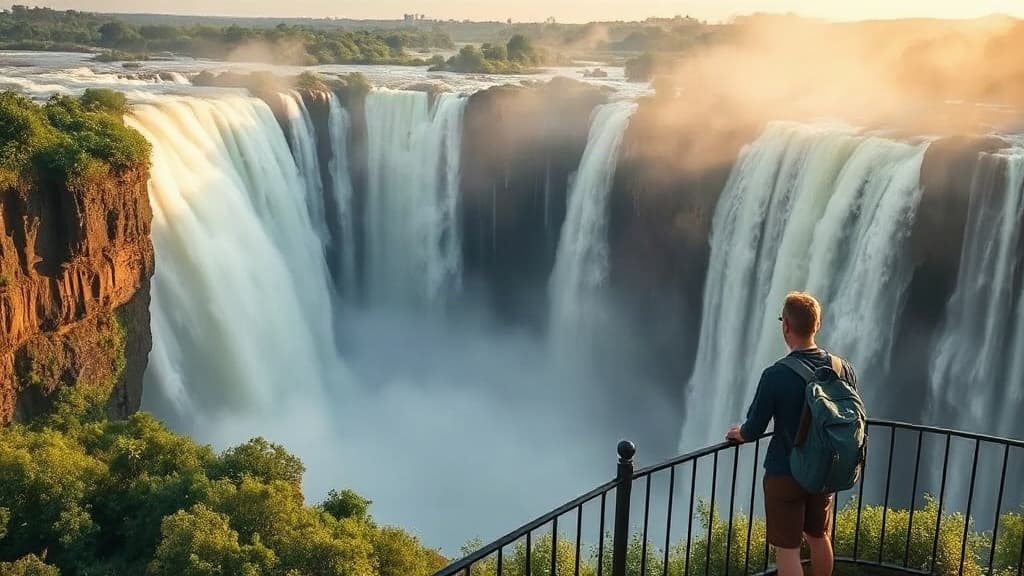
At a glance
- Zimbabwe entry (int'l)
- US$58/day, up from US$50 since 25 Jan 2026
- Zambia entry (int'l)
- US$20/day
- KAZA Univisa
- US$50, valid 30 days, Zambia + Zimbabwe
- Devil's Pool season
- Mid-August to mid/late-December
- Botswana day trips
- Covered via Kazungula Border on the KAZA Univisa
- Zimbabwe gateway
- Victoria Falls Airport (VFA)
Victoria Falls — Victoria Falls · Victoria Falls Airport (Zimbabwe) · Livingstone, Zambia · Kazungula Border (Botswana day-trip crossing)
Since 25 January 2026, an international day visitor walking into the Victoria Falls Rainforest on the Zimbabwe side pays US$58, up from US$50 — an increase Zimbabwe's national parks authority, ZimParks, tied directly to a new value-added tax now applied to tourism services. The VIP gate rose from US$150 to US$174, the moonlight rainforest tour from US$100 to US$116, and Zimbabwean day visitors keep paying US$7, unchanged. It's the kind of fee bump that's easy to miss if you priced your trip off an older blog post — and this month it lands right as Devil's Pool, the rock pool teetering on the lip of the falls, reopens for its short dry-season window.
What changed, and why it's not the same on both sides
Victoria Falls straddles the Zambezi River between Zimbabwe and Zambia, and each country runs its own park, its own gate, and now, its own price. Zimbabwe's 2026 tariff schedule — covered by NewZimbabwe.com and corroborated by the African Travel and Tourism Association — also raised conservation fees at Mana Pools, Sapi and Chewore, where international visitors now pay US$24 a day against US$8 for Zimbabwean locals and US$18 for SADC-region visitors. On the Zambian side, the international day rate has held at US$20, a straightforward US$38 cheaper than Zimbabwe's new price for essentially the same waterfall from a different angle.
Both tickets are single-entry: leave the park and you pay again to re-enter, so plan your day (sunrise photos, a midday break, an evening return) around one continuous visit rather than in and out.
Zimbabwe or Zambia — or both
The two sides aren't interchangeable. Zimbabwe's Victoria Falls Rainforest walkway gives the wider, more photogenic panoramic view and is the better pick during peak flow (roughly April to June, when spray can obscure the Zambia-side viewpoints entirely). Zambia's side is where Devil's Pool sits, a natural rock pool right at the edge of the falls that's swimmable only when the Zambezi's water level drops low enough — typically mid-August through mid or late December, varying year to year with the river. That window just opened for 2026 and runs through the rest of this year, which makes an October or November booking genuinely well-timed rather than a random date on a seasonal chart.
Serious travelers do both sides in the same trip: the KAZA Univisa (below) makes crossing the border for a half-day worthwhile rather than a hassle.
The KAZA Univisa: what it actually covers
The Kavango-Zambezi Univisa, sold by Zimbabwe and Zambia jointly, costs US$50 and is valid for up to 30 days within any 12-month period, as long as you stay inside Zambia and Zimbabwe. According to Zambia's Department of Immigration, it also covers day trips into Botswana's Chobe National Park through the Kazungula Border — a real saving if a Chobe safari is part of the plan, since it means skipping a separate Botswana visa for a single-day excursion. It's available on arrival or online at Zambia's Kenneth Kaunda International Airport, Harry Mwanga Nkumbula International Airport in Livingstone, the Victoria Falls Border post, and the Kazungula Border. Eligibility is nationality-specific — the Zambia Immigration site lists more than 50 qualifying passports, including Australia, Canada, most of the EU, Japan, New Zealand, the UK and the US, so check your own passport against the current list before assuming it applies, since KAZA eligibility isn't universal the way a Schengen-style waiver is.
If your nationality doesn't qualify for the KAZA Univisa, you'll need separate single-entry visas for Zimbabwe and Zambia — budget more time at the border and check current fees directly with each country's immigration authority before you travel.
Getting there
Victoria Falls Airport (VFA) on the Zimbabwe side is the main international gateway, with connections through Johannesburg and other regional hubs. On the Zambia side, Harry Mwanga Nkumbula International Airport serves Livingstone, a short drive from the falls and the town where most Zambia-side lodges and the KAZA Univisa's online application both sit. Which airport you fly into often decides which side you see first — and if your itinerary already includes a Botswana safari, landing in Livingstone and crossing at Kazungula keeps the logistics simpler than backtracking through Zimbabwe.
Beyond the entry ticket: the activities that actually add up
The park entry fee is the smallest line on most Victoria Falls budgets. The bridge linking Zimbabwe and Zambia carries one of the world's highest commercial bungee jumps at 111 metres, and pricing across current operator and booking-site listings clusters loosely between US$150 and US$300 depending on whether you book a solo jump or a combo with the gorge swing and zipline — enough spread across sources that it's worth getting a quote directly from the operator rather than budgeting off one figure. A Zambezi sunset cruise is a gentler add-on and more consistently priced, with standard sundowner cruises running roughly US$65-110 per person depending on the boat and operator, plus a separate US$10 river-usage fee charged by several operators on top of the ticket price. None of this requires advance booking from home the way Devil's Pool does — most lodges and tour desks in Victoria Falls town or Livingstone can book same-day or next-day.
Staying connected across three countries in a week
Both Zimbabwe and Zambia require passport registration for any prepaid SIM — Zimbabwe's carriers register every SIM to a passport before activation, and Zambia's process goes a step further, taking fingerprints at the point of sale, per tour-operator visa guides for both countries. That's a manageable errand for a single-country trip, but it turns into two separate shop visits, two passports-out moments, and two local numbers if you're crossing the border for Devil's Pool one day and a Chobe safari the next. An eSIM sidesteps the registration counter entirely for this kind of multi-country loop — worth weighing against a physical SIM in each country if your trip covers Victoria Falls, Livingstone and a Botswana day trip inside one week. Neither Zimbabwe nor Zambia currently has a dedicated country page in Roameo's destination catalog, so check device compatibility and current regional coverage before you fly rather than assuming a specific plan.
FAQ
Is Victoria Falls more expensive on the Zimbabwe side or the Zambia side?
Zimbabwe, since 25 January 2026 — international day visitors pay US$58 there against US$20 on the Zambia side, a gap driven by Zimbabwe's new VAT on tourism services rather than anything about the view itself.
What is the KAZA Univisa and does it cover Botswana?
It's a joint US$50, 30-day visa covering Zambia and Zimbabwe, and it also covers day trips into Botswana's Chobe National Park through the Kazungula Border — but not overnight stays there, and only for passport holders on Zambia Immigration's eligible-nationality list.
When is Devil's Pool open in 2026?
Typically mid-August through mid or late December, depending on the Zambezi's water level that year — it's closed during the high-water months when the river is too dangerous to swim near the edge.
Do I need a visa on top of the KAZA Univisa?
No — if your nationality is on the eligible list, the KAZA Univisa replaces separate Zimbabwe and Zambia tourist visas entirely for stays within its 30-day, two-country limit.
Can I buy one SIM card that works in Zimbabwe, Zambia and Botswana?
Not with a single physical SIM — each country requires its own passport-registered SIM from a local carrier, which is the main practical case for an eSIM if your itinerary crosses more than one of the three in a short trip.
Keep reading
Bolivia Is Visa-Free Now — Here's How to Reach Salar de Uyuni
Bolivia dropped its visa and $160 fee for US, UK, EU and Canadian travellers on 1 December 2025. Here's the SIGEMIG paperwork and real Salar de Uyuni tour costs.
Read more
Costa Rica's Parks in 2026: Poas Alert, Corcovado's New Fines
Poas Volcano has been under a green alert since May 2026 and Costa Rica now fines illegal park entry up to $10,270 — what a legal visit to Poas and Corcovado costs.
Read more
Dubrovnik 2026: How the Cruise Ship Cap Changes Your Visit
Dubrovnik now caps cruise arrivals at two ships and 4,000 passengers with an 8-hour minimum port stay. Here's what that means for timing an Old Town visit in 2026.
Read more