
Dulles Airport: Silver Line or Taxi for Your DC Hotel?
At Washington Dulles, choose Silver Line or Washington Flyer taxi by your exact hotel stop, terminal walk, fare and late arrival, using airport and Metro rules.
How-to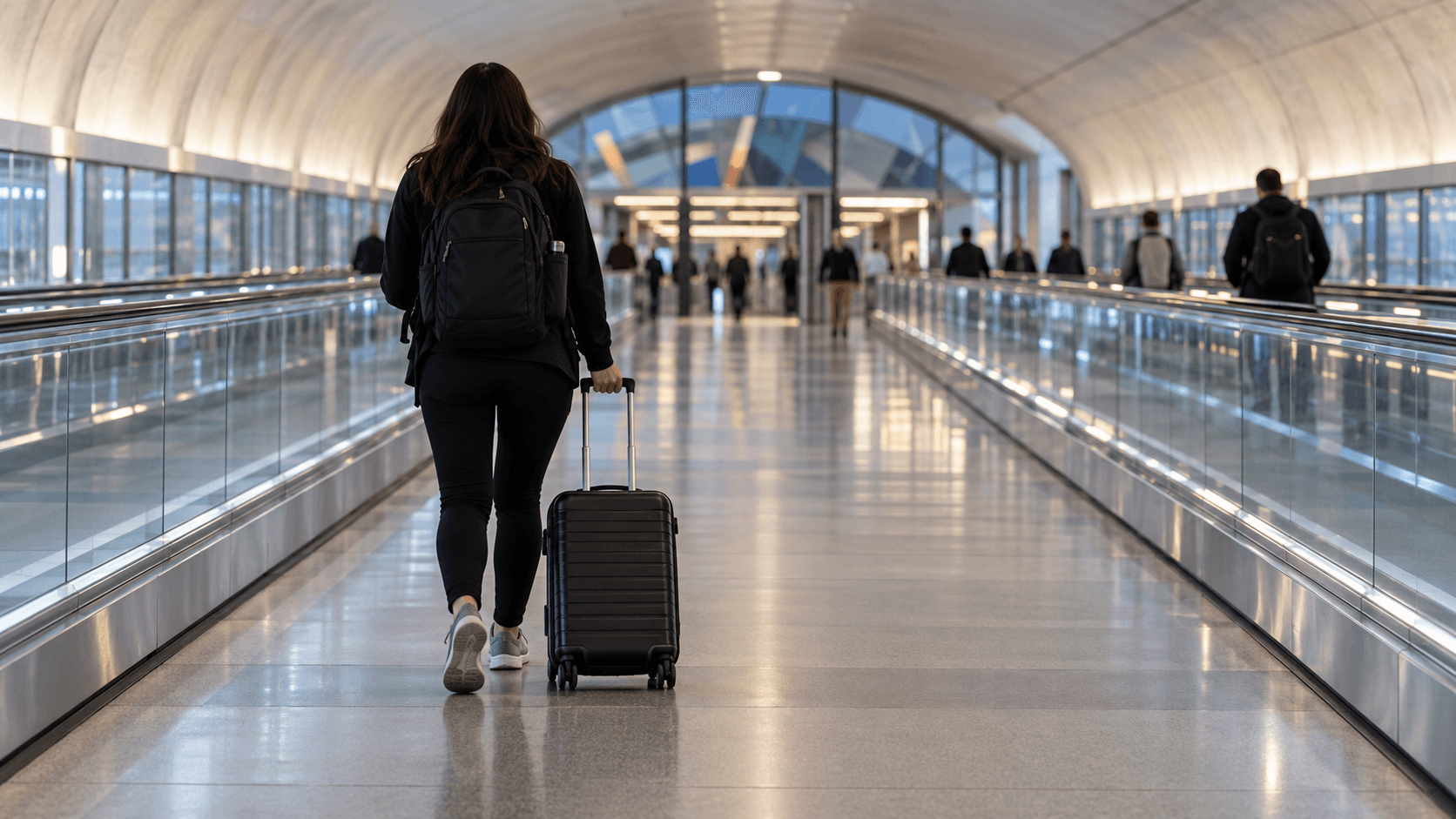
At a glance
- Metro connection
- Indoor tunnel to Silver Line station
- Station walk
- About 600 feet, roughly five minutes
- Taxi service
- Washington Flyer, 24 hours
- Taxi fee
- Additional $5 airport trip fee
Washington Dulles International Airport — Washington Dulles International Airport
A Washington Dulles arrival asks a more specific question than “is there a train?” The airport has a Silver Line Metrorail station connected to the main terminal by an indoor pedestrian tunnel, while Washington Flyer taxis collect passengers on the lower level. For an autumn or year-end trip, choose by the location of your actual hotel and the time you reach baggage claim. A downtown address near a Silver Line station can make the train straightforward. A hotel that requires a second line, a long final walk or an awkward late-night connection can change the answer. Official airport and Metro pages now give enough detail to plan the first steps without relying on an undated taxi-fare guess.
Find the rail station before comparing travel times
The airport's Silver Line guide says the station connects to the main terminal through an indoor pedestrian tunnel with moving sidewalks. Signs lead from the terminal to the tunnel, which also links with Parking Garage 1. The airport's Silver Line FAQ calls the walk approximately 600 feet or about five minutes and confirms elevators at the station and main terminal. WMATA's airport guide calls it about a six-minute walk. These are consistent planning estimates, not a promise for someone with heavy luggage or a mobility constraint. Include the route from your baggage carousel to the tunnel and the time to find your platform.
WMATA's airport guide, updated in May 2026, says Dulles is directly connected to the Silver Line. A Silver Line journey can reach places such as Metro Center, Farragut West and other stops on the line without changing trains; confirm the destination shown on the train and use the operator's current map for your exact station. If your hotel is near a different line, include a transfer and the final street-level route. A Metro station named for a neighbourhood does not tell you whether the hotel entrance is two easy blocks away or a longer walk across a busy road. The best rail itinerary is the one whose complete final section is manageable for your group.
Price the rail journey with the correct day and time
The Dulles FAQ says rail fares depend on travel time and distance. It gives weekday fares ranging from $2.25 to $6.75 and lists Metro Center at $6.75, with lower evening and weekend ranges. Those figures are dated to what the airport currently publishes; the operator's trip planner is the appropriate place to calculate your own station pair and time. Do not treat $6.75 as a universal Dulles fare or assume that the minimum applies at any hour. Also check any onward bus or separate rail leg before comparing the cost with a single taxi vehicle.
The airport says riders can tap a contactless credit or debit card to enter and exit Metrorail faregates. Its own guide instructs passengers to use the same card or device for both taps. If you use a mobile wallet, keep that device powered through the journey; changing to the physical version of the card midway can cause payment confusion. A SmarTrip pass or card may be useful for a longer Washington stay, but choose one on the basis of the trips you will actually make, not because an airport blog claims everyone needs a pass. The airport FAQ says fare vending machines in the mezzanine can sell 1-, 3- or 7-day passes through SmarTrip. Check the live fare page and terms before buying.
How the Washington Flyer taxi works
The airport's Washington Flyer taxi instructions say the service operates 24 hours and that travelers leaving Dulles need no reservation. Follow Ground Transportation or Taxi signs from the terminal to the lower level, down the ramp toward Door 1 or Door 7, where staff are available. The airport's general FAQ also describes taxi queues reached from the arrivals level, so rely on current signs and staff if a door assignment is temporarily different. Non-Washington Flyer taxis require advance arrangements for airport pickup; do not join an unofficial solicitation in the terminal expecting it to be the ordinary airport cab queue.
Washington Flyer taxis are metered or can be prepaid online. The airport's taxi service standards state that an additional $5 trip fee applies to all taxi fares to or from Dulles, effective January 10, 2024, and that a $2 processing fee applies to prepaid online bookings, effective September 10, 2024. Those are additions or booking conditions, not a fixed fare to central Washington. The same page says the rates are subject to change, so use the current airport price guidance or an actual reservation quote for a budget. Tolls on nearby roads may also affect a journey. A taxi's door-to-door convenience is real, but there is no truthful single fare for every DC hotel or every traffic period.
Work through a hotel-address scenario
Consider a solo traveler staying beside a Silver Line station and arriving while trains are running. A walk through the indoor tunnel, a station-specific fare and a short walk from the exit can make Metro a simple choice. Now consider a group of three with two large cases and an address far from a Silver Line stop. Even if the rail fare per person looks modest, the group must multiply it by the riders and perhaps add a transfer or another vehicle. A Washington Flyer taxi can take them to the actual entrance, with a metered price shared by the party. That does not prove the taxi is cheaper; it makes clear what the extra cost buys. Neither traveler should decide from an isolated airport-to-Metro-Center fare if Metro Center is not their destination.
For a hotel near a Silver Line stop but with an inaccessible station exit, the arithmetic is secondary. Check WMATA's current elevator status and the hotel's approach. The airport confirms elevators at its station and terminal, while Washington Flyer says wheelchair-accessible taxis can take one passenger in a wheelchair plus three additional passengers. Request the correct vehicle when needed, and check actual availability with the ground transportation representative. A traveler with a stroller may find the moving walkway and elevators manageable; another may prefer one road vehicle. The meaningful comparison is the full trip for the people in your party.
Late flights require a station-specific service check
The Dulles FAQ lists broad Metrorail opening hours, but explicitly warns that the first and last trains serving Dulles differ from general system open and close times. That warning matters more than a memorized “Metro closes at midnight” rule. Use the Dulles station's first-and-last-train page or WMATA's current trip planner for the direction you need, on the actual day of arrival. A flight landing just before the last train may still leave you too late after immigration, baggage collection and the tunnel walk. Plan against the time you can reach the platform, not the published landing time. A delayed flight can also change the decision entirely.
Washington Flyer states its taxis serve the airport 24 hours, which gives a road fallback after the last useful train. However, a queue, suitable vehicle availability and road travel still need checking on arrival. Save the hotel address and a current route result before departure so you can compare again when you have cleared baggage claim. If you use your phone to open WMATA alerts, a fare page or the hotel location away from terminal Wi-Fi, compare a United States travel eSIM ahead of travel and verify device compatibility. A reseller plan cannot promise a particular speed or uninterrupted local signal.
Choose in a short sequence at the terminal
First, search the hotel's exact address in WMATA's trip planner and identify the nearest practical station, any transfer and the final walk. Second, check whether a train in the correct direction still serves Dulles after your likely baggage-claim time. Third, calculate the fare for each rider using the current operator result; compare it with a taxi's metered arrangement, the airport trip fee and possible tolls, not with a made-up flat quote. Fourth, factor in luggage and accessibility. For Metro, follow the indoor tunnel signs and tap the same card or device at entry and exit. For a taxi, follow the lower-level Ground Transportation signs to the Washington Flyer queue and give the driver the exact address. This sequence turns a vague “rail or cab” question into a decision based on the actual journey you need.
Frequently Asked Questions
Is the Silver Line station inside the Dulles terminal?
It is connected by an indoor pedestrian tunnel with moving sidewalks, rather than being at the baggage carousel. The airport estimates the walk at about 600 feet or five minutes; allow more if you need it.
Does the Metro Center fare apply to every DC hotel?
No. The airport lists Metro Center as one example. Metrorail fares vary with station pair, day and time. Use WMATA's current trip planner for your exact destination.
Do I need to book a Washington Flyer taxi before arrival?
The airport says no reservation is needed for departing travelers and states that Washington Flyer serves Dulles around the clock. Follow the official taxi signs and staff directions at the lower level.
Keep reading
SEA Airport: Link Light Rail or Taxi to Your Seattle Stay?
At Seattle–Tacoma airport, compare Link light rail with a metered taxi using your hotel stop, luggage, arrival time and the official station and pickup directions.
Read more
Empire State Building: Choose the 86th or 102nd Floor
Compare the open-air 86th Floor with the enclosed 102nd Floor, then separate deck access from Flex and Express features before booking your New York visit.
Read more
Yosemite in Late October: Can You Drive Tioga Road?
Check the current Tioga and Glacier Point road status, October overnight-parking rule and eastbound fallback before committing to a late-season Yosemite drive.
Read more