
Empire State Building: Choose the 86th or 102nd Floor
Compare the open-air 86th Floor with the enclosed 102nd Floor, then separate deck access from Flex and Express features before booking your New York visit.
Destinations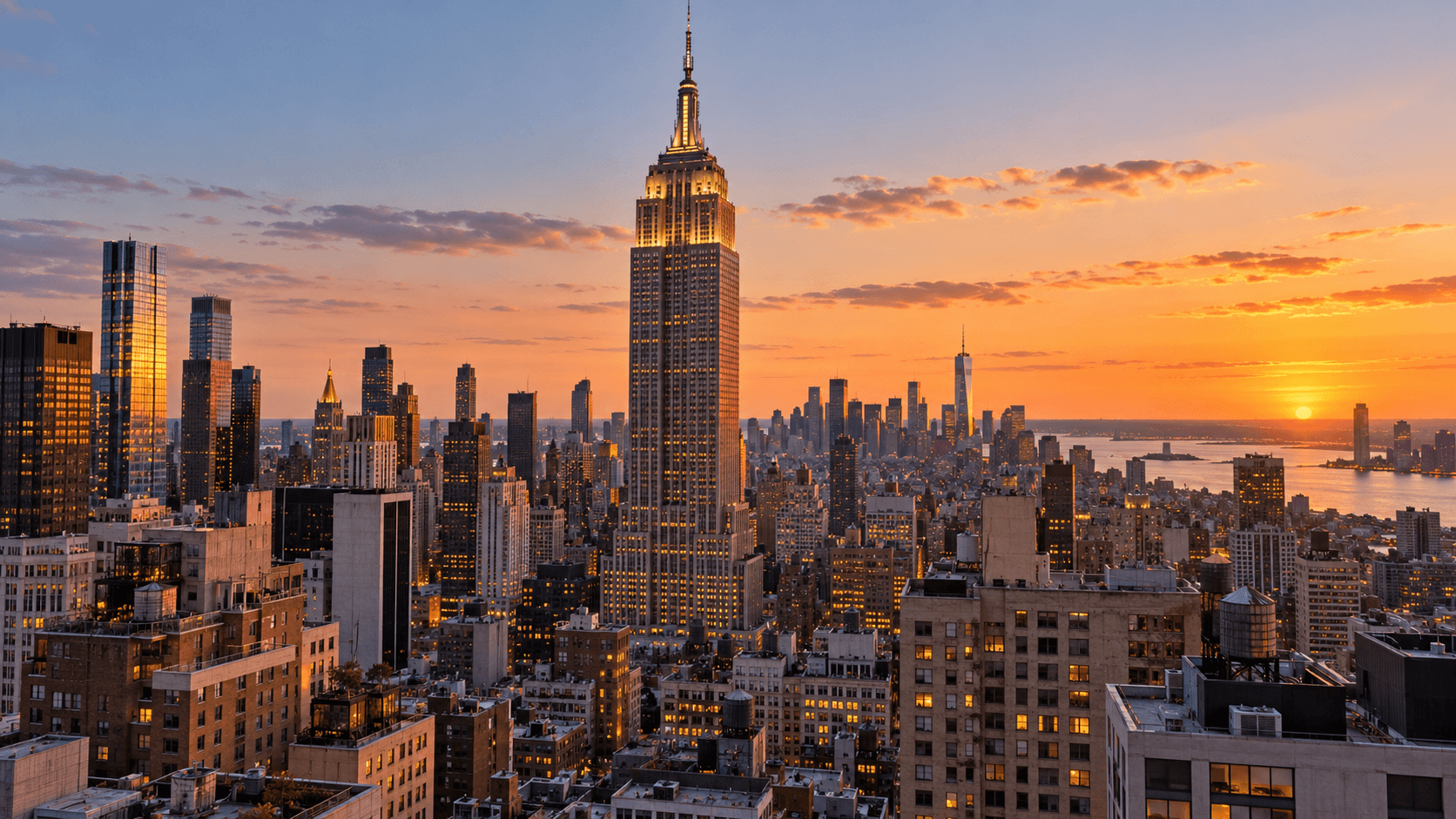
At a glance
- Main Deck
- Open-air 86th Floor
- Top Deck
- Enclosed 102nd plus 86th Floor
- Booking charge
- $5 per transaction on official pages
Empire State Building — Empire State Building
Autumn New York visitors choosing an Empire State Building ticket face a specific decision: is the open-air 86th Floor enough, or is the enclosed 102nd Floor worth the higher Top Deck fare? The building's Main Deck page and Top Deck page show the answer in the inclusions. Main Deck covers the 86th Floor. Top Deck covers both the 86th and 102nd. The difference is chiefly the kind of viewing experience, not whether the familiar museum exhibits are included.
What you gain on the 86th Floor
The 86th Floor is the building's open-air observation deck. You can step outside and look around the Midtown skyline, with the outdoor setting making city sounds and weather part of the visit. The building describes its views as 360 degrees. It also lists the Art Deco lobby photo opportunities and exhibitions in the standard visit. Its observatories and exhibits page places the exhibit galleries on the second and 80th floors and says they are open to ticket holders. If your mental picture is the classic outdoor railings and skyline, the Main Deck is the direct purchase.
An 86th-only ticket does not grant the 102nd-floor room. That distinction is easy to miss when resellers display a photograph of the entire skyscraper beside a generic "Empire State Building" label. Read the named deck in the product details before paying. The building's official Main Deck page describes the 86th as open-air, while its Top Deck page lists both levels. Comparing those exact inclusions is more reliable than ranking tickets by labels such as basic, premium or best value, which can mean different things across sellers.
What the 102nd Floor adds
The 102nd Floor is an enclosed observatory with floor-to-ceiling glass, reached through a glass elevator. The official Top Deck page includes an 86th Floor visit as part of the same ticket. You can therefore experience the outdoor deck and then the higher indoor view on one Top Deck booking. The upper room changes the composition of a photo: you are higher and protected from wind, but looking through glass. A visitor who strongly prefers an unobstructed outdoor photograph may find the additional level less valuable than someone who wants the elevated indoor panorama.
The building states the 102nd is about 1,250 feet above street level, compared with about 1,050 feet for the 86th. Those heights explain the different perspective, but they do not mean the upper ticket doubles the view. The same city remains beneath you. Haze, cloud, rain and sun angle determine what is visible and how photos turn out on either deck. The building promotes long-distance views on clear days, a condition worth taking literally. Do not pay extra on the assumption that a higher floor will remove bad visibility.
Compare a real checkout, not a fixed difference
Prices vary by visit date, time and ticket type. When checked in October 2026, the official Main Deck page displayed a starting price of $46, while Top Deck displayed a starting price of $79; each also stated a $5 booking charge per transaction. These are advertised starting figures, not a quote for your chosen slot or party. They should not be used to calculate an exact upgrade cost for a different date. Open both official pages, select the same desired visit time if available, and compare the checkout totals including any charge before deciding.
A useful comparison asks what the extra spending buys your group. If four travelers mainly want the outdoor 86th Floor, multiplying an added per-person fare for an upper room nobody especially wants is a weak choice. If one member has dreamed of the enclosed upper view and the group has time to visit both levels, the Top Deck can be the right splurge. Either way, the second-floor and 80th-floor exhibits are part of the observatory journey, so do not count them as a Top Deck-only benefit when comparing the offers.
Worked scenario: an October sunset booking
Suppose your party wants sunset photos in Midtown. First check the building's current operating hours and choose an actual available ticket slot; hours vary by season, so a general search result is insufficient. Next ask whether the outdoor atmosphere is the main goal. If yes, reserve the 86th Floor at a time that lets you enjoy the changing light without rushing. If the group wants two viewpoints and a sheltered upper room, compare the Top Deck price for the same period. Sunset demand may affect availability and price, so make the decision on the live checkout rather than an old "from" rate.
Now suppose the forecast is poor. A Top Deck ticket provides an enclosed space, but glass does not guarantee a clear skyline. The 86th Floor remains outdoors and the building says it operates through rain, shine or snow. Rather than assuming a refund or free weather change, read the terms presented for the exact ticket you choose. The official pages advertise rescheduling on certain products, yet the details of any change are set by that purchase. If the trip has flexible days, pick a time when you can act on the actual forecast instead of treating the premium level as weather insurance.
Do not confuse higher access with line skipping
Top Deck describes where you may go. Express describes a different benefit: bypassing certain lines. The official Main Deck FAQ says Express options exist for either the 86th Floor or both observatories, and that they bypass exhibits and elevator lines. A standard Top Deck ticket is therefore not the same purchase as an Express Pass. If queues are the reason you are considering paying more, compare the Express inclusions explicitly. Conversely, someone interested in the building's exhibits may not want a product whose fast route skips them.
The building also sells a Flex option for visiting the 86th Floor at a chosen time on the selected date. That solves a scheduling problem rather than adding the 102nd Floor. Distinguish the three questions before checkout: which floor, how fixed a time, and whether to bypass lines. A traveler can otherwise spend on a higher viewpoint when the real need was timing flexibility, or buy a flexible 86th-floor ticket while expecting upper-floor admission. The official ticket descriptions make the Flex scope clear.
Plan the rest of the visit around the ticket you choose
The observatory visit includes more than an elevator ride. Give the galleries time if the construction history and Art Deco details interest you, then decide how long you want at the view. For a short New York stopover, an 86th Floor ticket can deliver the signature experience without making the upper room an obligation. For a deliberate architecture outing, both levels can offer a useful comparison between outdoor and enclosed views. That is an editorial judgment based on the stated inclusions, not a claim that one deck is universally better.
Keep the booking confirmation, venue directions and return route available offline. For maps and messages during the broader trip, browse Roameo destination plans and check your device on the compatibility page before purchase. Roameo resells mobile connectivity through local networks, so performance depends on location, network and handset. The observation deck ticket itself is a separate transaction with the building; an eSIM purchase does not affect entry or queue priority.
A short decision checklist at checkout
Before paying, read the product name and verify that it explicitly names every floor you expect to visit. Then confirm your date, entry time, total for the entire party and whether the charge shown is per person or per transaction. Keep the official confirmation accessible. If you selected Main Deck, plan around an outdoor view and a visit to the included galleries. If you selected Top Deck, allow time for both levels and remember that the glass-walled upper space will produce a different photograph from the open-air deck. If you selected Express or Flex, reread that product's separate benefit so you do not confuse speed or scheduling freedom with added floors.
A useful final test is to imagine that you reach the 86th Floor and already feel satisfied. Would the 102nd still add an experience you value? For some visitors, seeing the skyline without glass and hearing Midtown from the outdoor deck is the memorable part. Others want a calmer enclosed panorama and the novelty of moving between two different heights. The official product pages provide the access facts; this preference test supplies the decision. It also protects a short-trip visitor from choosing a larger ticket simply because its label sounds more complete.
Frequently Asked Questions
Does a standard 86th Floor ticket include the 102nd Floor?
No. The official Main Deck product covers the open-air 86th Floor. The Top Deck product specifically includes both 86th and 102nd Floors.
Is the 102nd Floor outside?
No. The building describes the 102nd Floor as enclosed with floor-to-ceiling glass. The 86th Floor is the open-air deck.
Does a Top Deck ticket automatically skip lines?
No. Floor access and Express entry are separate product features. Check the exact official ticket inclusions if faster entry is your priority.
Keep reading

Yosemite in Late October: Can You Drive Tioga Road?
Check the current Tioga and Glacier Point road status, October overnight-parking rule and eastbound fallback before committing to a late-season Yosemite drive.
Read more
Salem Halloween 2026: Tickets, Trains and Road Closures
Salem has cancelled its 2026 city shuttle and published Halloween road closures. Here is the ticket, train and attraction plan to use instead this October.
Read more
Angels Landing Winter Permits: Which Lottery to Use
Compare Zion's seasonal and day-before Angels Landing lotteries for a December-to-February hike, with the October cutoff, UTC conversion and group cost.
Read more