
Edinburgh in August 2026: What the New Visitor Levy Costs
Edinburgh's 5% visitor levy took effect on 24 July 2026, days before the Fringe, Tattoo and International Festival fill the city. Here's what it adds to your bill.
Destinations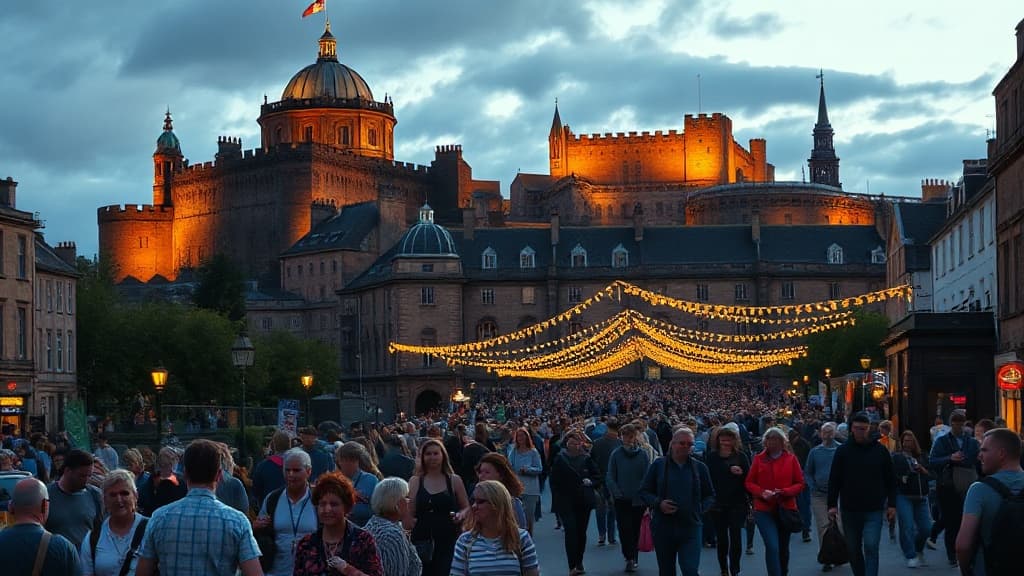
At a glance
- Visitor levy
- 5% of the accommodation cost
- Live since
- 24 July 2026
- Applies retroactively to
- Bookings made since 1 October 2025
- Fringe and Tattoo
- 7-31 August 2026
- Projected revenue
- Up to £50m a year
Edinburgh — Edinburgh · Edinburgh Castle
On 24 July 2026, a 5% charge landed on every paid overnight stay in Edinburgh — hotels, holiday lets, short-term rentals and licensed home-sharing properties alike. Eleven days later, the city's three biggest festivals open together: the Royal Edinburgh Military Tattoo and the Edinburgh Festival Fringe both run 7-31 August 2026, and the Edinburgh International Festival runs 7-30 August. If you are booking a room for any of them now, you are booking into the first festival season the levy has ever applied to.
What the levy actually charges
Scotland's Visitor Levy Act gives local councils the power to add a percentage charge on overnight accommodation, and Edinburgh is the first Scottish city to switch it on. The mechanics, confirmed by the city's own rollout coverage, are specific:
- The rate is 5% of the accommodation cost, charged at the same rate every day of the year — there is no separate festival-season rate, though festival-season room rates are themselves higher, so the cash amount rises with them.
- It applies to all paid overnight accommodation in the city: hotels, guest houses, holiday lets, short-term rentals and residential properties licensed for home-sharing or letting.
- It is capped at five consecutive nights — book a two-week stay and you only pay the levy on the first five.
- It went live for stays taking place on or after 24 July 2026, but it applies retroactively to any booking made since 1 October 2025 for a stay in that window — so a room booked in late 2025 for August 2026 still carries the charge.
A concrete example from the city's own briefing: a £100-a-night stay picks up an extra £5 (roughly US$6.75 at the 1 August 2026 GBP/USD rate of 1.3483). Council projections put the levy on track to raise up to £50m a year, earmarked for culture, events, festivals, infrastructure and visitor management — the same civic budget lines that make the festivals possible in the first place.
| Nightly room rate | Levy added (5%) | Approx. in USD |
|---|---|---|
| £80 | £4.00 | ~US$5.40 |
| £150 (typical Fringe-week rate) | £7.50 | ~US$10.10 |
| £250 (peak Tattoo-week hotel) | £12.50 | ~US$16.85 |
Five festival nights at £150 a night means £750 in room cost plus £37.50 in levy — a small line item against everything else a festival week costs, but one that was not on last year's bill and is worth budgeting for explicitly rather than discovering at checkout.
Three festivals, one week, one city
The overlap this year is tight. The Royal Edinburgh Military Tattoo runs on the Castle Esplanade from 7 to 29 August 2026, and tickets for it are sold separately from any Fringe show and typically sell out months ahead. The Edinburgh Festival Fringe, the open-access arts festival that has made the city's name, runs 7 to 31 August 2026 with more than 4,000 shows across the city's venues. The Edinburgh International Festival, the curated classical-music-and-theatre programme that predates the Fringe, runs 7 to 30 August. All three land on the same opening weekend, which is the single most expensive and most fully booked stretch Edinburgh has in any given year — accommodation for the first weekend of August tends to sell out before the levy or anything else about the trip matters.
Practically, that means the levy is the least of the planning problems if you are booking now for opening weekend. Rooms further from the Old Town, or a base in Leith or Portobello with a short bus or tram ride in, remain available later into the summer than anything inside the Royal Mile footprint.
Getting into the UK: the ETA most travellers now need
Separately from the accommodation levy, most visitors entering the UK for a short stay now need an Electronic Travel Authorisation before they travel — including nationals of the US, EU countries, Canada and Australia, among others. The current fee is £20 (about US$27), it covers multiple entries over up to two years or until the passport expires, and each stay it covers can run up to six months. British and Irish passport holders, and anyone with existing UK immigration status, are exempt. Since 25 February 2026 the requirement has been enforced at the carrier level — an airline can refuse to board a passenger who has not obtained one — so this is not something to leave for the departure gate. Apply through the official gov.uk process rather than a third-party site, which can charge well above the government fee for the same authorisation.
Staying connected through a city at festival capacity
Festival crowds put real load on venue and street-level mobile networks in August, particularly around the Royal Mile, the Grassmarket and the Castle Esplanade during Tattoo performances. A UK eSIM bought before you fly activates the moment you land, without a stop at an airport SIM counter that is itself busier than usual during festival season. Check that your handset supports eSIM on the compatibility checker, then compare UK options on Roameo's destination plans — Roameo resells data over existing UK carrier networks rather than operating them, so treat coverage in a packed festival crowd the way you would treat any dense-urban network, not as a guarantee.
Booking around the levy, not just for it
The levy itself is a small, fixed percentage — it will not be the reason a festival trip to Edinburgh is expensive or cheap. What it does change is that the headline room rate you see is no longer the final number, in the same way a hotel tax works in many other cities. Add 5%, capped at five nights, to whatever accommodation total you are comparing, and budget the UK ETA fee once per traveller as a separate, one-off cost before you ever look at a room. Both charges are small individually; stacked against festival-week room rates that are already the highest of Edinburgh's year, they are worth having in the total before you book rather than after.
Frequently Asked Questions
How much is Edinburgh's new visitor levy?
5% of the accommodation cost, added to hotels, holiday lets, short-term rentals and licensed home-sharing stays. It applies to the same rate every day of the year and is capped at five consecutive nights, so longer stays only pay the levy on the first five nights.
When did the Edinburgh visitor levy start?
It came into effect on 24 July 2026, but it also applies to any booking made on or after 1 October 2025 for a stay taking place on or after that date — so a booking made months in advance can still carry the charge.
What festivals are on in Edinburgh in August 2026?
The Royal Edinburgh Military Tattoo and the Edinburgh Festival Fringe both run 7-31 August 2026 (the Tattoo to 29 August), and the Edinburgh International Festival runs 7-30 August. All three open on the same first weekend of August, which is the city's most fully booked stretch of the year.
Do I need an ETA to visit the UK for the festivals?
Most visitors who do not hold a British or Irish passport and do not already have UK immigration status need an Electronic Travel Authorisation, currently £20, before they travel. It covers multiple entries for up to two years and each stay can run up to six months. Since 25 February 2026, airlines can refuse to board a passenger without one, so apply well before your flight.
Keep reading
Glastonbury Festival 2027: October Ticket Sale Guide
Glastonbury's 2027 ticket sale starts on 1 October. Check registration status, exact prices, queue rules, coach conditions and travel planning before the sale.
Read more
Christmas at Kew 2026: Tickets, Dates & Gate Guide
Christmas at Kew has nine cheaper nights, three gates and no routine refunds. Use the 2026 prices, entry cutoffs and transport rules to book with care.
Read more
Tower Bridge Lift: Free View or Paid Walkways?
Use the official lift timetable to decide whether to watch Tower Bridge open from the riverside or book its glass-floor walkways during an October visit.
Read more