
Faroe Islands 2026: The New Nightly Fee, and Why EU Roaming Fails
Every overnight guest now pays a DKK 20 nightly fee, and EU roaming plans don't cover the islands at all. Here's what changed, what it costs, and how to see them.
Destinations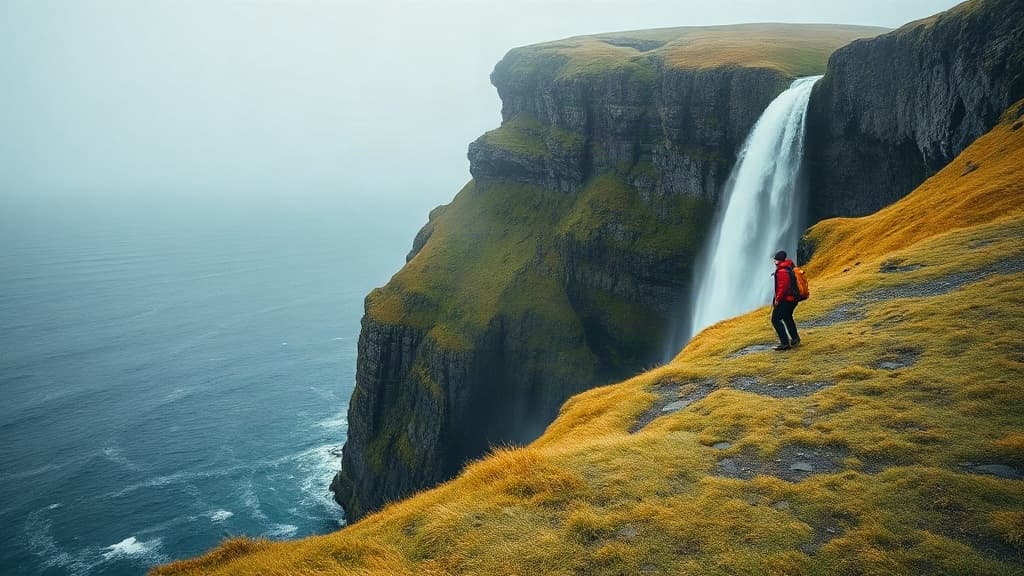
At a glance
- Nightly fee
- DKK 20 (~USD 3) per guest 16+, since 1 Feb 2026
- Cruise fee
- DKK 65 (~USD 10) flat per visit
- EU roaming
- Does not apply — Faroe Islands is outside the EU/EEA
- Gateway
- Vágar Airport (FAE), 45 min from Tórshavn
- Copenhagen route
- Atlantic Airways + SAS, 2+ flights daily, 2h15m
- Bird cliffs season
- Vestmanna boat tour runs through 30 Sept
Tórshavn — Tórshavn · Vágar Airport (FAE) · Múlafossur Waterfall, Gásadalur · Saksun · Kirkjubøur · Trælanípa / Sørvágsvatn · Vestmanna Bird Cliffs
Since 1 February 2026, every overnight visitor to the Faroe Islands aged 16 or over has paid a new sustainability fee — DKK 20 (roughly USD 3) per night, added by the accommodation provider, either on the final bill or on arrival. Cruise passengers pay a flat DKK 65 (about USD 10) per visit instead. The charge is backed by a law the Faroese Parliament passed in 2024, and the money funds hiking-trail maintenance, protection of fragile landscape, and the kind of visitor-flow planning that keeps eighteen wind-scoured islands of roughly 54,000 residents from being overrun by roughly triple that many visitors a year, according to Nonni Travel's reporting on the new fee.
It is a small line item next to the flight. The bigger cost most travellers don't see coming is their phone.
The EU roaming trap: Danish territory, but not the EU
The Faroe Islands are an autonomous nation within the Kingdom of Denmark, which makes it easy to assume a Danish or EU SIM just works there the way it does crossing from Germany into France. It doesn't. The islands are not part of the EU or the EEA, and the EU's "Roam Like at Home" rules — the ones that let an EU SIM use its home data allowance anywhere in the bloc — stop applying the moment you land at Vágar. The islands are also outside Schengen, which is the same reason a Schengen visa alone won't get you through immigration either (more on that below).
Some European carriers quietly include the Faroe Islands in their EU zone anyway, but most don't, and the ones that charge standard international roaming rates charge a lot — travellers have reported bills running to thousands of euros per gigabyte on the wrong plan, according to a detailed breakdown of Faroese roaming pitfalls, and a roaming-rate comparison for the islands confirms the same gap: check your carrier's Faroe Islands policy specifically, don't assume the "EU" label on your plan covers it. A regional eSIM bought before departure sidesteps the question entirely — browse Roameo's Europe eSIM plans and land with data already working, no carrier fine print to untangle at the airport.
Buy and install the eSIM before you fly — Vágar Airport's terminal wifi is workable but not something to rely on for setup, and you'll want maps working the moment you're driving the single-lane tunnels toward Tórshavn.
Getting in: passport rules and the flight itself
Because the Faroe Islands sit outside Schengen, EU/EEA, UK, Swiss and Liechtenstein nationals can enter with just a passport or national ID card, but travellers who need a visa for Denmark or the wider Schengen area need a separate visa that specifically names the Faroe Islands — a standard Schengen visa does not carry over, per the official visa and passport guidance. Apply through a Royal Danish Embassy or Consulate in your country of residence, and do it early: visa processing for a nation this small isn't built for last-minute requests.
Vágar Airport (FAE) is the only way in by air, a 45-minute drive from Tórshavn through two sub-sea tunnels. Atlantic Airways and SAS both fly from Copenhagen at least twice a day year-round, rising to four times daily in peak summer, a 2-hour-15-minute hop; Atlantic Airways also runs Edinburgh–Vágar twice a week from March to December, 1 hour 30 minutes in the air — routes confirmed on Atlantic Airways' Copenhagen route page and its Edinburgh route page. There's no rail or road link — every visitor arrives by air or by the Smyril Line ferry from Denmark or Iceland.
What to see, and what it costs
The postcard shot most people are chasing is Múlafossur, a waterfall that drops straight off a sea cliff into the Atlantic beside the village of Gásadalur — free to view, a short walk from the car park, and best in the low afternoon light of autumn rather than the flat midnight-sun glare of July. Saksun, a hamlet built around a tidal lagoon that was cut off from the sea by a 1600s storm, and Kirkjubøur, the medieval seat of the Faroese bishopric with the roofless 13th-century Magnus Cathedral, both sit on Streymoy and are free to walk around outside opening hours for any ticketed buildings.
The hike to Trælanípa cliff and the lake Sørvágsvatn — which appears to hang above the ocean from the right angle — is unguided and free, though the car park charges a small parking fee collected by the local landowners' association. The one paid excursion worth budgeting for is the boat trip under the Vestmanna bird cliffs: a 6-hour tour for 1,995 DKK (roughly USD 310) that sails beneath nesting puffins and guillemots, but it only runs through 30 September, per the operator's own booking page — anyone travelling this autumn is inside the last two weeks of the 2026 season, and next year's opening won't come around again until May 2027.
Every two years the islands also run "Closed for Maintenance," where popular trails shut to ordinary tourists for a long weekend so volunteer travellers can rebuild them instead — 2026's edition covered ten separate path and viewpoint projects across islands including Koltur, Nólsoy and Suðuroy, running 30 April to 2 May, according to the official projects page. It's not something you can join on short notice — past editions have filled their volunteer slots within 48 hours of opening — but it's worth knowing the trails you're walking in September were likely rebuilt by someone who volunteered for exactly that a few months earlier.
When to go
Late September through October is the trade-off window: the Vestmanna boat season is closing, but the tour buses have thinned out, accommodation prices ease from the July-August peak, and the long, dark evenings from October onward bring a real shot at the aurora on clear nights, without the extreme winter storms that can cancel Atlantic Airways' shorter routes outright. If the puffin cliffs are the priority, book before the season ends; if scenery and quiet trails matter more, the shoulder season delivers both, sustainability fee and all.
FAQ
Do I have to pay the new Faroe Islands fee separately, or is it added automatically?
Accommodation providers collect it themselves and add it to your bill — some fold it into the total at booking, others charge it on arrival, so it can look different depending on where you stay. Cruise operators handle the DKK 65 per-visit charge similarly.
Can I use my EU phone plan's data in the Faroe Islands?
Only if your specific carrier has chosen to include the islands in its EU zone, which many haven't — the EU's Roam Like at Home rules don't apply here by default because the Faroe Islands are outside the EU and EEA. Check your carrier's terms for the Faroe Islands by name before you fly, or use a regional eSIM instead of guessing.
Do I need a visa to visit the Faroe Islands?
EU/EEA, UK, Swiss and Liechtenstein nationals can enter with a passport or national ID and no visa. If you need a Schengen visa for Denmark, note that a standard Schengen visa does not cover the Faroe Islands — you need a visa that specifically names the islands, applied for through a Royal Danish Embassy or Consulate.
How do I get to the Faroe Islands?
Fly into Vágar Airport (FAE), served by Atlantic Airways and SAS from Copenhagen at least twice daily year-round, and by Atlantic Airways from Edinburgh twice weekly between March and December. The Smyril Line ferry from Denmark or Iceland is the only sea option.
Keep reading

Where to Travel in Autumn 2026: Seven Shoulder-Season Picks
Autumn is the value window for Japan, Greece, Italy and China. Here is where to go between September and November 2026, and what changed at the border.
Read more
Tomorrowland Winter 2027: Package or Ticket Guide
Compare what Tomorrowland Winter's package and festival-only options include, then use the 10 October sale times without mistaking a listing for availability.
Read more
How to Buy Official Monaco Grand Prix 2027 Tickets
Verify all three official 2027 Monaco Grand Prix ticket channels, including the new mobile app, and use the first Sprint format to choose your day wisely.
Read more