
Fernando de Noronha, Brazil: 2026 Entry Fees and Card Rule
Fernando de Noronha charges R$384 marine-park entry plus a daily R$105.79 tax — and foreign cards can't pay that tax online. Here's the 2026 breakdown.
Destinations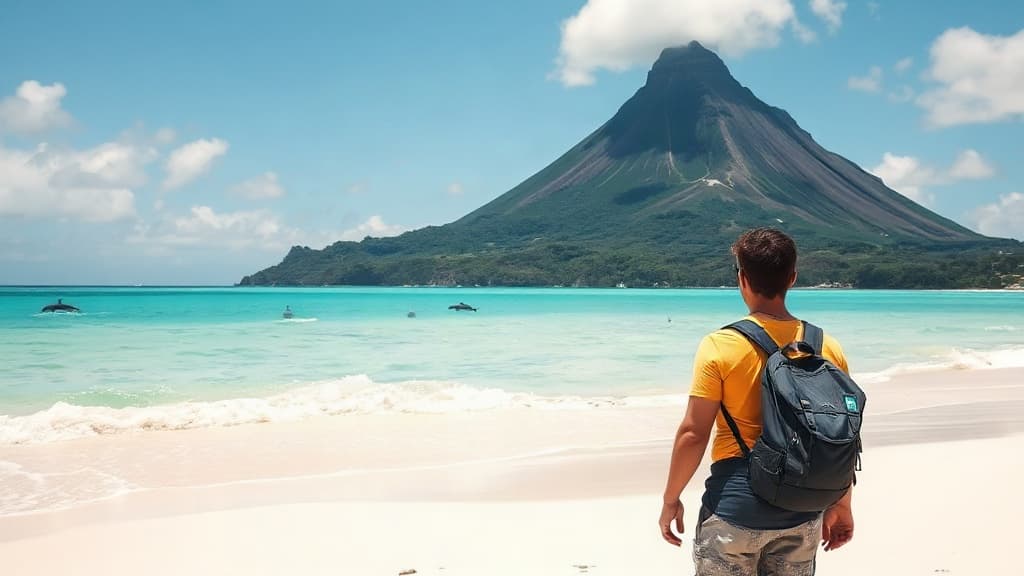
At a glance
- Marine park entry (foreign)
- R$384 (~US$75), valid 10 days
- Daily preservation tax (TPA)
- R$105.79/day (~US$21/day) per visitor
- Foreign card TPA payment
- Airport counter only, not the online portal
- Only gateways
- Recife (REC) or Natal (NAT), no direct international flights
- Best visibility window
- Aug-Dec dry season, up to ~40m underwater
- Trail access
- Guided, ~4-hour low-tide booking windows
Fernando de Noronha — Fernando de Noronha · Praia do Sancho · Morro do Pico · Recife Guararapes Airport (REC)
Land on Fernando de Noronha with a credit card issued outside Brazil and you cannot pay the island's daily preservation tax online before you fly. As of this month, the district administration's own guidance still routes any foreign-issued card to the airport counter on arrival — a restriction flagged in reporting published 9 September 2026 that catches out travelers who assume, reasonably, that a fee described as payable "online" means payable with any card. It doesn't block the trip, but it does mean budgeting airport queue time most visitors don't plan for.
What you actually pay, and to whom
Fernando de Noronha charges two separate, non-negotiable fees, collected by two different governments. The first is the Taxa de Preservação Ambiental (TPA), a Pernambuco state tax charged per day of your stay, regardless of nationality. The official 2026 fee table published by the district administration prices it at R$105.79/day (~US$21/day) for a single day, rising on a sliding scale — R$672.85 (~US$132) for a 7-day stay, R$901.36 (~US$177) for 10 days. USD figures throughout use the 10 September 2026 USD/BRL close of 5.1045. The TPA is collected before you board (for Brazilian-issued cards and PIX), on landing, or at the return boarding gate if you haven't already settled it — and that fallback is where the foreign-card restriction bites, since the online portal simply won't process a non-Brazilian card.
The second fee is the federal marine-park entry ticket, administered by ICMBio (Instituto Chico Mendes de Conservação da Biodiversidade) and sold through the official Parque Nacional Marinho de Fernando de Noronha visitor site, which lists the current price at R$384 (~US$75) for foreign visitors and R$192 (~US$38, a 50% discount) for Brazilian citizens, valid for ten days from first use. That ticket is what actually gets you onto the island's headline beaches — Baía do Sancho, Baía dos Porcos, Sueste, and Leão — and its inland trails; the TPA alone gets you a hotel room, not the park.
Why the fee looks different depending on where you read it
ICMBio adjusts national-park entry fees periodically using Brazil's IGP-M price index. CNN Brasil's coverage of the prior round put the foreign-visitor fee at R$373 before a further increase — so a blog post, forum thread, or tour operator page dated even a year earlier may still be quoting an outdated number. The R$384/R$192 figures above are what the park's own ticketing site charges today; always cross-check against that page rather than a travel guide before you budget the trip, since this fee has moved more than once inside 24 months.
Getting there — there's no shortcut around Recife or Natal
No airline flies international routes directly to Fernando de Noronha. Every visitor connects through the Brazilian mainland first: Azul and GOL both operate the Recife (REC)–Noronha (FEN) route, a roughly 90-minute hop, and Azul additionally flies Natal (NAT)–Noronha, which is shorter still. Recife's Aeroporto Internacional dos Guararapes–Gilberto Freyre is the more common gateway for travelers arriving from outside Brazil, since it has the wider spread of long-haul and regional connections; book the Noronha leg as a separate domestic segment rather than assuming a through-fare exists, because availability on the short hop sells out well before the mainland flight does in the August–December dry season.
When to go, and why the trails run on a clock
August through December is Fernando de Noronha's dry season, and it's also when underwater visibility is best — divers and snorkelers report conditions reaching roughly 40 meters, a headline figure repeatedly cited by operators running the island's reef and wreck dives. That's also exactly the window this post is written in: if you're booking for a November or December trip, now is the moment to lock the Recife or Natal flight before dry-season demand pushes fares up.
Once on the island, several of the best-known attractions — the tide pools at Atalaia, Abreu, Capim Açu, Pontinha Caieira, and the Morro São José trail — require a separate advance trail booking on top of both fees, because ICMBio caps how many people can be on a given trail during its low-tide window, which runs roughly four hours a day. Miss the booking window and you don't get a refund on the park ticket; you just don't get in. Some trails additionally require hiring an ICMBio-certified guide, a rule aimed at protecting sea-turtle nesting areas and coral that a self-guided hiker could otherwise damage without realizing it.
Pay the TPA online before you fly if your card was issued in Brazil — it's the same fee either way, but it removes one queue from an arrival day that already involves an immigration-style fee check before you clear the arrivals lounge. Travelers on foreign-issued cards should budget an extra 15–20 minutes at the airport counter for this specific reason.
Connectivity on the island
Fernando de Noronha sits roughly 545 km off the Brazilian mainland, and mobile coverage on the archipelago is limited to the small resident network serving Vila dos Remédios and the main beaches — it is not dense, and it is not free. Landing with a working Brazil eSIM data plan already active means you can pull up your TPA and park-ticket QR codes, confirm a trail booking time, or look up a dive operator's contact without hunting for hotel Wi-Fi that may not reach your room. Roameo resells data over Brazilian carrier networks rather than operating them directly, so speed and coverage on the island itself still depend on the local network's own reach — worth knowing before you count on a video call from the beach.
Where to base yourself
Nearly all accommodation sits around Vila dos Remédios and neighboring Vila do Trinta, the island's only real village, walkable to the harbor, the visitor center at Boldró, and a cluster of small pousadas rather than large chain resorts — a byproduct of the same conservation rules that cap trail access. Booking a pousada close to Boldró cuts down on taxi time to the trail-booking counter, useful if you plan to line up an early low-tide slot the morning after you land.
Frequently Asked Questions
Can I pay the Fernando de Noronha environmental tax with a foreign credit card?
Not through the online portal. The TPA's online payment system is built around Brazilian-issued cards and PIX; travelers with a card issued outside Brazil pay in person at the airport counter on arrival instead, per the district administration's own guidance reported in September 2026 coverage. The restriction applies to where the card was issued, not the traveler's nationality.
How much does a week on Fernando de Noronha cost in fees alone?
A 7-day stay carries a TPA of R$672.85 (~US$132) plus the R$384 (~US$75) marine-park entry ticket for a foreign visitor — roughly R$1,057 (~US$207) in government fees before accommodation, flights, or any guided trail booking.
Do I need to book trails in advance, or can I just show up?
Several of the most popular spots — including the Atalaia tide pools and the Morro São José trail — require a separate advance booking because ICMBio limits access to the roughly four-hour low-tide window each day. Some also require an ICMBio-certified guide. Buying the park entry ticket does not automatically secure a trail slot.
What's the best time of year to visit Fernando de Noronha?
August through December is the dry season and the period divers and snorkelers cite for the best underwater visibility, reported at up to roughly 40 meters. Booking flights into Recife or Natal early in that window matters because the short Noronha connection sells out ahead of demand on the mainland route.
Keep reading

Rio Carnival 2027: Sambadrome Tickets and Dates
Official standard tickets are sold out, but more Rio Carnival inventory is due. Compare parade dates, prices, sectors and four free rehearsal nights now.
Read more
Singapore Grand Prix 2026: Race Weekend, Tickets, Getting There
Marina Bay's F1 night race runs 9-11 October 2026, and most grandstands are sold out. Here's exactly what's left, what it costs, and how to get in and around.
Read more
Maldives 2026: Green Tax, 17% T-GST and the New OTA Tax Bill
A bill filed 15 August 2026 would tax foreign booking platforms 17%. Every fee a Maldives trip carries, plus the visa and IMUGA rules that get you there.
Read more