
Ghibli Museum Tokyo: November 2026 Ticket Guide
Ghibli Museum's November tickets go on sale 10 October. Get the exact release time, official price, entry rules, Mitaka transport and visitor policies.
Destinations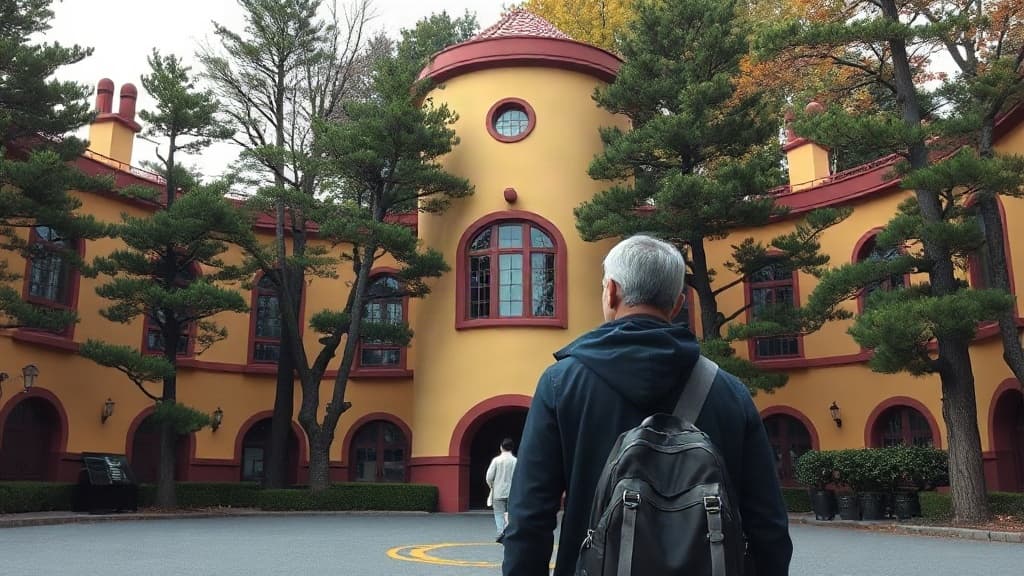
At a glance
- November sale
- 10 October 2026 at 10:00 JST
- Adult admission
- JPY 1,000 (about US$6.35)
- Museum hours
- 10:00-18:00
- Entry windows
- Seven hourly slots from 10:00 to 16:00
- Walk-up tickets
- None; advance reservation only
- Walk from Mitaka
- About 15 minutes
Ghibli Museum, Mitaka — Ghibli Museum, Mitaka · Mitaka Station · Kichijoji Station · Inokashira Park West Garden
As of 30 September 2026, the useful date for a November visit to the Ghibli Museum is not your flight day but 10 October 2026 at 10:00 JST. That is when the museum's official overseas ticket channel releases the following month's dated slots. There is no ticket window to rescue an unplanned visit: admission is none; advance reservation only in practical terms, and the museum explicitly says it cannot take reservations or sell tickets at the door.
The official adult price is JPY 1,000 (about US$6.35). The dollar figure uses the Bank of Japan's 29 September 2026 17:00 midpoint of JPY 157.38 per US dollar and is only a planning conversion; the ticket is priced in yen, and a card issuer may use a different rate or add fees. The hard part is not the price. It is choosing a date and one of seven entry hours before your preferred slot disappears.
Put the 10 October release in your own time zone
The Ghibli Museum's official overseas ticket page states that tickets go on sale at 10:00 Japan Standard Time on the 10th of each month for the subsequent month. For November 2026, that means Saturday 10 October at 10:00 JST. Japan does not observe daylight saving time, but your location may, so convert the moment for where you will actually be when sales open rather than copying a traveller's old screenshot.
Choose several workable dates before entering the Lawson Ticket store. The reservation is valid only for its specified date and entry time. The museum does not impose a set exit time after admission, but you cannot turn a November booking into a flexible any-day pass. The official Japanese page also says commercial resale is forbidden and resold tickets are not accepted. Buy only through the museum's linked Lawson Ticket store or the official Sunrise Tours JTB option shown on the same ticket page.
Do not build a Tokyo itinerary around a ticket offered through a marketplace or social account. The official price is low, resale is prohibited, and the museum has no walk-up inventory to fall back on if an unofficial ticket fails.
Prices, hours and the seven entry windows
The museum publishes four paid age bands. Visitors aged 19 and over pay JPY 1,000, about US$6.35 at the 29 September reference rate. Ages 13-18 pay JPY 700, about US$4.45; ages 7-12 pay JPY 400, about US$2.55; and ages 4-6 pay JPY 100, about US$0.65. Children aged three and under enter free. These conversions are rounded from the same Bank of Japan rate, not separate dollar prices.
| Visitor | Official price | Approximate USD |
|---|---|---|
| Age 19 and over | JPY 1,000 | US$6.35 |
| Age 13-18 | JPY 700 | US$4.45 |
| Age 7-12 | JPY 400 | US$2.55 |
| Age 4-6 | JPY 100 | US$0.65 |
| Age 3 and under | Free | Free |
Published museum hours are 10:00-18:00. The Japanese ticket page gives seven hourly slots from 10:00 to 16:00: 10:00, 11:00, noon, 13:00, 14:00, 15:00 and 16:00. A visitor must enter within one hour of the selected time, and the visit is not run as a timed exit rotation. Tuesdays are normally closed, while other closures and long maintenance periods vary by year, so cross-check the live calendar before settling on a November date.
The first and last entries have different tradeoffs. A 10:00 booking gives you the full day and leaves room for Inokashira Park or Kichijoji afterward. A 16:00 booking has only the final two published opening hours available, even though there is no formal exit time attached to the ticket. If the museum is the purpose of the day, prioritise the earlier windows instead of forcing it between distant Tokyo sights.
What is included once you get inside
The building is designed as part of the visit rather than as a neutral container for memorabilia. The museum's own guide points visitors toward its stained glass, central hall, Cat Bus room and rooftop garden, where a five-metre Robot Soldier stands above Inokashira Park. The Cat Bus itself is reserved for children aged 12 and under, a detail worth knowing before promising an adult fan a ride.
November visitors are also inside the announced run of “The Studio of Yuriko Yamawaki—Treasure from an Artist's Clutter”, scheduled from 19 November 2025 to May 2027 on a tentative basis. The exhibition recreates the illustrator's studio and connects Yamawaki's children's-book work with short animations made by Studio Ghibli. The Saturn Theater screens original shorts, but the programme is part of the museum experience rather than a reason to assume a particular film will be showing on your chosen date.
That last distinction matters because the museum is intentionally resistant to checklist tourism. You are not buying access to a warehouse of film props or a conventional ride park. Leave space to follow the rooms in the order they reveal themselves, then use the rooftop, café deck or surrounding park as natural pauses.
How to reach the museum without crossing Tokyo twice
The museum is at 1-1-83 Shimorenjaku in Mitaka, on the western side of metropolitan Tokyo. Its official directions place JR Mitaka Station about 20 minutes from Shinjuku on the JR Chuo Line. From Mitaka's south exit, the signed walk along the Tamagawa Josui is about 15 minutes.
A community bus also leaves Mitaka Station during opening hours. The museum says it runs about every 15 minutes; the published fare is JPY 230 for an adult, about US$1.46 at the same 29 September exchange rate. Children aged 7-12 pay JPY 120 in cash or JPY 50 with an accepted IC card. The Japanese directions page puts the bus journey at about five minutes and notes that the service does not run on museum closure days.
Kichijoji is the useful alternative gateway, especially if the museum is paired with the east side of Inokashira Park. The official Japanese directions describe a walk of about 15 minutes from Kichijoji Station or Inokashira-koen Station. Do not choose it because a map makes the distance look marginally shorter; choose it if you want the park and Kichijoji to be part of the same day. Mitaka remains the clearer approach for the signed museum route and dedicated community bus.
There is no visitor car park, and the museum asks guests to use public transport. That is a concrete planning rule, not a suggestion to hunt for a nearby unofficial space. Travellers carrying luggage should also avoid arriving straight from an airport or station transfer: small bags fit the on-site coin lockers, while larger luggage requires help from staff and is better left at accommodation or a major station.
Photography, phones and accessibility
The museum's published visitor policies prohibit photography and video inside and ask guests to turn off mobile phones. Save the booking details and route before arrival, then treat the interior as an offline visit. Food and drink are not allowed in the galleries; visitors may eat café purchases or their own food at available seats in the Straw Hat Café or on its deck.
Most of the three-storey museum building is wheelchair accessible, and wheelchairs can be borrowed. The exception is the rooftop garden: it is reached from the second floor by a narrow spiral staircase and has no elevator route. The roof may also close in bad weather. Accessible restrooms are available on every floor, service dogs are welcome, and the Saturn Theater can lend hearing-assistance earphones, though its audio is currently Japanese only.
Parents should plan to leave a stroller in the designated area. Visitors sensitive to flashing light should note that the permanent exhibition contains a stroboscopic-light display. These are better decisions to make before sale day, because the cheap ticket can otherwise encourage people to book first and examine the building's practical limits later.
Entry to Japan is a separate check
A museum reservation has no bearing on permission to enter Japan. Check the requirement for your passport and country of residence before paying for non-refundable transport. Japan's Ministry of Foreign Affairs currently lists 74 countries and regions under short-stay visa-exemption arrangements, with passport-type and stay-length conditions that differ for some nationalities.
If your passport is not covered by the relevant exemption, follow the ministry's visa route rather than assuming another traveller's rule applies to you. The Japan eVISA system is available only to eligible applicants residing in specified countries and regions; residence can matter as well as nationality. Recheck the official pages close to travel because entry rules can change after an October museum purchase.
Use mobile data around the visit, not inside it
Data is most useful before and after the museum: loading the Lawson confirmation, checking a Chuo Line disruption, navigating from Mitaka or deciding where to eat in Kichijoji. Inside, the phone-off and no-photography policies sharply reduce its role. Save the reservation and return route offline so a weak signal or flat battery does not become a ticket problem.
Before departure, compare Japan eSIM plans and check the handset on Roameo's compatibility page. Roameo resells connectivity on local carrier networks, so actual service depends on the plan, device, available network and conditions at the time. Install and label the travel eSIM before leaving home, while keeping the line disabled for data until the plan's activation instructions say otherwise.
A compact booking checklist
- Convert 10 October 2026 at 10:00 JST into the time zone where you will buy.
- Pick several November dates and rank the seven entry windows before the sale.
- Use the Lawson Ticket link reached through the museum's official ticket page.
- Book the correct age category for every visitor and retain the confirmation offline.
- Build the day around Mitaka or Kichijoji rather than pairing it with a distant attraction.
- Recheck the museum calendar and Japan entry rule for your passport before travel.
FAQ
When do Ghibli Museum tickets for November 2026 go on sale?
They go on sale on Saturday 10 October 2026 at 10:00 JST. The museum releases tickets on the 10th of each month for admission during the following month.
Can I buy Ghibli Museum tickets at the door?
No. The museum uses advance reservations only and says no reservation or ticket purchase can be made at the museum. Use the official Lawson Ticket link on the museum website or its listed official tour option.
How much is Ghibli Museum admission?
Admission costs JPY 1,000 for ages 19 and over, about US$6.35 using the Bank of Japan's 29 September 2026 reference. Lower official prices apply from ages 4 to 18, and children aged three and under enter free.
How late can I enter after my reserved time?
The official Japanese ticket page says admission is allowed within one hour after the selected entry time. There is no set exit time, but the museum closes at 18:00 under its published schedule.
Is Mitaka or Kichijoji better for the Ghibli Museum?
Mitaka is the simplest official approach: walk about 15 minutes from the south exit or use the community bus. Kichijoji is also about a 15-minute walk and works well when you want to continue through Inokashira Park or explore Kichijoji.
Can I take photographs inside the Ghibli Museum?
No. The museum prohibits photography and video inside and asks visitors to turn off mobile phones. Its rooftop and exterior create natural pauses, but follow the posted rules in each area.
Keep reading

Japan Customs: Old Declaration App or Visit Japan Web?
Codes from Japan's old Customs Declaration App stopped working in 2024. Use Visit Japan Web for the electronic route, or the accepted paper form on arrival.
Read more
Sapporo Snow Festival 2027: Dates, Costs and Booking
Sapporo's 2027 snow festival runs for eight days in February. Use this venue-by-venue guide to budget the new hotel tax, trains, tickets and winter gear.
Read more
Tokyo Disney Christmas 2026: Tickets, Dates and Costs
Christmas tickets are opening on a rolling clock. Compare Tokyo Disneyland and DisneySea, check exact costs, and plan the app-dependent day before booking.
Read more