
Giant's Causeway 2026: The Coin Ban and How to Actually Visit
Conservators just pulled 10,000+ coins from the basalt columns. Why it mattered, plus the real 2026 ticket price, hours, and route to see the stones yourself.
Guides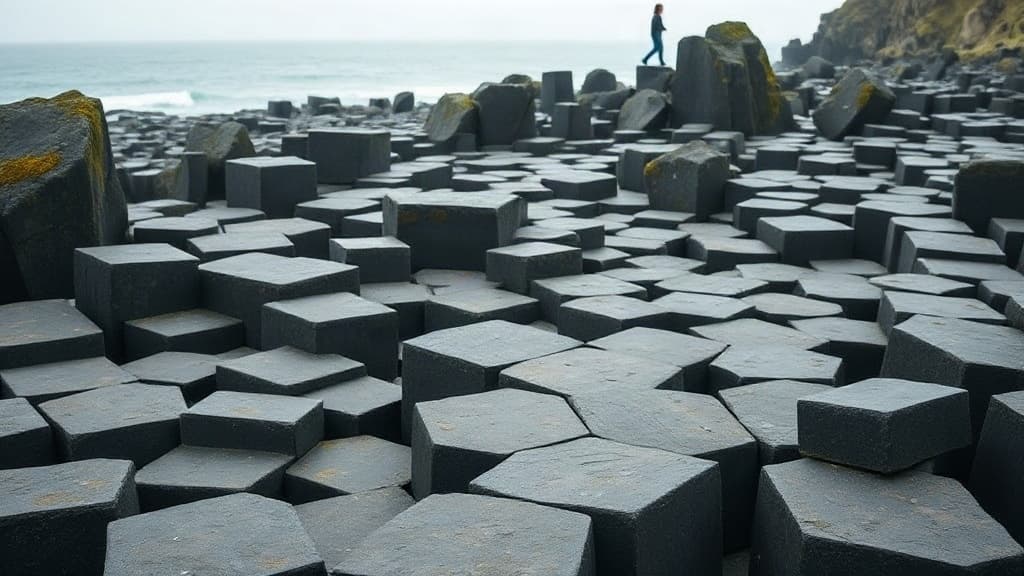
At a glance
- Coins removed
- 10,000+ (20.5kg) as of August 2026
- Removal cost
- Over £30,000 (about $40,500)
- Adult admission
- £16.00, includes parking and centre
- Coastal path
- Free to walk, no ticket needed
- From Belfast
- ~90km, 1hr15-1hr30 drive
- Annual visitors
- About 700,000 a year
Giant's Causeway — Giant's Causeway · Belfast International Airport · Carrick-a-Rede Rope Bridge · Dunluce Castle · Bushmills
In August 2026, a National Trust conservation team finished a job that took years: prying more than 10,000 coins — about 20.5kg of them — out of the cracks between the basalt columns at Giant's Causeway in County Antrim, Northern Ireland. The habit of wedging a coin into the rock for luck had been building for roughly 40 years, and it was quietly destroying the thing people came to see.
Why a coin does more damage than a footstep
Giant's Causeway is around 40,000 interlocking hexagonal basalt columns formed by a volcanic lava flow roughly 60 million years ago, and UNESCO inscribed the Giant's Causeway and Causeway Coast as a World Heritage Site in 1986 for that geology. Visitors hammer coins into the narrow joints between the columns, sometimes using loose stones as makeshift hammers. Once wedged in, a coin corrodes fast in the salt air, and as it rusts it expands — Dr Cliff Henry, the National Trust's nature engagement officer for the site, has said the metal swells to about three times its original thickness. That expansion pushes on the surrounding rock from the inside, fracturing it and leaving rust-coloured streaks of copper, nickel and iron oxide across the columns.
A report from the Geological Survey of Northern Ireland had recommended removing the coins to stop that physical and chemical damage, and the National Trust's own account of the project puts the clean-up cost at more than £30,000 (about $40,500), carried out by hand with specialist stonemasons including Nathan Morrow, who described the wedged coins as "quite well stuck." A public appeal launched in 2025 to get visitors to stop the practice reportedly reached a global media audience in the billions, and the Trust says sections that have already been cleared are attracting far fewer new coins than before.
It isn't a uniquely Irish habit — coin-wedging shows up at wishing walls and old bridges worldwide — but Giant's Causeway is a rare case where someone measured the damage and put a price on undoing it. If you've picked up the habit at other sites, this is the argument for leaving it behind for good, not just here.
If you're visiting: leave the coins at home. The National Trust's ask is simple "leave no trace" — no coins wedged into the rock, no stacked stone cairns, nothing left behind.
The legend behind the stones
The columns get their name from the Irish legend of Finn McCool, a giant said to have built a causeway across the North Channel so he could fight a rival giant in Scotland — and the Scottish side of that story lines up with a matching basalt formation at Fingal's Cave on the island of Staffa, which formed from hexagonal basalt columns that geologists say may come from the same era of volcanic activity, around 60 million years ago, as the Antrim coast. The scientific explanation for the Causeway itself is that a lava flow cooled unevenly, cracking into the tightly packed hexagonal columns you see today, most only a few dozen centimetres wide but running many metres down into the rock. It's the kind of site where the folklore and the geology point at the same spot, which is part of why it draws roughly 700,000 visitors a year and why the National Trust is now this protective of what those visitors leave behind.
What it actually costs to get in
The basalt columns themselves sit on open coastline and are free to reach on foot via the public coastal path — you don't need a ticket to walk out onto the stones. What you pay for is the National Trust's Visitor Centre and its car park: current published pricing lists adult admission at £16.00, with a child ticket (ages 5-17) at £8.00 and a family ticket (2 adults plus up to 3 children) at £40.00, and that fee covers parking, the exhibition, and an audio guide. If you'd rather skip the Visitor Centre fee entirely, park in nearby Bushmills village and walk in along the coastal path instead — a workaround worth knowing if you're only there to see the stones.
The site pulls in roughly 700,000 visitors a year, so arriving early or late in the day matters if you want the columns to yourself for photos. Most people spend around two hours at the Causeway itself; build in more if you're doing the guided Clifftop Experience, a 5-mile hike that starts at Dunluce Castle and finishes on the stones.
Getting there and making a day of it
Giant's Causeway sits on the north Antrim coast about 90km from Belfast — reckon on a 1 hour 15 minute to 1 hour 30 minute drive, whether you land at Belfast International or George Best Belfast City Airport, both of which put you on the Causeway Coastal Route. It's a right-hand-drive country, so if you're used to driving on the right, budget extra time for the first hour behind the wheel.
Two stops make the detour worth a full day rather than a quick photo stop. Carrick-a-Rede Rope Bridge, about 8km east, crosses a chasm roughly 30 metres above the sea to a small fishing island — also National Trust-run and ticketed separately. Dunluce Castle, about 5km west, is a roofless medieval ruin perched on a cliff edge, worth an hour. In between, Bushmills is home to the Old Bushmills Distillery, which has held a distilling licence since 1608 and is the obvious lunch-and-tour stop. Put the three together with the Causeway itself and you've got a full day on the north Antrim coast rather than a rushed stopover.
Data for the drive
The Causeway Coastal Route runs through patchy signal in places, so having working data before you leave Belfast — for maps, ferry or car park bookings, and checking opening hours before you drive out — is worth sorting in advance rather than hunting for a local SIM counter at the airport. An eSIM for the UK activates before you land and covers Northern Ireland the same as the rest of the UK, so you're online the moment you're off the plane. If you're routing through Dublin or continuing into the Republic of Ireland afterwards, check our plan comparison for options that cover both.
Frequently Asked Questions
Do I need a ticket to see the Giant's Causeway stones?
No. The coastline and the basalt columns themselves are on open public land and free to visit via the coastal path. The £16.00 adult ticket is for the Visitor Centre, its car park, the exhibition, and the audio guide — not for access to the rocks.
Why did the National Trust remove coins from the rocks?
A Geological Survey of Northern Ireland report found that coins wedged into the basalt joints by visitors were corroding and expanding, cracking the surrounding rock and staining it with rust. The National Trust removed more than 10,000 coins (about 20.5kg) by August 2026 at a cost of over £30,000, and is asking visitors to stop the practice going forward.
How far is Giant's Causeway from Belfast?
About 90km, roughly a 1 hour 15 minute to 1 hour 30 minute drive along the Causeway Coastal Route from either Belfast International Airport or George Best Belfast City Airport.
What else can I see nearby in one day?
Carrick-a-Rede Rope Bridge (about 8km east), Dunluce Castle (about 5km west), and the Old Bushmills Distillery in Bushmills village are all within a short drive and pair naturally with a Causeway visit for a full day out.
Keep reading
UK ETA 2026: Fee Rises to GBP 20 as Boarding Enforcement Bites
The UK's Electronic Travel Authorisation is now enforced at boarding, and the fee just rose to GBP20. Who needs one, what it costs, and how long it lasts.
Read more
Glastonbury Festival 2027: October Ticket Sale Guide
Glastonbury's 2027 ticket sale starts on 1 October. Check registration status, exact prices, queue rules, coach conditions and travel planning before the sale.
Read more
Christmas at Kew 2026: Tickets, Dates & Gate Guide
Christmas at Kew has nine cheaper nights, three gates and no routine refunds. Use the 2026 prices, entry cutoffs and transport rules to book with care.
Read more