
Kruger National Park Turns 100: What a 2026 Safari Costs
Kruger National Park marked its 100th birthday on 31 May 2026, and its conservation fees run through 31 October 2026 — here's what a safari actually costs.
Destinations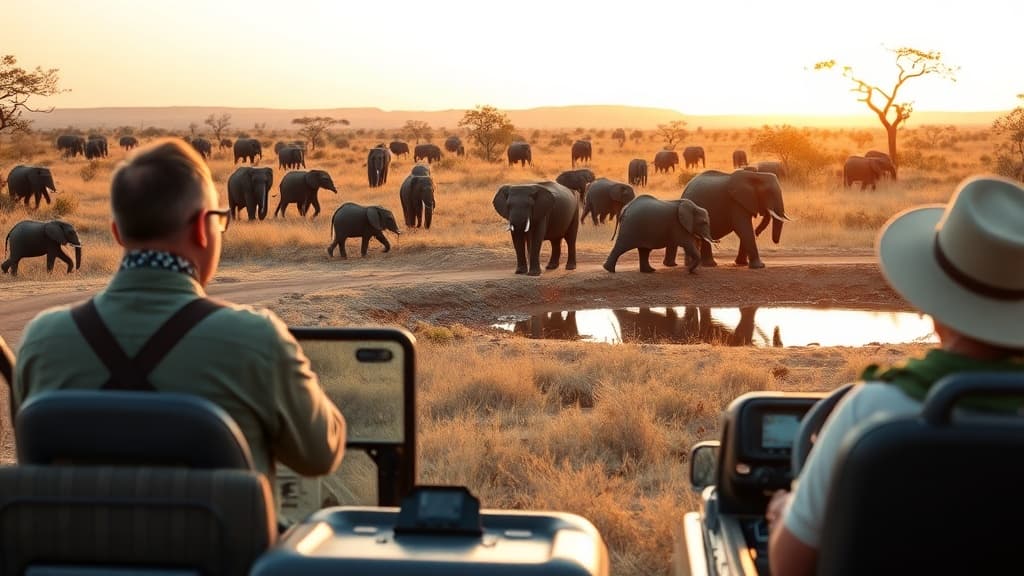
At a glance
- Founded
- 31 May 1926 — celebrated its centenary in 2026
- International day fee
- R602 adult / R300 child, through 31 Oct 2026
- SADC-national fee
- R275 adult / R137 child
- Fee period
- 1 Nov 2025 - 31 Oct 2026
- Best game viewing
- Dry season, May-Oct, peaks Sep-early Oct
- Nearest airport
- Kruger Mpumalanga Intl (MQP), ~45 min from the south gates
Kruger National Park (Skukuza) — Kruger National Park (Skukuza) · Sabi Sand Game Reserve · Kruger Mpumalanga International Airport
On 31 May 2026, Kruger National Park turned 100. SANParks marked the centenary with a ceremony at Skukuza Rest Camp — the same camp that has served as the park's administrative heart since 1926 — under the theme "Our Heritage, Our Future," and handed the ranger corps four new anti-poaching vehicles as a birthday present. If you're planning a first Kruger trip around the anniversary, the number that actually decides your budget isn't the birthday, it's the conservation fee table SANParks locked in for the season: those rates run to 31 October 2026, and Kruger's own dry season — the best month-by-month window for sightings — sits almost entirely inside that window.
What the conservation fee actually costs
SANParks charges a daily conservation fee per person, on top of any accommodation or safari-vehicle cost, and the rate depends on residency, not where you're staying. For the period 1 November 2025 to 31 October 2026, an international visitor pays R602 a day for an adult (12 years and older) and R300 for a child (2-11). SADC nationals — travelers from Kruger's neighbouring region — pay a lower R275 adult / R137 child rate, and South African citizens and residents pay R134 adult / R67 child. At the rand's early-August 2026 level of roughly R16.3 to the US dollar, the international adult rate works out to about US$37 a day, or US$18 for a child. Multiply that by however many days you're inside the gates: a five-night, six-day Kruger stay adds close to US$220 per adult in conservation fees alone, before a single game-drive vehicle or bed is booked.
The fee is flat regardless of season — SANParks doesn't discount it for the quieter green months — so the only lever you control is how many days you spend inside the park versus in a private reserve that charges its own separate conservancy fee, like neighbouring Sabi Sand.
When to actually go: the dry season isn't marketing copy
Kruger's dry season runs May through October, and the driest, clearest weeks — typically September and early October — are when the wildlife viewing is genuinely at its best: grass cover drops, waterholes shrink to a handful of reliable spots, and animals concentrate around them instead of dispersing across the bush. Mornings are cold, clear, and long, which is also exactly why early-morning game drives get booked out first in this window. The wet, "green" season runs November through February — newborn animals, migratory birdlife, and lodge rates that run around 15% below peak, but denser bush that makes sightings harder to spot and roads that can turn to mud after a storm. If your trip lands in the August-to-October planning window most travelers are in right now, you're booking into the tail of Kruger's best sightings weather, not a slow season.
Entry, and the visa question worth checking before you fly
South Africa doesn't apply one visa rule to every nationality. Under the country's revised visitor-visa framework — approved by Cabinet in the White Paper on Citizenship, Immigration and Refugee Protection in March 2026 — the Department of Home Affairs has been extending visa-free entry to most European and SADC nationalities, while other visitors still need a visa or an Electronic Travel Authorisation arranged before departure. The rules differ enough by passport that the only reliable step is checking your own nationality against the current list on the Department of Home Affairs site before you book flights, not assuming Kruger works the same way it did on your last African trip.
Getting online once you land
Kruger's rest camps have patchy, camp-by-camp connectivity at best, and the reserve itself is deep in Mpumalanga, well outside any city's mobile coverage. Most travelers fly into Kruger Mpumalanga International Airport (MQP), about 45 minutes from the park's southern gates, or Skukuza's own small airstrip if their lodge arranges it. Either way, landing with an eSIM already installed means you're not hunting for a local SIM counter in a small regional terminal — check device compatibility before you fly, then browse South Africa eSIM plans so data is live from the moment you land, not after you've found a signal at your first rest camp.
Booking six to eight months out for a September or October date isn't excessive — that's the same overlap between prime sightings weather and the fee window closing on 31 October that every repeat Kruger visitor plans around.
The park is open — but check your specific camp first
Heavy flooding hit Mpumalanga and Limpopo in mid-January 2026, forcing SANParks to evacuate several northern rest camps and briefly close parts of Kruger to day visitors. Recovery has been steady rather than instant: Shingwedzi Rest Camp, next to the Shingwedzi River in the park's far north, was the last of the flood-affected camps to reopen, on 6 March 2026, and even then only via the Punda Maria and Pafuri gates while the Letaba high-water bridge stayed under repair. By early March, SANParks was reporting "significant progress" — Punda Maria, Bateleur and a partially reopened Mopani were welcoming guests again, and Olifants was taking visitors through the Phalaborwa gate — but some infrastructure, including gravel roads and at least one bush camp cut off by further rain in early March, was still out of action. None of this affects the conservation fee or the south of the park, where most first-time visitors base themselves around Skukuza and the Sabi Sand boundary, but if your itinerary includes a northern camp near Shingwedzi, Punda Maria or Mopani, it's worth confirming that camp's current access status directly with SANParks before you lock in accommodation, rather than assuming every camp is back to its pre-flood routing.
Beyond the main gates: Sabi Sand and the private reserves
Sabi Sand Game Reserve, unfenced against Kruger's western boundary, runs its own separate conservancy fees on top of lodge rates and is the reason some travelers pair a self-drive Kruger stretch with a few private-reserve nights: Sabi Sand's guides can drive off-road to follow a sighting, which SANParks' public roads inside Kruger itself don't allow. It's a different budget bracket — private-reserve lodges routinely run several times a public Kruger rest camp's nightly rate — but it's worth knowing the two aren't interchangeable experiences before you build a itinerary around one or the other.
Frequently Asked Questions
Do children pay the full conservation fee at Kruger?
No. SANParks' child rate applies to ages 2 to 11 and is roughly half the adult rate at every residency tier — R300 a day for an international child against R602 for an adult, for the period running to 31 October 2026. Children under 2 aren't charged.
Is the Kruger conservation fee the same all year?
Yes, within a fee period. SANParks sets one flat daily rate per residency category for the full 1 November-31 October cycle, so the amount doesn't rise for peak dry-season dates the way lodge accommodation prices do.
What's the closest airport to Kruger's southern gates?
Kruger Mpumalanga International Airport (MQP), near Nelspruit/Mbombela, is about 45 minutes from the park's southern entrance gates and the main gateway most international visitors fly into for a Kruger trip.
Does South Africa require a visa for a Kruger safari?
It depends on your passport. South Africa has extended visa-free entry to most European and SADC nationalities under its revised visitor-visa framework, while other nationalities still need a visa or an Electronic Travel Authorisation arranged in advance — check the current list for your nationality on the Department of Home Affairs site before booking.
Keep reading
South Africa's New ETA: What a Cape Town Trip Needs in 2026
South Africa launched its Electronic Travel Authorisation on 12 Aug 2026. Here's who needs it, what it costs, and how to prep a Cape Town trip around it.
Read more
The Twelve Apostles in 2026: The Last Free Season Left
A $126 million visitor centre is hiring staff now for a late-2026 opening — and with it, the Twelve Apostles will charge an entry fee for the first time.
Read more
Ha Long Bay and Sapa in 2026: Vietnam Just Widened Its E-Visa Net
Vietnam added 41 e-visa entry points on 5 August 2026 and opened its 90-day multi-entry e-visa to every nationality. What that means for Ha Long Bay and Sapa.
Read more