
Nazare, Portugal: Big-Wave Season 2026/27 and the New EUR1 Tax
Nazare starts charging a EUR1-a-night tourist tax on 1 September 2026, right as the world's biggest rideable waves build for winter. What changes and what to book.
Guides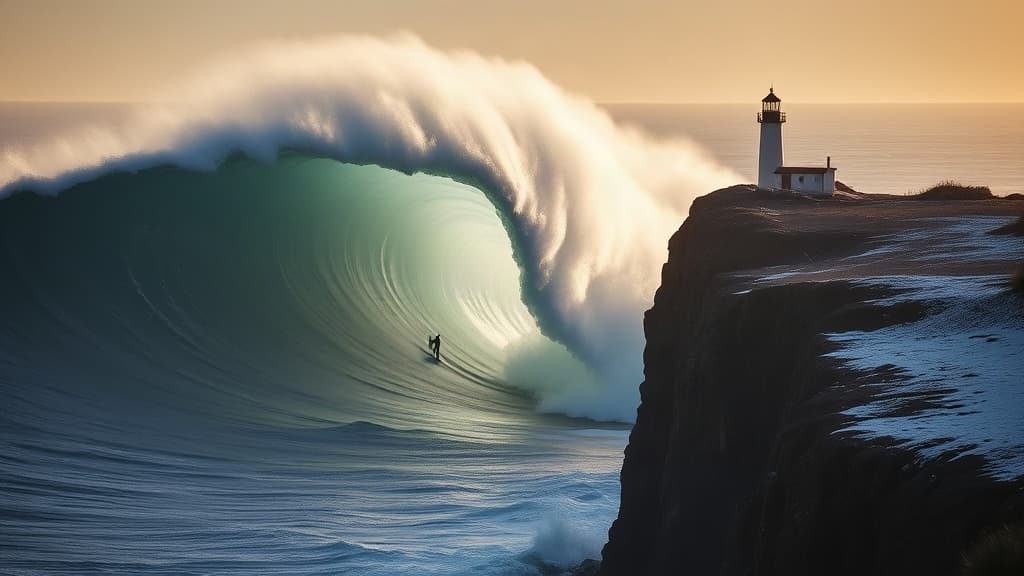
At a glance
- New tourist tax
- EUR1/night from 1 Sep 2026, capped at 5 nights
- Tax exemptions
- Under 12, over 65, and 60%+ disability
- Big-wave window
- WSL event runs 1 Nov 2026 to 31 Mar 2027
- Lighthouse viewpoint
- Fort entry EUR2, open 10am-6pm daily
- Lisbon to Nazare
- ~1h45 by bus, from EUR4-12 one-way
- 2025 overnight stays
- 248,981 recorded in Nazare municipality
Farol da Nazare (Sitio lighthouse) — Farol da Nazare (Sitio lighthouse) · Praia do Norte · Lisbon Humberto Delgado Airport
From 1 September 2026, every overnight guest in Nazare over the age of 12 pays an extra EUR1 a night, capped at five consecutive nights — a new municipal tourist tax the town's assembly approved unanimously on 25 June 2026, timed to land right as the surf town's famous winter swell season starts building. If you're planning to watch the biggest rideable waves on the planet this winter, that fee is now part of the budget, and the booking window for it is right now.
What the new tax actually costs you
The regulation was published in Portugal's Diario da Republica and took effect on the first day of the month following publication — 1 September 2026. It applies to every form of paid accommodation in the municipality: hotels, hostels, alojamento local (Portugal's licensed short-term-rental category) and campsites. The charge is EUR1 per guest per night, for guests aged 12 and over, and stops accruing after five consecutive nights even on a longer stay. Three groups are exempt outright: children under 12, adults over 65, and travellers with a disability rated at 60% incapacity or higher, along with anyone who falls ill during their stay, per the municipal assembly's unanimous 25 June 2026 vote.
The council's stated reason is the same one driving similar levies across Portugal — Nazare recorded 248,981 overnight stays in 2025, and the town says that volume is straining street cleaning, public-space upkeep and security budgets sized for a fishing town, not a peak-season surf destination. Revenue is earmarked for tourism promotion and infrastructure projects rather than general municipal spending. It's a modest add-on next to Lisbon's EUR4-a-night tax or Porto's EUR3, but it's new, and nothing on a booking confirmation made before June 2026 will show it — expect it to appear as a separate line item at check-in or check-out instead.
When the waves actually show up
Nazare's big-wave reputation comes from an underwater canyon just offshore — the Nazare Canyon — that funnels open-ocean swell energy into walls that have exceeded 25 metres in recorded sessions. The season runs roughly October through March, but the WSL's Nazare Big Wave Challenge — part of the World Surf League's Big Wave Tour — holds a standing "waiting period" window rather than a fixed date: for 2026/27 that window opens 1 November 2026 and runs to 31 March 2027. There is no scheduled event day. Organisers watch swell forecasts and call the contest with roughly 24-48 hours' notice once forecasts show wave faces over 12 metres and workable wind. December tends to produce the highest odds of a genuinely giant swell, but a callable day can land any week inside that five-month window — which is exactly why "book a fixed date" doesn't really work here. Book your accommodation dates around the season, then watch forecasts once you're closer to travel and treat any specific huge-wave day as a bonus, not a guarantee.
Where to actually watch it — safely
Praia do Norte is the beach where the giant waves break, but it is not a spectator beach: Nazare's own tourism office (nazarewaves.com) explicitly warns visitors to stay well back from the water, noting past drowning incidents from people getting too close to the shorebreak and rogue surges. The recommended vantage point is the clifftop at Sitio da Nazare, next to the Farol da Nazare (Nazare Lighthouse), which sits roughly 110 metres above the water and looks straight down onto the break. The Fort of Sao Miguel Arcanjo, built into the same headland and now doubling as a small exhibition space, is open daily 10am-6pm with a EUR2 entry fee for the interior. A funicular connects the harbourside town to Sitio, followed by about a 13-minute, roughly 1km walk out to the lighthouse itself.
Do not walk onto Praia do Norte itself during a big swell. The sets that make Nazare famous also produce sudden surges well beyond the normal waterline, and the town's own safety guidance is explicit that the shoreline has caused fatalities. Watch from the clifftop at Sitio, not the sand.
Getting there from Lisbon
Nazare has no airport of its own, so Lisbon's Humberto Delgado Airport is the practical gateway for international arrivals. From Lisbon, Rede Expressos and FlixBus both run direct coaches from the Sete Rios and Oriente terminals, taking about 1 hour 45 minutes for roughly EUR4-12 one-way. The train option is slower and involves a transfer: a mainline train to Famalicao da Nazare station followed by a short local bus into town, around 2 hours 40 minutes total for EUR11-24. Driving is fastest at about 1 hour 30 minutes via the A8 motorway toward Leiria, exiting at Nazare/Alcobaca and following the IC9, with tolls and fuel putting the one-way cost around EUR25. For a winter trip built around watching for a swell window, the bus is the easiest option — it's cheap enough to make a same-day return from Lisbon workable if a big day is called on short notice.
Staying connected on the coast
Portugal is a Schengen country, so the standard 90-days-in-any-180-days visa-free allowance applies to nationals of the US, UK, Canada, Australia and most other visa-exempt countries — check your own passport's status before booking. The EU's planned ETIAS pre-travel authorisation, which was expected to add a screening step for visa-exempt visitors, has been delayed indefinitely: as of a 30 July 2026 report, EU officials removed any 2026 launch date from the ETIAS site after concluding implementation by year-end was "no longer feasible," with industry estimates now pointing to April 2027 at the earliest. For now, no ETIAS is required to enter Portugal.
If you buy a physical prepaid SIM in Portugal, expect to show a passport at the point of sale — Portuguese law requires ID registration for local SIM cards, the same as most of the EU. A pre-installed Portugal eSIM sidesteps that step entirely: you activate it online before you fly and land already connected, which matters if you're chasing a swell alert on the coast road rather than hunting for a phone shop that's open. Check your device's eSIM support against Roameo's compatibility guide before you travel, since not every phone sold outside the EU ships with eSIM enabled.
Frequently Asked Questions
Do I have to pay Nazare's new tourist tax if I'm staying in a private rental?
Yes. The EUR1-a-night charge applies to hotels, hostels, alojamento local rentals and campsites alike — any paid overnight accommodation in the municipality, for guests aged 12 and over, capped at five consecutive nights.
Is there a fixed date for the 2026/27 Nazare Big Wave Challenge?
No. The WSL holds a waiting-period window from 1 November 2026 to 31 March 2027 and calls the event with about 24-48 hours' notice once a big enough swell and workable wind are forecast, so no single date is scheduled in advance.
Where's the safest place to watch the big waves in Nazare?
The clifftop at Sitio da Nazare, beside the Farol da Nazare lighthouse and the Fort of Sao Miguel Arcanjo (EUR2 entry, 10am-6pm daily). Nazare's tourism office explicitly warns against approaching Praia do Norte's shoreline during a swell.
Do I need ETIAS to visit Portugal right now?
No. ETIAS has been delayed indefinitely — the EU pulled its 2026 launch date in July 2026, with industry estimates now pointing to April 2027 at the earliest — so visa-exempt travellers still enter under the standard 90/180-day Schengen rule with no extra pre-authorisation.
Keep reading

Funchal New Year's Eve 2026: Where to Watch Fireworks
Funchal's 2026 fireworks use 58 launch stations for an eight-minute show. Use this guide to choose a viewing zone and plan the night without guesswork.
Read more
Normandy's D-Day Beaches Just Became a UNESCO World Heritage Site
UNESCO inscribed Omaha, Utah, Gold, Juno, Sword and Pointe du Hoc on 26 July 2026. Here's what's free, what costs money, and the visitor change coming before 2027.
Read more
Everest Base Camp Trek 2026: What the Permits Now Actually Cost
Spring 2026 set a record for Everest climbing permits. Here's what an EBC trekker (not a summit climber) actually pays, and the guide rule that changed in 2023.
Read more