
Pushkar Camel Fair 2026: Dates, Visa Fees, Booking Guide
Pushkar's camel fair runs November 17-24, 2026, peaking at Kartik Purnima on the 24th. Here's the e-visa fee, tent-city booking window, and how to get there.
Destinations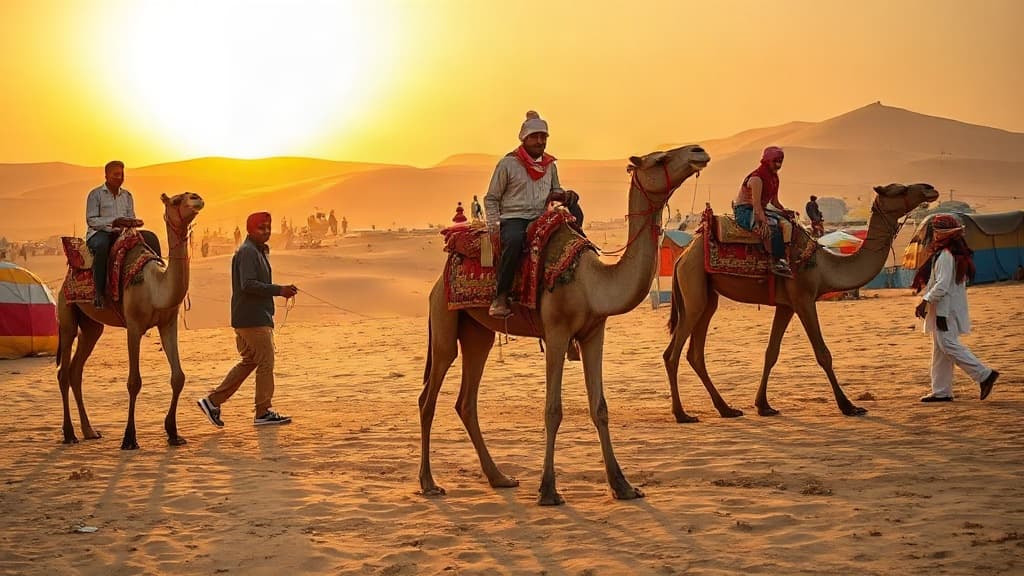
At a glance
- Fair dates 2026
- November 17-24
- Kartik Purnima peak
- Tuesday, November 24
- e-Tourist visa (30-day)
- USD 25 (Jul-Mar), USD 10 (Apr-Jun)
- e-Visa eligible nationalities
- 175, per indianvisaonline.gov.in
- Apply by
- At least 4 days before arrival
- Nearest airport
- Jaipur, ~150 km / 3 hrs by road
Pushkar, Rajasthan — Pushkar, Rajasthan · Jaipur International Airport · Ajmer railway junction
Pushkar's camel fair runs November 17-24, 2026, and the whole event builds toward a single night: Kartik Purnima, the full moon of the Hindu month of Kartik, which falls on Tuesday, November 24 this year. That's the date when, according to the Ministry of Tourism's official festival page, pilgrims bathe in Pushkar Lake believing "33 million gods and goddesses descended upon Pushkar to consecrate its sacred lake" — and it's also when camel trading, dance competitions, and the fair's tent city hit peak capacity and peak prices. If you're weighing a November trip to Rajasthan, the booking window that matters is now, not next month.
What the fair actually is
Pushkar Camel Fair (Pushkar Mela) is one of the world's largest livestock fairs — thousands of camels, horses, and cattle traded on the dunes outside a small pilgrim town — wrapped around a Hindu religious festival at Pushkar Lake, one of the few temples anywhere dedicated to Brahma. The official programme lists camel parades, camel beauty pageants, moustache and turban competitions, folk music and dance stages, and a rural olympics-style Matka Tod event, alongside snake charmers, magicians, and food stalls selling regional Rajasthani snacks. Hot-air balloon rides over the fairgrounds and camel safaris into the surrounding desert are sold locally throughout fair week. None of this is staged for tourists first — it's a genuine agricultural and religious event that tourism has grown up around, which is part of why it photographs and feels the way it does.
Getting there and the accommodation squeeze
Pushkar has no airport of its own. Jaipur International Airport is the practical gateway, roughly 150 km and a three-hour drive away, and sits on India's "Golden Triangle" circuit with Delhi and Agra, so a Pushkar trip slots easily onto the end of a longer Rajasthan itinerary. Ajmer, 15 km away, is the nearest railway junction if you're coming overland from Delhi, Udaipur, or Jodhpur.
Accommodation is the part that actually requires planning ahead. Pushkar's seasonal tent camps — the desert "tent city" that springs up for fair week — run at three to four times their normal rate during November 17-24 compared with the quieter post-fair winter months, when the same tents drop 50-70%. Basic shared-facility tents book out first; if you want a specific camp, travel-industry listings for the fair consistently flag mid-October as the point rooms start disappearing for the peak nights around Kartik Purnima.
Weather, crowds, and what to pack
November is Pushkar's most comfortable month and also its most crowded — the two are directly related, since the fair is scheduled for exactly this window. Average daytime highs run around 30°C (86°F) with lows near 16°C (61°F) overnight, a wide swing typical of Thar Desert edge climate, and rainfall for the month is negligible. That means shorts-and-t-shirt afternoons on the dunes give way to genuinely cold desert nights around the campfires at the tent camps — pack layers rather than relying on daytime weather alone, and expect dust: the fairground is open sand and animal enclosures, not paved ground.
Because the whole town — hotels in Pushkar itself, not just the tent camps — fills up for the same eight days, day-trippers from Jaipur or Udaipur who decide on the day to stay overnight regularly find nothing left. If Kartik Purnima night itself (November 24) is the priority, that's the single date to lock accommodation against first; the days either side of it have more flexibility.
The e-visa: fees, eligibility, timing
Most travellers to India need either a physical visa or an e-Tourist Visa before they fly — there's no visa-on-arrival scheme for general tourism. The official e-Visa portal, indianvisaonline.gov.in, lists 175 eligible nationalities, "ranging from Albania to Zimbabwe," and requires applying at least four days before arrival — cutting it closer than that risks a fair-week trip with no visa in hand.
Fees follow a seasonal and duration split confirmed by the Embassy of India's official fee schedule: a 30-day e-Tourist Visa costs USD 25 from July through March (the window that covers the Pushkar fair) and drops to USD 10 April-June; a one-year multiple-entry e-Tourist Visa costs USD 40; a five-year version costs USD 80. The 30-day visa is multiple-entry but non-extendable and non-convertible — if your plans might stretch past 30 days, the longer visa is the only fix, not an extension request filed from inside India. Fees are reciprocal by nationality in some cases, so confirm the exact figure for your passport on the official portal before paying — third-party visa agencies routinely mark this fee up.
Money, dress, and etiquette at the fairgrounds
Stalls and camel traders on the fairground deal overwhelmingly in cash — Indian rupees — and card machines are unreliable on open sand even where vendors have them, so carry enough cash from Jaipur or Ajmer before heading out to the fair site. Modest dress is expected at Pushkar's ghats and the Brahma Temple: cover shoulders and knees, and be ready to remove footwear before stepping onto the temple's marble platform or the lake's bathing ghats, the same etiquette expected at any working Hindu temple in Rajasthan. Leather items — belts, wallets, camera straps — are traditionally kept off the ghats themselves, a custom tied to the same religious significance that draws pilgrims here for Kartik Purnima.
Ajmer, the railway junction 15 km from Pushkar, is also home to the Ajmer Sharif Dargah — the shrine of the Sufi saint Moinuddin Chishti and one of India's most-visited pilgrimage sites in its own right, fair or no fair — worth the short detour if you're routing through by train rather than flying into Jaipur direct.
Book the tent camp before the visa, not after — camps sell out on fixed fair-week dates regardless of your visa status, while the e-visa itself can usually be turned around within days of applying (though the official minimum is four).
Connectivity for the fairgrounds
Pushkar's fair site sits away from town on open desert ground, and mobile coverage across the camps and dunes is noticeably patchier than in central Rajasthan's cities — worth planning around if you need maps, translation, or ride-hailing to work reliably while you're out among the camel lines. An India eSIM plan installed before you fly means you land in Jaipur already connected, without hunting for a local SIM counter at the airport or navigating India's SIM-registration paperwork during a short trip.
FAQ
When exactly is the Pushkar Camel Fair in 2026?
November 17-24, 2026, according to the Ministry of Tourism's official festival listing, with the religious peak — Kartik Purnima full moon — on Tuesday, November 24.
Do I need a visa to attend the Pushkar Camel Fair?
Almost certainly yes. India does not offer visa-free tourist entry to most nationalities; check whether your passport is among the 175 eligible nationalities for the e-Tourist Visa at indianvisaonline.gov.in, and apply at least four days before you fly.
How much does the e-Tourist Visa cost?
Per the Embassy of India's published fee schedule, the 30-day e-Tourist Visa is USD 25 for travel between July and March (USD 10 April-June), a one-year visa is USD 40, and a five-year visa is USD 80 — figures that can vary by nationality under India's reciprocal fee structure.
Keep reading
Agra and the Taj Mahal in 2026: India's New e-Visa Gateways
India just added 11 e-visa entry points, including the reopened Attari land border. What it means for planning an Agra trip, plus real Taj Mahal ticket prices.
Read more
Feria de Cali 2026: Salsa Festival Dates and Entry Guide
Cali's salsa fair runs December 25-30, 2026, opening with the Salsódromo parade. Colombia's entry rules, the optional Check-Mig form, and how to plan the trip.
Read more
Son Doong Cave Is Booked Through 2027 — How to See Phong Nha Now
Vietnam's Son Doong expedition sold out through 2027 after a CBS report went viral. Here's what's still bookable in Phong Nha-Ke Bang this year, and what it costs.
Read more