
Agra and the Taj Mahal in 2026: India's New e-Visa Gateways
India just added 11 e-visa entry points, including the reopened Attari land border. What it means for planning an Agra trip, plus real Taj Mahal ticket prices.
Destinations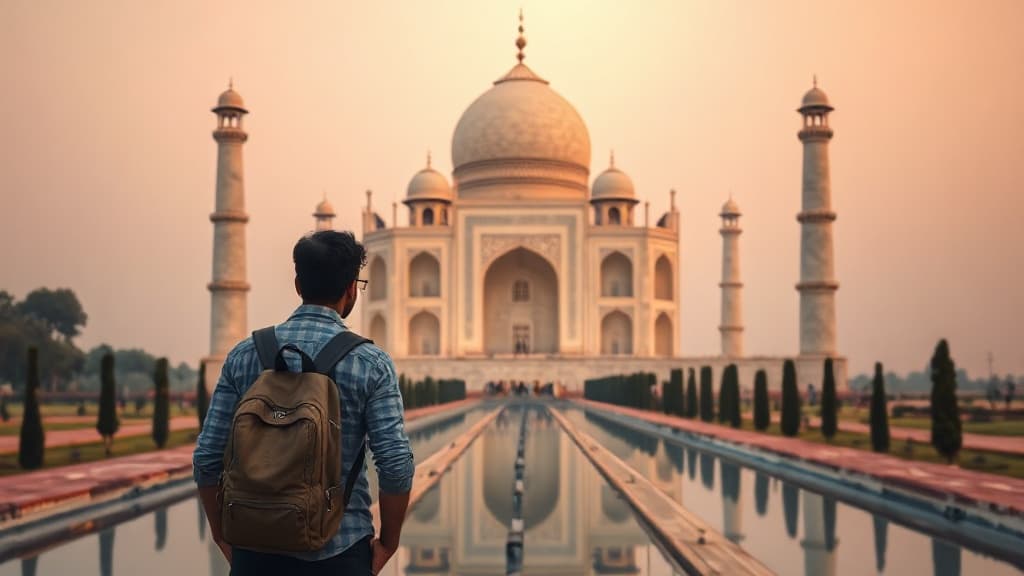
At a glance
- E-visa entry points
- 88 total (37 airports, 38 seaports, 13 land ports)
- New since 10 Aug 2026
- 11 ports added, incl. Attari, Bhopal, Tirupati
- Taj Mahal, foreign tourist
- Rs 1,100, +Rs 200 for the main mausoleum
- Best time to go
- October-March, cooler and drier
- Weekly closure
- Closed Fridays for general viewing
- Standard e-tourist visa
- 30 days, most nationalities USD 10-25
Taj Mahal, Agra — Taj Mahal, Agra · Agra Fort · Indira Gandhi International Airport, Delhi · Attari land border crossing
On 10 August 2026, India's Ministry of Home Affairs added 11 new international entry points to the e-visa network, taking the total to 88 designated gateways — 37 airports, 38 seaports and 13 land border crossings. The most notable addition isn't an airport: it's Attari, the India-Pakistan land border post in Punjab, which e-visa holders can now use again after security restrictions closed it off following an April 2025 incident. Two new airports also joined the list — Bhopal's Raja Bhoj Airport and Tirupati Airport — alongside nine land ports including Agartala, Gede, Ghojadanga, Haridaspur, Jaigaon, Dawki and Moreh. None of this changes who is eligible for an Indian e-visa, but it changes where you're allowed to actually walk through immigration with one, which matters if your route into India was ever going to be overland or through a smaller regional airport rather than Delhi or Mumbai.
For most travellers reading this, though, the practical trip on the other side of that visa still starts in the same place it always has: Agra, and the Taj Mahal.
What an e-visa actually gets you into India
India's e-visa programme runs through indianvisaonline.gov.in, the only official portal — third-party sites that charge a markup to "process" the same application are common, and none of them are the government. The standard e-Tourist Visa comes in three durations: 30 days (single entry), one year, and five years, both of the longer two allowing multiple entries with a cap of 180 days in India per calendar year. Fees are set per nationality rather than as one flat number — the government's own fee table lists most nationalities at USD 10 for the 30-day visa in the April-June window and USD 25 from July through March, rising to USD 40 for the one-year option — so check your own country's line on the official fee schedule before assuming a figure. Processing for the e-visa itself is separate from where you're allowed to enter; that's the list the August expansion added to.
The Taj Mahal: what it actually costs and when it's shut
The Archaeological Survey of India's own visitor page puts the Taj Mahal entry fee at Rs 1,100 for foreign tourists, Rs 540 for SAARC and BIMSTEC nationals, and Rs 50 for Indian and OCI cardholders — with an additional Rs 200, optional, for everyone who wants to walk into the main mausoleum itself rather than stop at the gardens and platform. Children under 15 get in free. The monument opens 30 minutes before sunrise and closes 30 minutes before sunset, and it is closed entirely on Fridays for general viewing, which trips up more first-time visitors than any fee does — plan your Agra day around that, not around it. Tickets bought online through the official portals, asi.payumoney.com and asiagracircle.in, carry a small discount over gate prices (Rs 5 off for Indian tickets, Rs 50 off for foreign tickets) and let you skip the queue at the Western or Eastern Gate, which is worth doing in peak season.
When to actually go
Agra's climate makes the decision for you more than any single event does. October through March is the standard window — daytime temperatures sit in the comfortable 15-25°C range instead of the 40°C-plus summer heat that makes an afternoon at a marble monument genuinely unpleasant, and it's dry, so you're not fighting monsoon downpours either. That window overlaps with the booking season most travel sites are already in as they read this: if you're planning a winter trip to northern India, August is exactly when flights and hotels for November-February dates are still reasonably priced before demand tightens closer to Diwali and the winter holidays.
Getting there
Agra has its own small airport (Kheria) but the realistic gateway for almost every international arrival is Delhi's Indira Gandhi International Airport, roughly three to four hours from Agra by road or about 100 minutes on the Gatimaan Express, India's fastest train. Most first-time visitors pair Agra with Delhi and, often, Jaipur — the loop travel agents call the Golden Triangle — though each city has its own separate ticketing and opening-hours system, so budget time to check them individually rather than assuming one pass covers all three.
Agra Fort: the second stop most people skip and shouldn't
A short drive from the Taj Mahal, Agra Fort is the walled Mughal citadel where Emperor Shah Jahan — who commissioned the Taj Mahal for his wife Mumtaz Mahal — spent his final years under house arrest, reportedly gazing out at the mausoleum he built from a small marble balcony. It's a UNESCO World Heritage Site in its own right, listed in 1983, the same year as the Taj Mahal itself, and most Golden Triangle itineraries budget an hour or two there on the same day as the Taj since the two sites sit close enough to combine without adding a separate travel day. The red sandstone walls and the contrast with the Taj's white marble make it worth the stop rather than treating it as an afterthought squeezed in before an evening train back to Delhi.
A note on the border reopening
Attari's return to the e-visa list is worth flagging on its own, separate from the airport additions. It's the only functioning land crossing between India and Pakistan, and its closure to e-visa holders after the April 2025 security incident had made it effectively unusable for anyone without a paper visa already in hand. Its reappearance on the August 2026 list doesn't reopen the border generally — Punjab-Pakistan land travel remains a niche, heavily document-checked route rather than a casual overland option — but it does mean an e-visa alone is once again sufficient there, which it wasn't for the past sixteen months.
Staying connected without the local SIM paperwork
Buying a local prepaid SIM in India as a foreign tourist means producing your original passport and visa page at the point of sale, plus a passport photo and often a hotel confirmation or a local reference — a process built around long-term residents, not a week-long trip. It's one of the more commonly cited frustrations from first-time visitors trying to get connected on arrival. A travel eSIM installed before you fly sidesteps that entirely: no store visit, no photocopies, and it's active the moment you land at Delhi, Bhopal, Tirupati or wherever your new e-visa-eligible entry point turns out to be. See Roameo's India eSIM plans for coverage and pricing, or check device compatibility before you travel if you're not sure your phone supports eSIM.
Book Taj Mahal tickets online a day or two ahead rather than at the gate in peak winter months — the Western Gate queue on a clear December morning can run past an hour, and the online discount covers most of the convenience fee anyway.
Frequently Asked Questions
Does the new e-visa entry point expansion change who can get an Indian e-visa?
No. It only changes which airports, seaports and land borders you're allowed to physically enter through while holding one. Eligibility, fees and application requirements are unchanged; check indianvisaonline.gov.in for your nationality's specific terms.
How much does it cost to visit the Taj Mahal as a foreign tourist?
Rs 1,100 for general entry, plus an optional Rs 200 if you want to enter the main mausoleum where the tombs are — a total of Rs 1,300 if you do both, per the monument's official visitor information page.
What day is the Taj Mahal closed?
Fridays, for general viewing — plan around it when building an Agra itinerary, since it's easy to accidentally schedule a day trip on the one day the monument is shut.
Can I use a local Indian SIM card as a short-term tourist?
You can, but it requires your original passport, visa page, a photo and often a local address reference at the point of sale — designed more for longer stays than a week-long trip, which is why many visitors travel with a pre-installed eSIM instead.
Keep reading
Pushkar Camel Fair 2026: Dates, Visa Fees, Booking Guide
Pushkar's camel fair runs November 17-24, 2026, peaking at Kartik Purnima on the 24th. Here's the e-visa fee, tent-city booking window, and how to get there.
Read more
Los Cabos 2026: The New Tourist Fee, Whale Season and SIM Rules
Baja California Sur's Embrace It fee just rose to MX$488 a head, whale season is peaking, and Mexico now requires ID to register any local SIM or eSIM.
Read more
El Nido, Palawan in 2026: World's No.1 Beach, New e-Visa Rule
Entalula Beach just topped the World's 50 Best Beaches list, and US/Caribbean travelers can now e-Visa online. What El Nido costs and how to get there in 2026.
Read more