
Serengeti Mara River Crossings 2026: Booking Window Closes Soon
The Serengeti's Mara River crossings peak in August and taper by early October. Here's what a 2026 trip actually costs, and how to still get a seat this season.
Destinations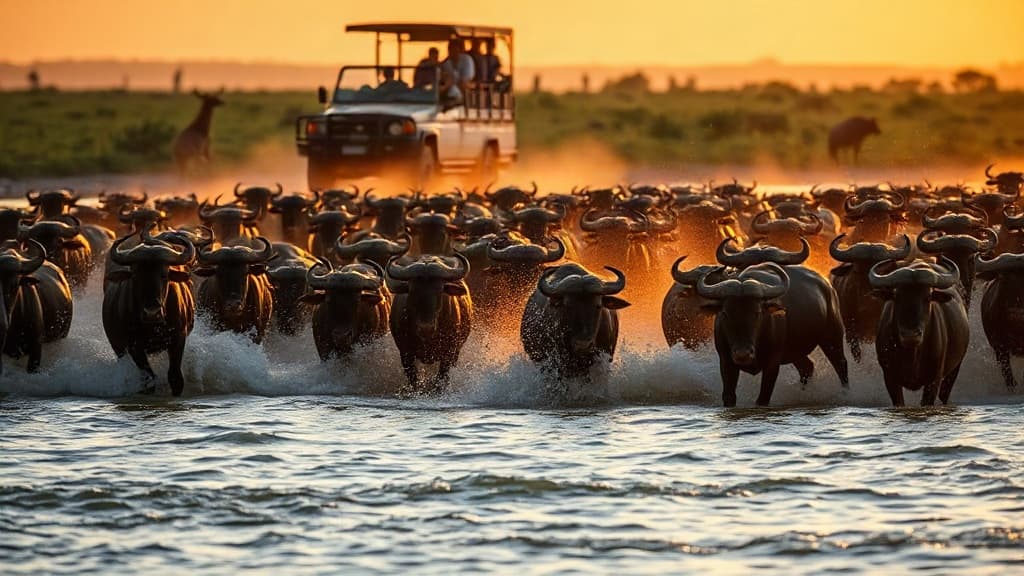
At a glance
- Serengeti entry
- $83/adult/day + 18% VAT (TANAPA rate)
- Mara River crossings
- Late July-early October, peaks in August
- Ngorongoro entrance
- $70.80/adult + 18% VAT
- Crater descent fee
- $295 per vehicle, one-time
- Tanzania eVisa
- $50 single-entry, apply at visa.immigration.go.tz
- Gateway airport
- Kilimanjaro Intl (JRO), then road/air to Arusha
Serengeti National Park — Serengeti National Park · Ngorongoro Crater · Kogatende (Mara River crossing points) · Kilimanjaro International Airport
The Mara River crossings that most people picture when they picture the Serengeti — thousands of wildebeest launching off a mud bank into crocodile-infested water — run from late July through September, peaking in August, and taper off by early October as the herds turn south for the short rains. It's the third week of September as this goes live, which puts a 2026 booking squarely inside the tail end of that window: camps in the northern Serengeti around Kogatende still have crossing-season nights open, but the window is closing, not opening, and by November the action has moved on.
What the Serengeti actually costs in 2026
Tanzania National Parks charges non-resident foreign visitors $83 per adult per 24 hours to enter Serengeti National Park, plus 18% VAT on top, with children aged 5-15 at $24 and under-5s free — the same rate applies in both peak and low season, so there's no discount for timing a visit around the crossings. If you're overnighting inside the park boundary rather than staying outside it, there's a separate concession (camping) fee of $60 per adult per 24 hours. None of this is small money for a family of four staying several nights, and it compounds with Ngorongoro if a Tanzania itinerary includes both, which most northern-circuit trips do (Serengeti National Park entry fee schedule).
Ngorongoro is a separate park with separate fees
The Ngorongoro Conservation Area, the crater most people bolt onto a Serengeti trip, is a distinct protected area with its own tariff: $70.80 per non-resident adult plus 18% VAT for entrance, and — this catches people out — a further $295 per vehicle if you actually want to drive down into the crater itself rather than just staying on the rim. That descent fee is per vehicle, not per person, so it matters less on a group safari and more if you've booked a private car. Permits run for one 24-hour entry; stay longer and you're charged again for the extra day (Ngorongoro Conservation Area fee schedule).
Neither TANAPA nor the Ngorongoro Conservation Area Authority publishes a fee schedule most travelers can find on their own official sites — both authorities route bookings through licensed tour operators, which is also who actually collects these fees at the gate. Cross-check the number your operator quotes against at least one independent listing before you pay a deposit.
The crossing window, month by month
The wildebeest migration is a year-round circuit, not a single event: herds are on the southern short-grass plains around Ndutu from roughly December to March, move north through central and western Serengeti (with Grumeti River crossings) from April to June, and reach the northern Serengeti and Kenya's Masai Mara from July to October, which is when the Mara River crossings happen. Because the timing tracks rainfall rather than a calendar, exact dates shift year to year — but late July through September, with August as the single most reliable month, is the consistent baseline, and crossings typically taper off by early October before the short rains push the herds south again. A booking made this week is a bet on the back half of that window rather than the front.
Getting in: eVisa and the flight in
Most nationalities need a Tanzania eVisa, applied for only through the government's own portal at visa.immigration.go.tz — not through any of the third-party sites that rank above it in search results and charge a markup. A single-entry tourist eVisa, valid up to 90 days, costs $50; a multiple-entry version is $100. Processing is typically quoted at around 10 business days, so this isn't a same-week fix if you're booking a crossing-season trip at the last minute. The usual arrival point for the northern safari circuit is Kilimanjaro International Airport (JRO), from which most travelers transfer overland or by light aircraft to Arusha and then on to an airstrip inside or near the park, rather than flying directly into the Serengeti.
Booking this late in the season
Camps in the Kogatende and Lamai Wedge area of the northern Serengeti — the stretch of river where most crossings happen — book out fastest for exactly the weeks a 2026 trip booked this month would land in, so a late booking usually means fewer camp choices rather than no trip at all. Operators generally recommend a minimum of three nights in the northern Serengeti to raise the odds of actually seeing a crossing, since the herds don't cross on a schedule and a single-night stopover can easily miss it. If northern Serengeti camps are full, central Serengeti (Seronera) still has resident game year-round and sits closer to Ngorongoro, which is the more forgiving trade-off for a late booking than trying to chase the river itself. Either way, book the Ngorongoro Crater descent as a separate line item with your operator — it's easy to assume the $295 vehicle fee is bundled into a standard day rate when it isn't.
Staying connected on safari
Coverage thins out fast once you're past the park gates. Vodacom, Airtel and Yas (formerly Tigo) all reach Arusha and the main roads toward Serengeti and Ngorongoro with a workable 4G signal, but deep inside the parks — especially on a game drive down into Ngorongoro Crater or out toward the Kogatende crossing points — the signal comes and goes, and a lot of northern-Serengeti camps lean on their own satellite Wi-Fi rather than a local carrier for guest internet. A data eSIM installed before you fly means you're not hunting for a physical SIM vendor in Arusha with a passport and a residency document in hand, and it keeps working the moment you land at JRO even if the deeper bush stays patchy — see Roameo's Tanzania eSIM plans or check device compatibility before you fly if you're unsure your phone supports eSIM — that's one less thing to sort out once you're already juggling park permits, an eVisa printout and a packing list built around dusty game drives and cold pre-dawn starts.
FAQ
When exactly do the Mara River crossings happen in 2026?
They typically run from late July through September, with August the single most reliable month for daily crossings, tapering off by early October. Because the timing follows rainfall rather than a fixed date, treat any specific date as a planning baseline, not a guarantee.
Do I need separate permits for Serengeti and Ngorongoro?
Yes. They're two different protected areas with two different fee schedules — Serengeti National Park entry is $83/adult/day plus 18% VAT, and the Ngorongoro Conservation Area entrance is a separate $70.80/adult plus 18% VAT, with an additional $295-per-vehicle fee only if you drive down into the crater itself.
How much does a Tanzania tourist eVisa cost and where do I apply?
A single-entry eVisa valid up to 90 days costs $50; a multiple-entry version costs $100. Apply only through the official government portal at visa.immigration.go.tz — third-party sites that appear in search results above it typically add a markup.
Will my phone get signal on a Serengeti or Ngorongoro game drive?
Sometimes, but don't count on it. Vodacom, Airtel and Yas all cover Arusha and the main access roads reasonably well, but coverage is patchy once you're deep inside either park, and many northern-Serengeti camps rely on satellite Wi-Fi rather than a carrier signal for guest internet.
Keep reading
Kilimanjaro's Long Dry Season Is Open: What It Costs in 2026
Late June through October is Kilimanjaro's long dry-season climbing window, and it's underway now. Here's what TANAPA's own park fees actually add up to.
Read more
Prague Christmas Markets 2026: Dates and the EES Border Check
Prague's Old Town Square market runs 28 Nov 2026-6 Jan 2027. Budget extra time at the airport for the EU's new EES fingerprint check, live since April 2026.
Read more
Copenhagen Will Pay You to Travel Sustainably: CopenPay 2026
Copenhagen's CopenPay scheme went permanent on 22 June 2026: 100+ partners give free perks for arriving by train, biking, or picking up harbour litter.
Read more