
Kilimanjaro's Long Dry Season Is Open: What It Costs in 2026
Late June through October is Kilimanjaro's long dry-season climbing window, and it's underway now. Here's what TANAPA's own park fees actually add up to.
Guides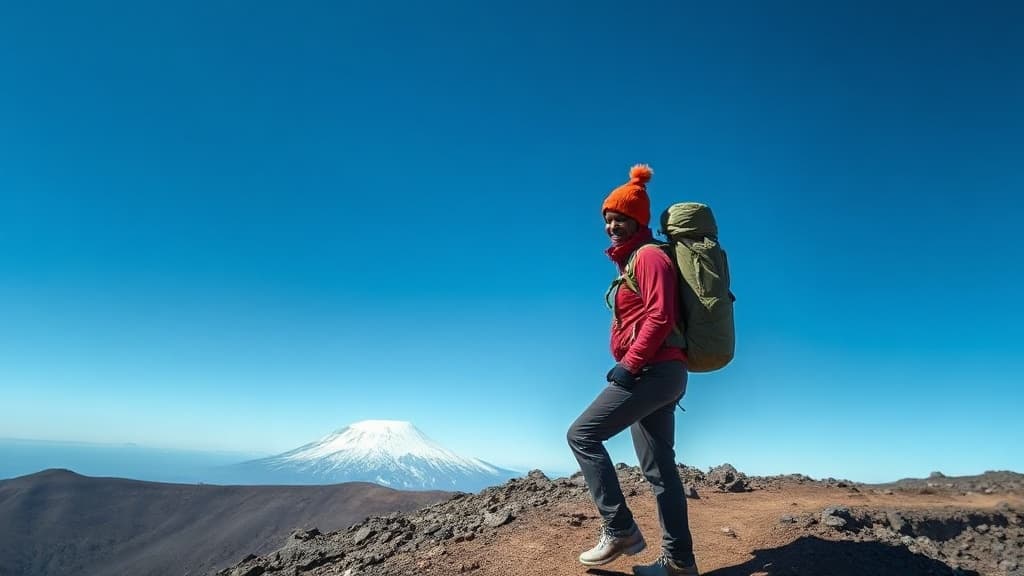
At a glance
- Conservation fee
- US$70 per day, ages 16 and over
- Camping fee
- US$50 a night (US$60 Marangu huts)
- Rescue fee
- US$20 per trip, mandatory
- Park fees, 7-day climb
- Roughly US$700-900, plus 18% VAT
- eVisa
- US$50 single entry, US$100 multiple
Mount Kilimanjaro — Mount Kilimanjaro · Moshi · Kilimanjaro International Airport
Kilimanjaro has two dry seasons, and the longer one — late June through October — is underway right now. Climbing guides who run routes on the mountain year-round consistently rank July, August, September and October among the best months to summit, alongside the shorter December-to-mid-March window: clearer skies, more stable weather below the summit, and trails that aren't churned into mud by the long rains that fall March through May. If you're weighing a climb for this year rather than next, the window is open, but the mountain's own park authority sets a specific, itemized cost stack that most trip-cost articles fold into a single package price instead of showing you directly.
What Tanzania National Parks actually charges
Tanzania National Parks Authority (TANAPA) publishes a formal tariff for every park it manages, and Kilimanjaro's fees run on a flat July-June rate — unlike Serengeti or Tarangire, Kilimanjaro has no separate peak/low-season pricing. Reading TANAPA's own published tariff directly, the per-person, per-day figures for a non-East-African-citizen climber are:
| Fee | Rate | Notes |
|---|---|---|
| Conservation fee | US$70/day (16+); US$20 (5-15); free under 5 | Charged for every day inside the park |
| Camping fee | US$50/night (16+) | Most routes (Machame, Lemosho, Rongai, Umbwe) |
| Hut fee | US$60/night (16+) | Marangu Route only — Mandara, Horombo and Kibo huts |
| Rescue fee | US$20/trip | Mandatory and non-refundable, charged once per climb |
| Crater camping | US$100/night | Premium option for climbers overnighting at the summit crater |
An 18% VAT is added on top of most of these tariffs, a detail operators fold into their all-in quotes but that isn't always broken out for climbers pricing the trip themselves. Run the arithmetic for a standard 7-day Machame Route climb — six nights camping, conservation fee for seven days, one rescue fee — and the raw TANAPA charges alone land somewhere in the US$700-900 range before VAT, before a single dollar goes to a guide, porter, cook, or the food and equipment they carry.
Why the total quote is always higher than the park fees
Kilimanjaro is unusual among Tanzania's parks in one specific way: TANAPA's own tariff table has a flat per-group guide fee for every park it lists — except Kilimanjaro. On the mountain, guide and porter costs aren't a fixed park charge at all; they're set by whichever licensed tour operator you climb with, because a licensed guide and operator are mandatory for every Kilimanjaro ascent. That's the main reason operator quotes for the same route can vary by over a thousand dollars for what looks like an identical itinerary — the TANAPA fees in the table above are close to fixed, but the guide, porter, cook, food, gear-rental and transport costs layered on top are entirely operator-dependent. As a rough sense of where quotes land, several operator cost breakdowns published this year put a full-service 6-7 day climb around US$2,200-3,000 per person, with the government fees above making up roughly a third to just over a third of that total — useful for sanity-checking a quote, not a number to hold any single operator to.
Picking a route for the season you're climbing in
During the long dry season, the busier routes — Machame and Marangu — see the heaviest traffic, since good weather draws the largest volume of climbers to the routes with the best-known trailheads and lodges nearby. If a quieter climb matters more to you than the shortest or cheapest one, Lemosho, Shira and the Northern Circuit route around the mountain's northern side see meaningfully fewer people while running through the same dry-season weather window. The Marangu Route is the only one with hut accommodation rather than tents, which is the direct reason its nightly fee (US$60) is higher than the camping fee (US$50) charged on every other route.
The Northern Circuit is the longest standard route on the mountain, typically run over eight or nine days rather than the six or seven most other routes take. Those extra days aren't padding — they buy more time at altitude to acclimatize before the final summit push, which is the single biggest factor in whether a climber actually reaches Uhuru Peak rather than turning back with altitude sickness partway up. A longer route also means more nights of the US$50 camping fee, which is worth weighing against the acclimatization benefit rather than assuming the shortest, cheapest-looking itinerary is automatically the best value.
Getting into Tanzania
Most nationalities need a visa for Tanzania, applied for online through the government's official eVisa portal rather than a third-party site charging a markup for the same paperwork. A single-entry tourist eVisa costs US$50; a multiple-entry visa, useful if your trip also crosses into Kenya for a Serengeti-Mara combination, costs US$100. Apply in advance — the eVisa is not something to sort out on arrival at Kilimanjaro International Airport, and processing can take several working days.
Connectivity before and after the climb
There is no meaningful mobile signal on the mountain itself once you're above the lower forest zone — a fact every trekking guide on Kilimanjaro states plainly, and one worth planning around rather than fighting. Where connectivity matters is in Moshi or Arusha before you start and after you come down: confirming your operator's pickup, checking weather, and letting people know you're off the mountain and back in range. Tanzania's networks — Vodacom, Airtel and Tigo among them — cover both towns well. Setting up a Tanzania eSIM before you fly means Moshi and Arusha are covered the moment you land, without a stop at an airport SIM counter; check your device's eSIM support on the compatibility checker and compare Tanzania options on Roameo's destination plans. As a reseller running over Tanzania's existing carrier networks, Roameo can't promise signal above the tree line — nobody can, on this mountain — but it can get you connected everywhere below it.
Booking inside the window that's open now
With late June through October already underway, a climb booked now still lands inside the long dry season rather than pushing into November's short rains. The practical order is: pick a route that matches your appetite for crowds versus cost, confirm your chosen operator's quote actually itemizes the TANAPA fees above rather than burying them, and apply for the Tanzania eVisa as soon as your dates are fixed rather than in the final week before departure.
Frequently Asked Questions
What is the best time of year to climb Kilimanjaro?
Kilimanjaro has two dry seasons: December to mid-March, and late June through October. The second is the longer window and is currently underway; July through October are consistently ranked among the best individual months to climb, alongside January and February.
How much does Kilimanjaro's park fee actually cost?
TANAPA's published tariff charges a US$70/day conservation fee, a US$50/night camping fee (or US$60/night for Marangu Route huts), and a mandatory US$20 rescue fee per trip, with 18% VAT added on top. For a standard 7-day climb, that's roughly US$700-900 in park fees alone, before guide, porter and equipment costs set by your tour operator.
Why do Kilimanjaro climb quotes vary so much between operators?
Unlike other Tanzanian parks, TANAPA has no flat per-group guide fee for Kilimanjaro — guide, porter, cook, food and equipment costs are set entirely by the licensed operator you climb with, which is mandatory for every ascent. The TANAPA park fees are close to fixed; everything layered on top is not.
Do I need a visa to climb Kilimanjaro?
Most nationalities need a Tanzania eVisa, applied for online in advance. A single-entry tourist eVisa costs US$50; a multiple-entry eVisa, useful for combining the climb with a Kenya safari, costs US$100.
Keep reading
Serengeti Mara River Crossings 2026: Booking Window Closes Soon
The Serengeti's Mara River crossings peak in August and taper by early October. Here's what a 2026 trip actually costs, and how to still get a seat this season.
Read more
Petra Is Quieter Than It's Been in Years: What a Visit Costs Now
Petra's visitor numbers collapsed by 70% this spring after regional conflict cut Middle East travel. Entrance fees haven't moved — here's the real cost of going now.
Read more
Bhutan in Autumn 2026: What the $100 Nightly Fee Buys
Bhutan charges US$100 a night before you book a hotel, added 5% GST in January, and holds the halved rate only until 31 August 2027. The real numbers.
Read more