
Shibuya Sky Daytime or Sunset: Which Slot Should You Buy?
Shibuya Sky charges by entry period, not by the moment you take a photo. Choose a daylight or sunset slot with the booking window and rooftop-weather rules in mind.
Travel tips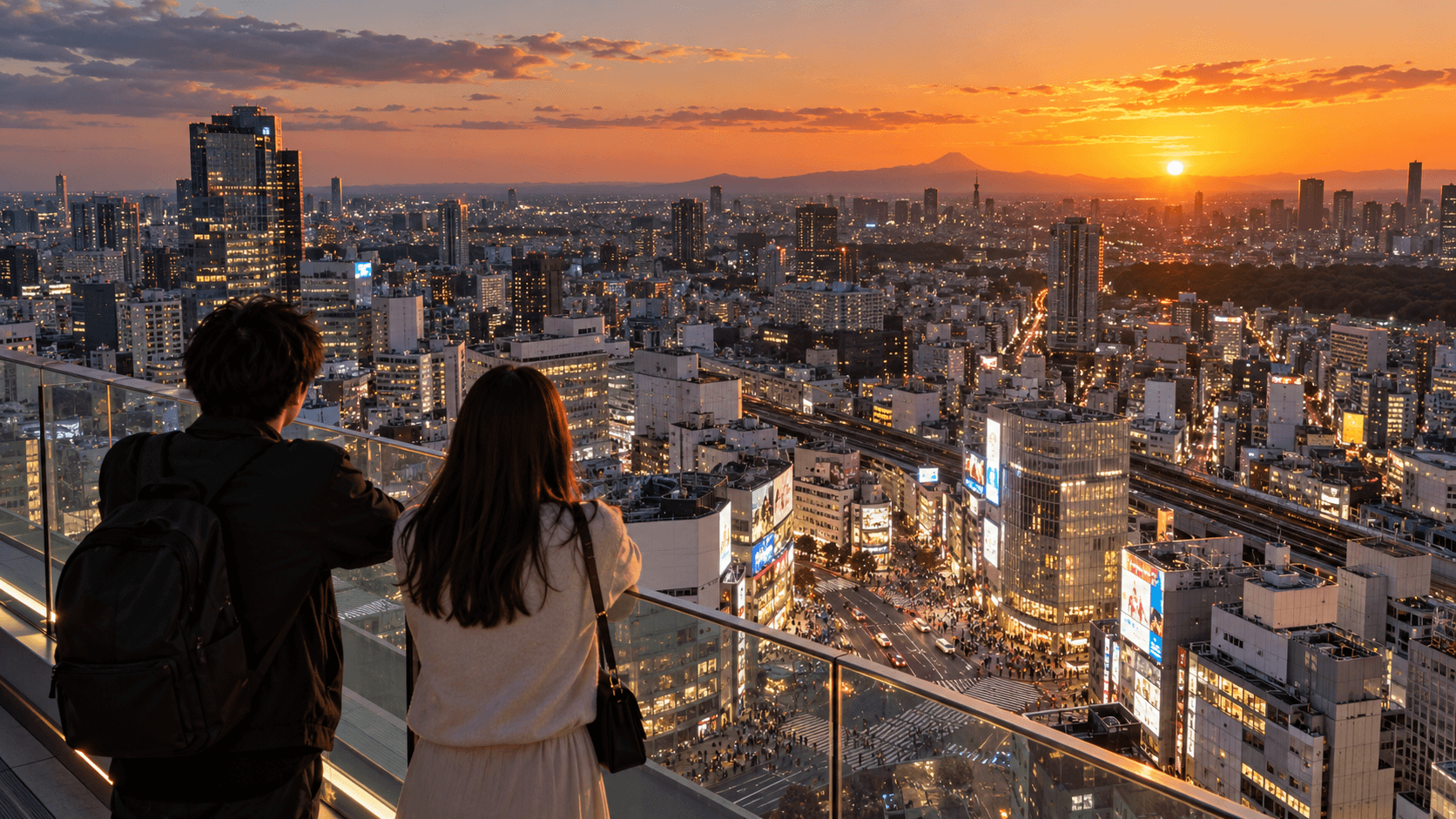
At a glance
- Lower-price entry
- By 14:59
- Later-price entry
- From 15:00
- Booking horizon
- Up to two weeks ahead
For a late-autumn Tokyo visit, should you pay for a Shibuya Sky slot before the afternoon price change or book later for sunset? The answer turns on what your admission time means. Shibuya Sky's official ticket page separates entry by 14:59 from entry from 15:00. The price tier is tied to your assigned entry period, not to the time when you finally take a rooftop photograph. Its published terms also say visitors may stay after entry without a fixed time limit, although there is no re-entry after leaving. This creates a useful decision: an earlier slot may allow daylight and a later view if you are willing to stay, while a later slot is for someone who wants a shorter visit near dusk.
First decide what you want from the view
Book a daytime entry if you want to identify streets and buildings clearly, take photographs in natural light or spend time moving between the indoor gallery and outdoor deck. A daylight visit is also easier to fit around an evening meal. If you can stay through the change in light, the earlier entry period can give you both conditions without buying a second ticket. That is a planning inference from the venue's entry and stay rules, not a promise about weather, visibility or how crowded the roof will feel.
Choose a later entry if your limited time is specifically for dusk and illuminated city views. You may prefer to arrive closer to the light you want instead of spending an extended stretch on the observation floors. This is particularly useful if your day already includes another booked attraction. It also means paying the later entry tier, subject to the price shown for your date. Do not use a generic sunset time from another city or season. Tokyo's daylight changes across the year, and Shibuya Sky's admission periods are fixed by clock time rather than by sunset. Look up the sunset for your actual date, then allow a buffer for moving through the building.
The entrance clock and the viewing clock are different
The ticket is a date-and-time admission product. Shibuya Sky's operator notice explains that entry times are assigned in short intervals and that the daytime and later periods have different prices. The current ticket page describes the lower-price period as entry by 14:59 and the later period as entry from 15:00. A traveler who enters earlier is not required to leave as soon as that lower-price period ends. A traveler who buys a late slot cannot simply enter earlier to photograph daylight. Treat the printed entry time as the appointment you must keep.
The venue warns that a late arrival may be refused. It is therefore unwise to reserve an entry immediately after a long cross-city journey or a flight landing. The landmark sits above Shibuya Station, but reaching the 14th-floor entry area, using lockers and moving through the visitor route all take time. If you want a sunset photograph, build those indoor steps into your plan; being on the station platform at sunset is not equivalent to standing on the roof. If the exact sunset interval has sold out, an earlier available entry with enough time to stay may be the better option.
When and where to book
The official ticket page says standard tickets are sold up to two weeks ahead. Its purchase notice gives the sales release as midnight Japan time two weeks before the admission date for applicable standard entry tickets. Confirm the current checkout calendar before planning a calendar reminder, since special events and product terms can differ. The same ticket page says that if an adult online ticket period sells out, going to the counter will not reveal an extra adult allocation for that period. A walk to the counter is therefore not a reliable fallback for a sold-out sunset slot.
Buy from the venue's linked official channel and read the exact product name. Standard admission, roof bar packages and special events are not interchangeable. The seasonal rooftop bar shown on the site has its own package terms, and a sofa package should not be mistaken for the only way to use the outdoor observation area. If you are comparing prices, compare the same standard admission product and the same arrival date. The useful distinction here is the entry period and what you intend to do after entering; a special bundle may contain services you do not need.
Weather can change the experience
Shibuya Sky comprises an outdoor rooftop area and an indoor observation gallery. The operator's entry conditions say that rain, lightning, wind, extreme heat and other conditions can close the roof, while the indoor gallery may remain open. A ticket for a late scenic view is therefore not a guarantee of outdoor access or a sunset. Check the roof's status on the official site on the day, especially if the rooftop itself is the reason you booked.
Cancellation rules depend on the ticket type and timing. The operator's notice describes free cancellation for eligible web tickets up to the day before a visit, and a same-day free cancellation option before entry if the rooftop is closed at the designated entry time. It also says counter tickets are outside that web-ticket cancellation programme and that waiting too long after the designated time can remove the same-day option. Read the live terms attached to the product you actually purchase. Do not assume a weather closure automatically refunds a used ticket, or that every partner's package follows the standard website policy. If the roof is closed, you can decide whether the indoor gallery still meets your goal or whether an eligible unused ticket should be cancelled within the stated window.
Bring the right things to the rooftop
The venue's rooftop guidance restricts loose items because wind can carry them. Bags, backpacks, tripods and selfie sticks are among the items it says must not go onto the roof. It lists pocket-size cameras with straps, similarly secured binoculars and smartphones among the items visitors may carry. Lockers on the observation floor are part of the practical visit; leave additional time for them. If you are travelling with a larger suitcase, the venue advises using surrounding luggage storage before arrival. This is relevant to an arrival-day booking, when a traveler may still have an airport bag with them.
Do not plan an elaborate photo setup that conflicts with those restrictions. The appeal of the roof is the open view, but the wind and the presence of other visitors make loose equipment a safety issue. An ordinary phone or secured small camera is the straightforward option. If your plan depends on a tripod, choose another location for that shot. The indoor gallery remains a meaningful part of the visit, particularly when weather limits the roof, yet it does not make the rooftop rules optional when the outdoor deck reopens.
A worked choice for a late-October itinerary
Imagine you have an open afternoon in Tokyo, want a panorama in daylight and would like to see the city lights come on. Check the live booking calendar as soon as your visit falls within the sale window. If a lower-price admission before 15:00 fits, enter on time and plan to stay if you still have the energy. Eat before entering if you need to; once you exit you cannot re-enter on the same ticket. Watch the venue's roof status and do not build the whole evening around a guaranteed sunset on an open deck. You have paid for access to the venue during its operating conditions, not bought control of the sky.
Now imagine you have a dinner reservation and only a short period to spare. An early ticket would force a long wait inside for the light you want, or you would have to leave before dusk. A later slot may suit the real schedule despite its higher tier. If late slots are sold out, do not assume counter inventory will save the plan. Choose an earlier slot only if you genuinely can remain and enjoy it, or pick a different Tokyo viewpoint for the evening. The best ticket is the one that aligns with your available time and appetite for weather uncertainty, not the one with the most fashionable photo hour.
Check the live status before setting out
The venue posts hours and the day's roof status on its official page. Check that rather than relying on a screenshot from an earlier season. Admission normally runs into the evening, but temporary closures, special events and operational changes can affect a particular date. If you are using mobile tickets and maps while moving around Tokyo, consider a travel data plan through Roameo's destinations and check the phone at compatibility. Save the ticket locally too. Connectivity can help with the live status and route, but a reseller cannot guarantee network performance at the entrance or on the observation floor.
Finally, separate three decisions: the entry period you pay for, the light you hope to see and the weather-dependent area you can use. An earlier admission offers more flexibility to stay across light conditions. A later admission saves waiting when your aim is dusk. Either way, reserve the exact date and time, keep the rooftop restrictions in mind and make a backup plan for a closed deck. That is a more durable answer than telling every traveler to chase a particular sunset slot.
Frequently Asked Questions
Can I enter before 15:00 and stay for sunset?
The operator says there is no fixed stay limit after entry, so this can work while the venue remains open. Your actual view still depends on the date, weather and roof status; re-entry after leaving is not allowed.
Will an adult sunset ticket be available at the counter if it is sold out online?
The official ticket page says adult counter tickets also sell out when the corresponding online tickets have sold out. Check another available date or period.
What happens if the rooftop closes for weather?
The indoor gallery may remain open. Eligible unused web tickets may qualify for the operator's stated cancellation option if the roof is closed at the assigned entry time; check your exact ticket terms before acting.
Keep reading
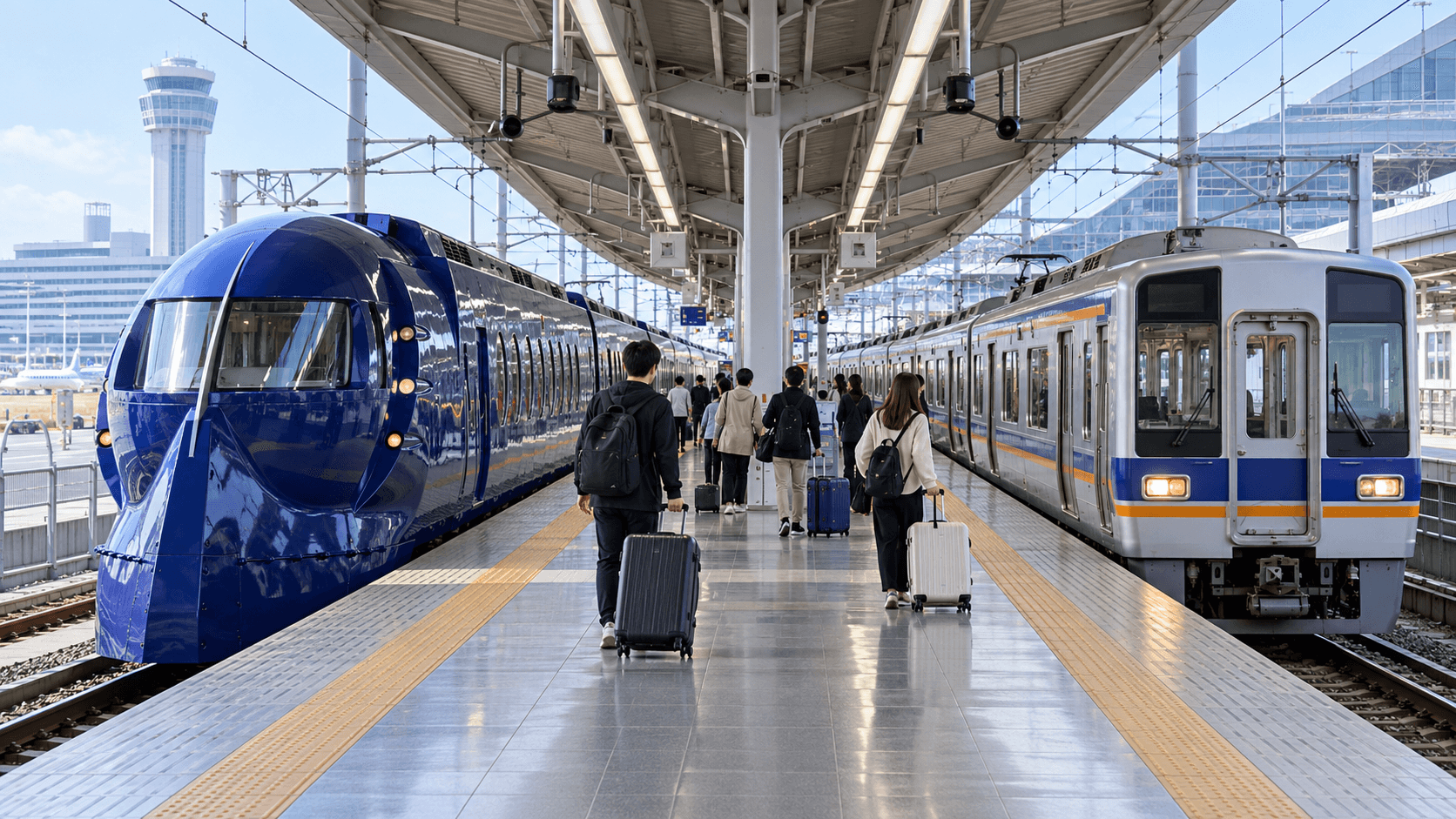
Kansai Airport to Namba: Rapi:t or Airport Express?
Both Nankai trains reach Namba from Kansai Airport. Compare the real journey, seat reservation, ticket layers and Terminal 2 transfer before choosing.
Read more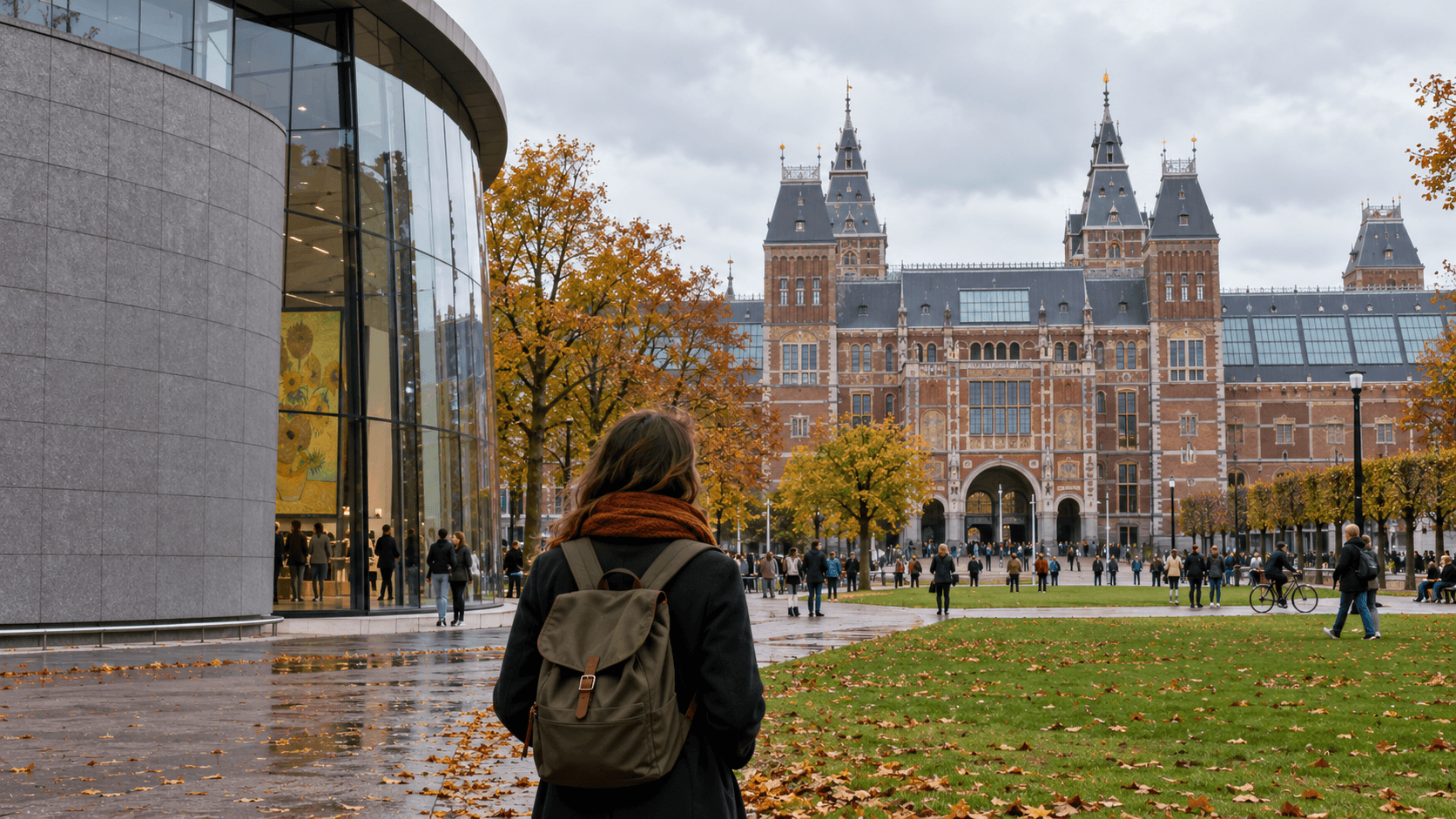
Van Gogh Museum or Rijksmuseum: Which One Visit Fits?
Have one Amsterdam museum slot? Compare the collections, timed-entry rules, late openings and pass conditions before choosing Van Gogh Museum or Rijksmuseum.
Read more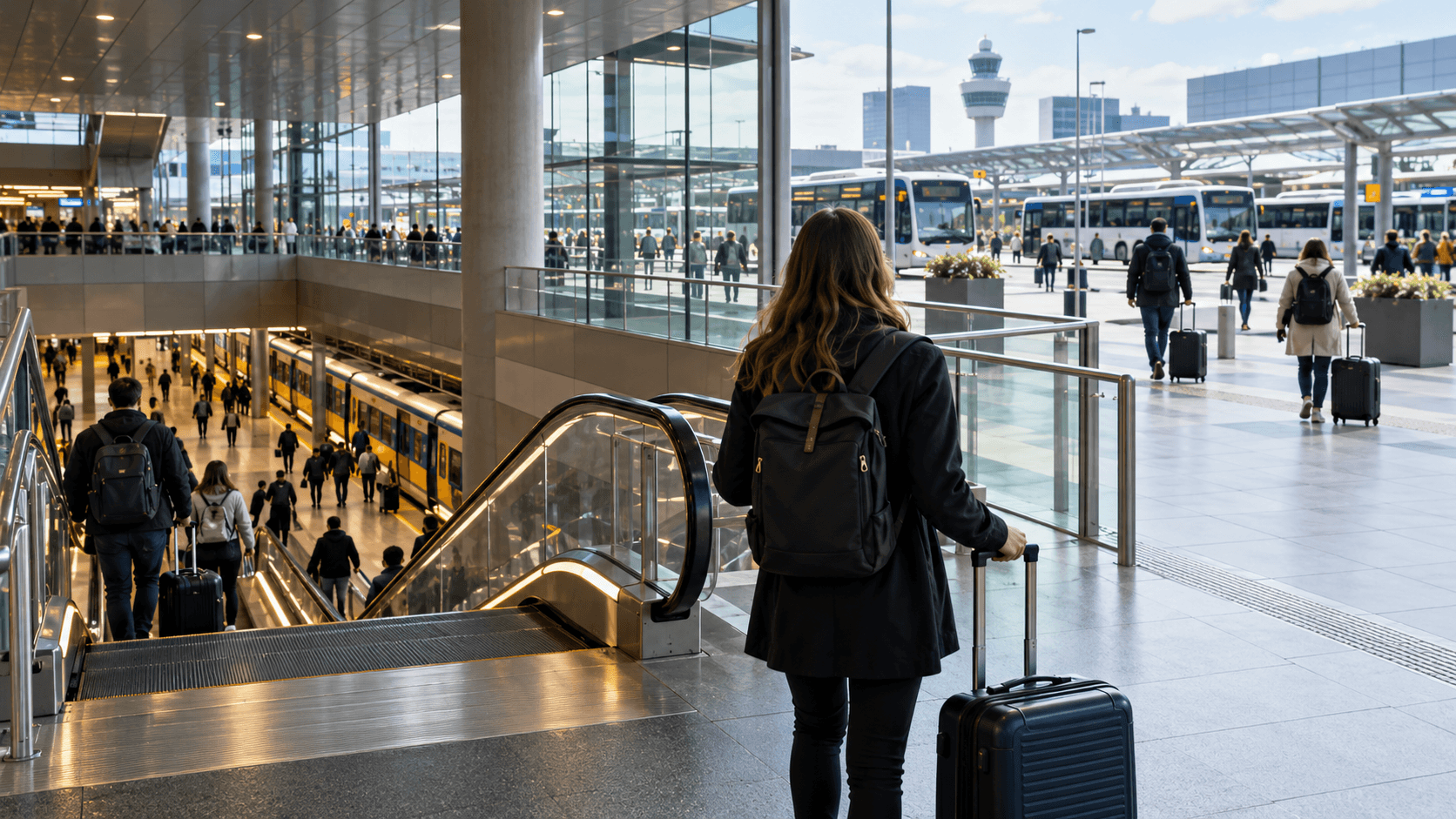
Schiphol to Amsterdam: Train or Bus 397 for Your Hotel?
The Schiphol train suits Amsterdam Centraal, while bus 397 serves Museumplein and Leidseplein. Choose by your hotel stop, ticket rules and arrival time.
Read more