
Sidi Bou Said, Tunisia: Visiting Now That UNESCO Has Listed It
Tunisia's blue-and-white clifftop village joined the UNESCO World Heritage List on 25 July 2026. Here's what it costs to visit it and Carthage next door.
Destinations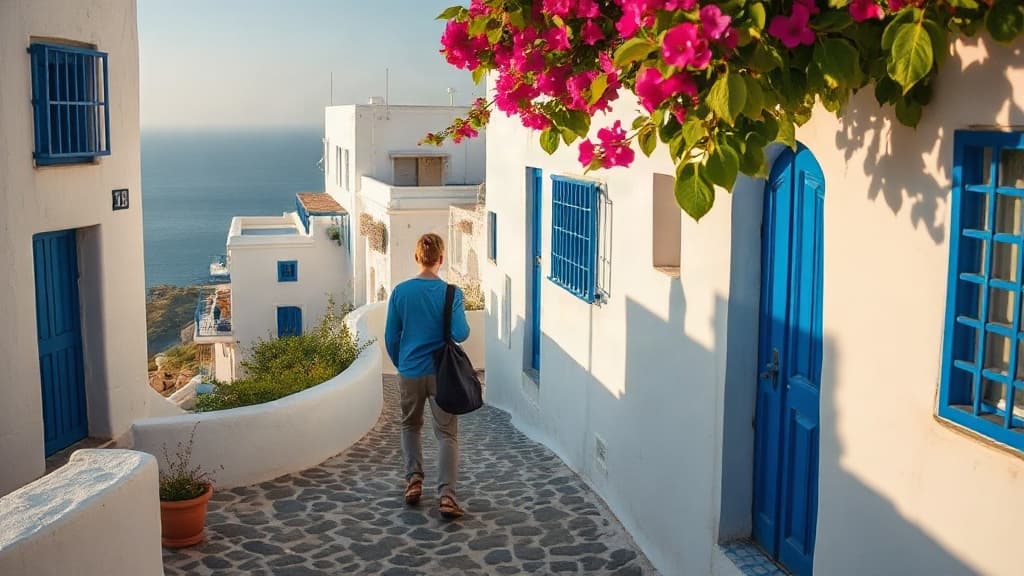
At a glance
- UNESCO listed
- 25 July 2026, at the 48th World Heritage session
- Carthage entry (foreign)
- 45 TND (~US$15.50), rising to 70 TND in 2027
- Ennejma Ezzahra Palace
- 10 TND adult, 5 TND student
- Visa-free stay
- 90 days (most EU/AU/NZ) to 4 months (US/Canada/Germany)
- Gateway
- Tunis-Carthage Airport; TGM train runs about 30 minutes
- Best months
- April-June and September-October
Sidi Bou Said — Sidi Bou Said · Carthage archaeological site · Tunis-Carthage Airport (TUN)
On 26 July 2026, Tunisia's Ministry of Cultural Affairs announced that the village of Sidi Bou Said had been inscribed on the UNESCO World Heritage List the day before — a decision adopted at the 48th session of the World Heritage Committee, held in Busan, South Korea. It is Tunisia's first new cultural inscription since the island of Djerba in 2023, and it puts an official global-heritage stamp on a hilltop village that has been drawing painters, writers and Instagram feeds for a century without one. If you're planning an autumn trip to North Africa, here's what the listing actually changes, what still costs money nearby, and how to get there.
What UNESCO just protected
The inscription covers the historic core of Sidi Bou Said — the whitewashed houses with cobalt-blue doors, wrought-iron window grilles and bougainvillea-lined lanes that climb a cliff above the Gulf of Tunis. The ministry's statement cited the village's distinct architectural identity, its centuries of layered Andalusian, Ottoman and French colonial influence, and its role as a magnet for Mediterranean artists and intellectuals since the early 20th century (Paul Klee and Andre Gide both painted or wrote about it). A World Heritage listing doesn't add a ticket booth to a village — Sidi Bou Said stays free to walk — but it does typically bring tighter building-restoration rules and, eventually, more visitors than the narrow lanes were built for. Going before that catches up is the practical argument for a 2026 trip, not just the fresh headline.
Getting there and who needs a visa
The gateway is Tunis-Carthage Airport (TUN), about 20 minutes by taxi from Sidi Bou Said. Entry rules depend on your passport, not a blanket policy: per Tunis-Carthage Airport's own visitor information page, citizens of the United States, Canada and Germany can stay visa-free for up to four months, while most European Union nationals (Cyprus excepted), Australians, New Zealanders, Japanese and South Korean passport holders get 90 days visa-free. Travelers from countries not on either list need to apply at a Tunisian embassy or consulate before arrival — there is no general visa-on-arrival counter at the airport for the remaining nationalities, so check your specific passport against the airport's table rather than assuming.
From the airport, the classic route into Sidi Bou Said is the TGM commuter train (Tunis-La Goulette-La Marsa), which connects central Tunis to the village in about 30 minutes for a fare of roughly a dollar. A direct taxi from the airport runs in the neighbourhood of 15-25 Tunisian dinars (TND) and takes 15-25 minutes depending on traffic.
What actually costs money
Sidi Bou Said's lanes, viewpoints and cafes are free to wander. Two paid sites sit inside or immediately next to the village and are worth budgeting for separately:
- Ennejma Ezzahra Palace — the Baron d'Erlanger's Andalusian-Moorish palace, now the Center of Arab and Mediterranean Music. The center's own published rates are 10 TND for adults and 5 TND for students with a valid card; entry is free for visitors with disabilities and their companions, and for everyone on International Museum Day (18 May). It closes Mondays and public holidays, and runs shorter summer hours (9am-3pm, 1 July-31 August) than the rest of the year.
- The Carthage archaeological site, a five-minute taxi ride away, is the natural pairing for a day trip and the place where prices have actually moved this year. A government decree that took effect on 1 April 2026 raised the combined foreign-visitor ticket — covering the Antonine Baths, the Byrsa Hill museum, the Punic ports and the Tophet sanctuary, among other sites — to 45 TND (roughly US$15.50 at the current exchange rate), with a further increase to 70 TND (about US$24) already scheduled for 1 January 2027. Tunisian and other Maghrebi-resident visitors pay a separate, much lower 9 TND rate under the same decree. Two independent Tunisian outlets, La Presse and Business News Tunisia, published matching figures the same week, both noting the increase is explicitly aimed at foreign tourists rather than the general museum-going public.
Budget half a day for Carthage on top of Sidi Bou Said — the ruins are spread across several kilometres of the modern suburb, so allow at least 2-3 hours plus transit time between sites.
The two fees move on different clocks: the Ennejma Ezzahra ticket has held steady, while the Carthage combined pass is mid-way through a two-stage government increase that finishes in January 2027. If you're pricing an autumn 2026 trip, 45 TND for Carthage is the number that applies; from New Year 2027 onward, budget for 70 TND instead.
Money and getting connected
The Tunisian dinar is a closed, non-convertible currency: you cannot legally buy TND before you land or take it out of the country when you leave, and export of Tunisian dinars is restricted at the border. That means changing money or drawing cash from an ATM happens after you arrive, not before — plan for a small cash buffer for taxis, the TGM fare and site tickets until you've found a bank or exchange counter. Buying a local SIM card once you land requires passport registration at the point of sale, which is standard across a lot of North Africa but is one more queue after a long flight. Landing with a travel eSIM already active on your phone skips that step entirely and gets you online for navigation and translation apps before you've cleared the taxi rank — useful in a village where street names are as much decoration as direction.
When to go
Sidi Bou Said sits right on the Mediterranean, so summer (July-August) runs hot and crowded, with daytime highs regularly above 30°C. The shoulder seasons — April through June, and again September through October — bring cooler, drier weather in the low-to-mid 20s Celsius and noticeably thinner crowds on the cliff-top viewpoints and in the village's cafes, which is also when the light for photographing those blue doors is at its best in the late afternoon. Booking an autumn trip now, in the weeks right after the UNESCO announcement, gets you the listing's headline moment without the crowds it will eventually bring.
FAQ
Is Sidi Bou Said free to visit?
Yes — walking the village's lanes, viewpoints and public squares costs nothing. The only fees are for specific sites inside or near it, such as Ennejma Ezzahra Palace (10 TND adult, 5 TND student) and the separate Carthage archaeological site (45 TND for foreign visitors as of 2026).
Do I need a visa to visit Tunisia?
It depends on your passport. US, Canadian and German citizens get four months visa-free; most EU nationals (excluding Cyprus), plus Australian, New Zealand, Japanese and South Korean passport holders, get 90 days visa-free. Other nationalities generally need to apply at a Tunisian embassy or consulate before traveling, since there is no general visa-on-arrival option at Tunis-Carthage Airport.
How do I get from the airport to Sidi Bou Said?
A taxi from Tunis-Carthage Airport takes roughly 15-25 minutes and costs about 15-25 TND. Alternatively, the TGM commuter train connects central Tunis to Sidi Bou Said in about 30 minutes for roughly a dollar, and is the route most locals and repeat visitors use.
Can I use my phone's regular data plan in Tunisia?
Only if your home carrier includes Tunisia in an international roaming package, and rates for North Africa are often steep outside bundled plans. Buying a local Tunisian SIM requires passport registration at the point of sale. A pre-installed travel eSIM avoids both the roaming bill and the SIM-shop queue.
Why did the Carthage entrance fee change in 2026?
A Tunisian government decree that took effect 1 April 2026 raised the combined foreign-visitor ticket for Carthage's archaeological sites to 45 TND, with a further rise to 70 TND set for 1 January 2027, while keeping a separate, lower rate for Tunisian and other Maghrebi-resident visitors. Local press coverage frames it as part of a broader push to raise revenue from foreign tourism at state-run heritage sites.
Keep reading
Amsterdam Tourist Tax 2026: The Real Cost of a Room Now
Amsterdam charges Europe's highest tourist tax at 12.5%. A new coalition deal locks in 16% for 2027 and 20% by 2031 — the real math on a room today, and later.
Read more
Lucerne, Switzerland: What the 2026 Tourist Tax Really Costs
Canton Lucerne's overnight tax rose to CHF 1.10 in 2026. Here's what that adds up to, plus the real Pilatus and Rigi ticket prices for planning an autumn trip.
Read more
Mount Olympus UNESCO Listing: What Changes for Hikers in 2026
Greece's highest peak was UNESCO-listed on 25 Jul 2026. Real 2026 refuge prices, the Class III summit scramble, and an easier gorge walk for everyone else.
Read more