
Similan Islands, Thailand: Reopening 15 October 2026
Thailand's Similan Islands reopen 15 October 2026 after a five-month monsoon closure. Here's the entrance fee, the diving surcharge, and how to actually get there.
Destinations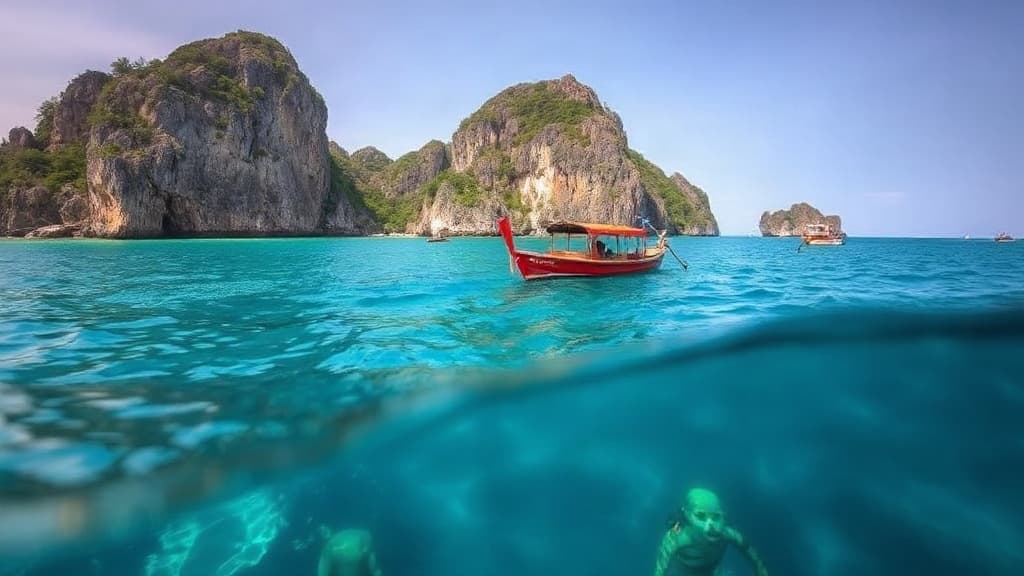
At a glance
- Reopens
- 15 October 2026
- Closed
- 15 May-15 Oct 2026, 5 months
- Entrance fee
- 500 baht (~US$15) foreign adult
- Diving surcharge
- 200 baht/day on top of entry
- Boat access
- Speedboat from Khao Lak, ~1-1.5h
- 2025-26 season visitors
- 400,000+, 90%+ foreign
Similan Islands (Mu Ko Similan National Park) — Similan Islands (Mu Ko Similan National Park) · Phuket International Airport · Thap Lamu Pier, Khao Lak · Koh Bon dive site
Mu Ko Similan National Park reopens on 15 October 2026, ending a five-month closure that ran from 15 May. If you're booking a Similan Islands diving or snorkelling trip for this winter, the reopening date is the number that actually matters — nothing gets to the islands before it, no matter how good the operator's cancellation policy sounds.
Why the islands close every year
The closure isn't a one-off. Thailand's Department of National Parks shuts Mu Ko Similan and the neighbouring Mu Ko Surin every year for the southwest monsoon, and 2026's window ran the full 15 May-15 October, five months in total. Officials describe it as doing two things at once: keeping boats off an Andaman Sea that turns genuinely dangerous in the monsoon swell, and giving the reef and beaches a recovery period before the next season's crowds arrive, according to The Nation Thailand's coverage of the 2026 closure. The same report puts a number on what reopens: the previous season pulled in more than 400,000 visitors and over 215 million baht in park revenue, with more than 90% of visitors arriving from outside Thailand.
What it costs to get in
Foreign visitors pay a 500 baht (roughly US$15) national park entrance fee for adults, with a reduced 250 baht rate for children aged 3-14 — Thai nationals pay a separate, lower local rate. That's before you touch the water: divers pay an additional 200 baht per day on top of the entrance fee, a surcharge that's been stable for years and is confirmed consistently across Similan-based dive operators including Aussie Divers Phuket and Similan Diving Tours. A snorkel-only day trip pays just the 500 baht entrance; add a day of diving and the park fee alone runs to 700 baht, before the boat operator's own charge.
There's no campsite left on the islands and no park accommodation either — the old Similan campsite has been discontinued. Everyone stays on the mainland, in Khao Lak or Phuket, and visits as a day trip or via a liveaboard that sleeps offshore.
Getting there: Khao Lak or Phuket, then a boat
The Similan Islands have no airport and no land connection — every visitor arrives by boat, most commonly a speedboat from Thap Lamu Pier near Khao Lak, the mainland town closest to the park. The crossing takes roughly 1 to 1.5 hours each way. Phuket International Airport is the practical international gateway: it's about 90 minutes by road down to Khao Lak, and several operators also run speedboats directly from Phuket for a longer same-day trip. Budget day-tour packages from either town start from around 3,100 baht, covering the boat, park fees are sometimes bundled and sometimes billed separately, so check before you book.
Day trip or liveaboard?
Most visitors see the Similan Islands as a day trip from Khao Lak or Phuket, which covers the well-known snorkel bays and one or two dive sites before the boat heads back to the mainland by late afternoon. Divers who want the park's signature sites — Elephant Head Rock, a maze of giant granite boulders with swim-throughs running past 40 metres and currents strong enough that it's generally reserved for experienced divers; Christmas Point, another big-boulder site carved by tidal flow over centuries; and North Point, further out and reachable only by liveaboard — typically book a multi-day liveaboard instead, sleeping aboard between dives rather than commuting from shore each morning. Liveaboard pricing for the Similan and Surin route spans a wide range, from roughly 13,900 baht for a short budget trip up to around 126,000 baht for a longer, higher-end itinerary, according to Liveaboard.com's current listings for the route. Either way, the same 15 October reopening date applies — no liveaboard operator can run the route before the park authority reopens it.
Booking now for an October trip
Because the park was closed through the entire high-season booking window that normally opens in late summer, dive shops and liveaboard operators around Khao Lak and Phuket are taking reopening-week bookings now rather than during the closure. If a specific reopening-day or reopening-week slot matters to you — first light back on the islands after five months usually means the clearest water and the fewest boats of the whole season — book before October, not after.
When in the season to go
The park stays open through the full dry season once it reopens, but conditions and wildlife shift within that window. Diving conditions are generally best from December through April, when wind drops and the Andaman Sea's water temperature sits around a steady 29°C, according to Similan Dive Center's seasonal guide. Whale shark sightings peak January through March, with March generally rated the strongest single month, while manta ray encounters run from late January into April as plankton blooms draw them in to feed, per Khao Lak Explorer's whale shark season guide. Neither species is guaranteed on any given trip — these are wild-encounter odds, not scheduled sightings — but if a specific animal is the reason for the trip, the month you book matters as much as the reopening date itself.
Entry rules and staying connected
Thailand requires every foreign arrival — air, land or sea, every nationality, every visa type — to file a free Thailand Digital Arrival Card (TDAC) online before entry, a requirement in force since 1 May 2025 that replaced the old paper TM6 card. It must be submitted personally, not by a travel agent, at the official tdac.immigration.go.th portal. Separately, Thailand's telecom rules require your passport for any physical prepaid SIM registration, with your photo taken as part of the process at point of sale — an eSIM installed before you fly sidesteps that counter entirely, which matters if your first stop off the plane is a transfer straight down to Khao Lak rather than a shop in Phuket town. See Roameo's Thailand eSIM plans or check device compatibility before you travel.
Frequently Asked Questions
When do the Similan Islands reopen in 2026?
15 October 2026, after a closure that ran from 15 May 2026 — the standard five-month monsoon-season shutdown that Thailand's national park authority applies every year.
How much does it cost to visit the Similan Islands?
Foreign adults pay a 500 baht (about US$15) national park entrance fee, with a 250 baht rate for children aged 3-14. Divers pay an extra 200 baht per day on top of the entrance fee.
How do I get to the Similan Islands?
By boat only — there's no airport or land route. Most visitors fly into Phuket International Airport, transfer to Khao Lak (about 90 minutes by road), and take a speedboat from Thap Lamu Pier, a crossing of roughly 1 to 1.5 hours.
Do I need a SIM card registered to my passport in Thailand?
Only for a physical prepaid SIM bought locally, which requires your passport and a photo at the point of sale. An eSIM installed before you arrive avoids that step and works from the moment you land.
When is the best time to see whale sharks at the Similan Islands?
January through March, with March generally rated the strongest month for sightings. Manta ray encounters run a little later, from late January into April, as seasonal plankton blooms draw them in to feed. Both are wild encounters, not guaranteed sightings on any single trip.
Keep reading

Thailand Cuts Visa-Free Stays to 30 Days From 15 September 2026
Thailand halves its 60-day visa waiver to 30 days for 60 countries from 15 Sept 2026, caps land-border entries, and drops 21 nationalities from the list.
Read more
Thailand Just Cut Visa-Free Stays From 60 Days to 30
Thailand's cabinet approved a 30-day cap for 59 nationalities on July 14, 2026, ending its 60-day scheme — here's exactly who's affected and when it bites.
Read more
Iceland Ring Road 2026: The New Km Tax on Every Rental Car
Iceland began charging a per-kilometre road tax on every rental car on 1 January 2026 — here is what it adds to a Golden Circle day trip or a full Ring Road lap.
Read more