
Iceland Ring Road 2026: The New Km Tax on Every Rental Car
Iceland began charging a per-kilometre road tax on every rental car on 1 January 2026 — here is what it adds to a Golden Circle day trip or a full Ring Road lap.
Destinations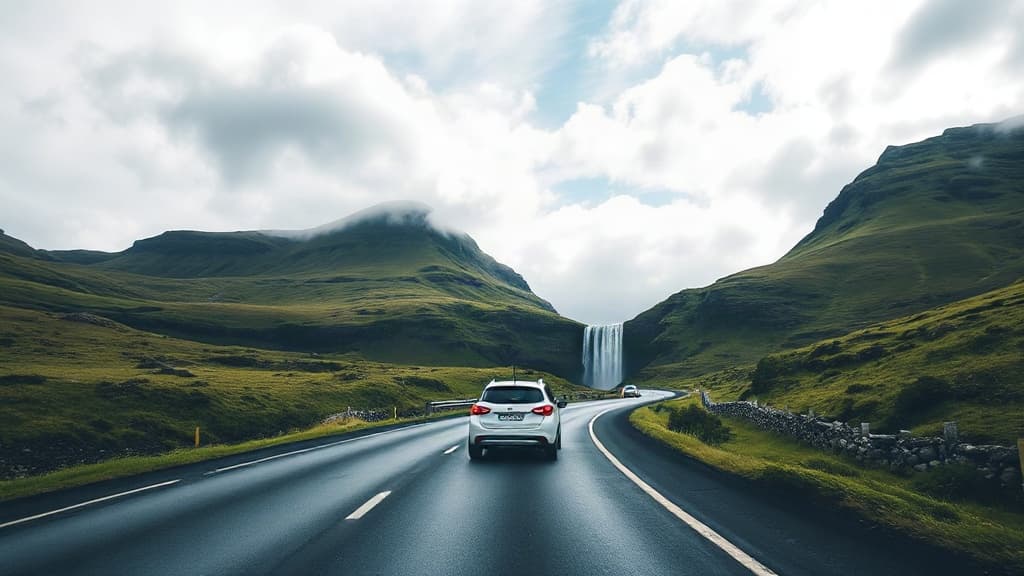
At a glance
- Road tax rate
- 6.95 ISK/km for cars & SUVs up to 3.5t
- In effect since
- 1 January 2026
- Daily flat-rate option
- 1,390 ISK/day (~200km estimate)
- Thingvellir parking
- 1,000 ISK/day, covers all 3 lots
- Full Ring Road (1,322km)
- ~9,190 ISK (~US$76) in road tax alone
- Exchange rate used
- ~121 ISK = US$1 (late Aug 2026)
Gullfoss Waterfall — Gullfoss Waterfall · Thingvellir National Park · Geysir Geothermal Area · Jokulsarlon Glacier Lagoon · Vik i Myrdal · Keflavik International Airport
Since 1 January 2026, every car rented in Iceland — petrol, diesel, hybrid or electric — has carried a new government road-usage tax of 6.95 ISK per kilometre driven, and it is now showing up as a line item on rental invoices for anyone booking a Golden Circle day trip or a full lap of the Ring Road. If you are pricing out an Iceland self-drive trip for the shoulder-season or winter aurora window, the number on the rental quote is no longer the number you actually pay at return.
What the road tax actually is
The kilometre fee (kilometragjald), according to Iceland's official government services portal, replaced the country's old fuel-tax system, under which electric and plug-in hybrid rentals had paid discounted rates (6 ISK/km and 2 ISK/km respectively) instead of tax at the pump. From 1 January 2026 every vehicle up to 3.5 tonnes — the class almost every tourist rental falls into — pays the same flat 6.95 ISK per kilometre, tracked by odometer readings at the start and end of the rental period. The change closed a gap that had been widening as more of the country's car fleet went electric and fuel-tax revenue fell, even as road maintenance costs kept climbing.
Rental companies have two ways to bill it, and Iceland's own government page for rental-car registration spells out the alternative: a company can register a car for a flat daily rate of 1,390 ISK instead of metering the actual distance, calculated against an assumed 200 km of driving per day. Pick a short, city-bound rental and the flat rate is usually cheaper; plan to actually drive the Ring Road and the per-kilometre rate works out lower, since few visitors cover 200 km every single day of a multi-week rental.
Some rental companies add their own processing fee on top of the government rate rather than passing it through at cost. Holdur, one of Iceland's larger local operators, discloses an extra 1.86 ISK/km administration charge on its own site, bringing its effective rate to 8.81 ISK/km — read the fine print on whatever company you book with before comparing quotes.
What it actually adds to a real itinerary
The classic Golden Circle loop out of Reykjavik — Thingvellir, Geysir and Gullfoss and back — runs close to 250 km. At the government's 6.95 ISK/km rate alone, that is roughly 1,740 ISK, or about US$14 at current exchange rates (around 121 ISK to the dollar in late August 2026). It is a real cost, but not one that should change anyone's plans.
The number that matters more is a full circuit of the Ring Road (Route 1), which runs 1,322 km end to end. At 6.95 ISK/km that is about 9,190 ISK — roughly US$76 — in road tax alone, before fuel, before any rental company's administration fee, and before tolls on the Hvalfjordur tunnel north of Reykjavik. For a two-week rental covering most of the Ring Road plus side trips into the Westfjords or the south coast, budgeting 10,000-15,000 ISK (roughly US$85-125) purely for the kilometre tax is realistic.
Golden Circle and south coast stops, and what they cost
The road tax is a driving cost, not an entry fee, and most of Iceland's headline sights are still free to walk into. Thingvellir National Park's own visitor page confirms parking is the only charge: 1,000 ISK per day for cars with up to five seats, covering all three of the park's main lots (Hakid, Efri-Vellir and Valholl) until midnight, paid at machines on site or online. Geysir's geothermal field is free to walk around — Strokkur erupts every few minutes regardless of payment — but its car park charges a similar 1,000 ISK fee. Gullfoss, by contrast, currently charges nothing at all for either entry or parking.
Push further along the Ring Road onto the south coast and the sights get bigger with no extra gate: Jokulsarlon Glacier Lagoon and the black-sand beach at Vik i Myrdal, near Reynisfjara, are both free to visit, though parking machines apply at some pull-offs. If your itinerary reaches for the interior F-roads — Landmannalaugar, Thorsmork, the Sprengisandur route — note that those are seasonal by nature of the terrain, typically opening in stages from late May through early July as snow clears and closing again as autumn weather returns, so a September or winter booking should plan around the paved Ring Road and coastal routes rather than the highlands.
Staying connected on the drive
Iceland's weather and road conditions change fast enough that the country runs its own dedicated safety infrastructure for it. SafeTravel, run by ICE-SAR (Iceland's volunteer search-and-rescue organisation), and the companion 112 Iceland app let drivers log a trip plan so rescuers know an intended route if someone does not check back in, and push live alerts for closed roads, high winds and other hazards — genuinely useful gear for anyone driving beyond Reykjavik in the shoulder season or during the winter aurora-viewing window, when road status can change within a few hours. None of that works without a live data connection at the moment you need it, whether that is checking road.is before a mountain pass or pulling up a map on an unfamiliar gravel stretch — worth having sorted before you land at Keflavik rather than hunting for a SIM counter after a long flight. An Iceland eSIM installs before departure and activates on arrival, which matters most on the exact kind of remote stretch where you would otherwise have no way to check whether the road ahead is still open.
Iceland is part of the Schengen Area, so most passport holders who qualify for visa-free Schengen entry can stay up to 90 days within any 180-day period without a separate visa — check your own passport's status before booking, since the requirement varies by nationality rather than being universal.
Booking the trip
None of this changes the basic math of an Iceland self-drive trip — it is still one of the more affordable ways to see the country's headline sights against the cost of a multi-day guided tour — but the road tax is a real, verifiable line item that Iceland did not charge a year ago, and it is worth building into a 2026 budget rather than discovering at the return counter. Compare Iceland eSIM plans or check device compatibility before you fly.
Frequently Asked Questions
Does Iceland's new road tax apply to electric and hybrid rental cars too?
Yes. Before 2026, electric and plug-in hybrid vehicles paid discounted rates of 6 ISK/km and 2 ISK/km respectively instead of fuel tax. Since 1 January 2026, the government's kilometre fee applies at the same flat 6.95 ISK/km to every vehicle up to 3.5 tonnes regardless of fuel type, closing that gap.
Is the road tax charged per person or per car?
Per car, based on the odometer reading at the start and end of the rental — it has nothing to do with how many people are in the vehicle.
Do Gullfoss, Geysir and Thingvellir charge entrance fees?
No entrance fees at any of the three. Gullfoss charges nothing at all, including for parking. Geysir's geothermal field is free to walk, but its car park charges around 1,000 ISK. Thingvellir National Park charges 1,000 ISK per day for car parking across all three main lots, with no separate entry fee.
When do Iceland's F-roads (highland routes) open and close each year?
There is no fixed date — Iceland's road authority opens each F-road once snow has cleared and the ground can support traffic, typically in stages from late May through early July, and closes them again as autumn weather sets in. A trip booked for autumn or winter should plan around the paved Ring Road and coastal routes rather than the highland F-roads.
Keep reading
Iceland's Northern Lights Season: What It Costs in 2026
Iceland's aurora season reopens as the nights darken. The lodging tax, the studded-tyre window, the official forecast to trust, and what to book in August.
Read more
Dubrovnik 2026: How the Cruise Ship Cap Changes Your Visit
Dubrovnik now caps cruise arrivals at two ships and 4,000 passengers with an 8-hour minimum port stay. Here's what that means for timing an Old Town visit in 2026.
Read more
Similan Islands, Thailand: Reopening 15 October 2026
Thailand's Similan Islands reopen 15 October 2026 after a five-month monsoon closure. Here's the entrance fee, the diving surcharge, and how to actually get there.
Read more