
Berlin Festival of Lights 2026: Free Route and Costs
Berlin's free light festival runs 9-18 October. Use this practical route through the confirmed displays, with current transit fares and entry checks now.
Destinations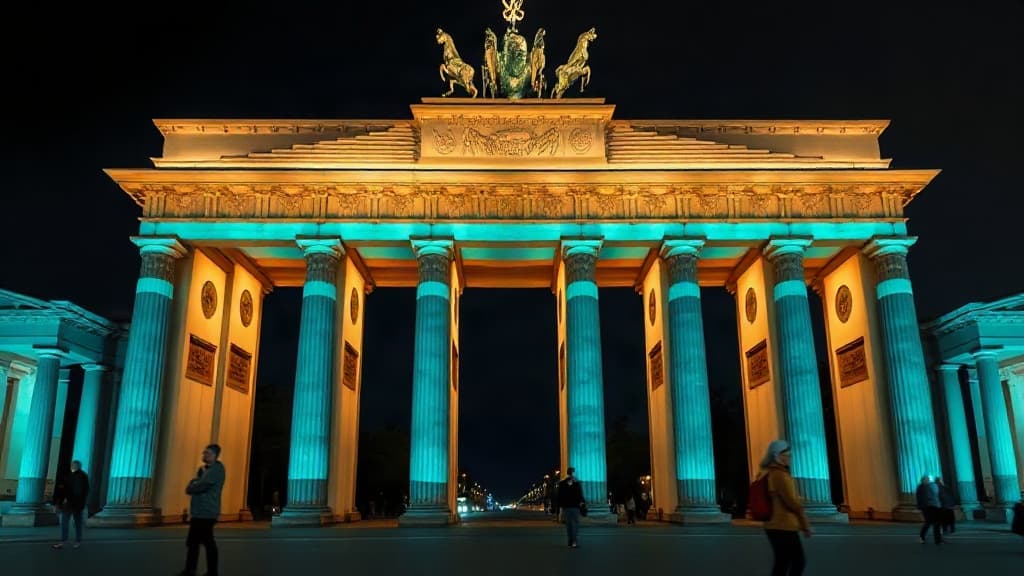
At a glance
- Festival dates
- 9-18 October 2026
- Lighting hours
- Daily, 19:00-23:00
- Outdoor admission
- Free for the outdoor programme
- Published programme
- 35 locations listed on 1 October
- 24-hour Berlin AB
- EUR 11.20 (about US$12.72)
- 24-hour airport ABC
- EUR 12.90 (about US$14.65)
Brandenburg Gate — Brandenburg Gate · Berlin TV Tower · Berlin Cathedral · Bebelplatz · Potsdamer Platz · Berlin Brandenburg Airport
As of 1 October 2026, Berlin's Festival of Lights is only eight days away, and the useful planning detail is finally public: the organiser has listed 35 illuminated locations for 9-18 October 2026. The outdoor displays run daily from 19:00-23:00 and cost nothing to view. The same programme page still says more locations and information are coming, so this is the moment to build a sensible route without treating the preview as a finished timetable.
The 22nd festival, themed “Colours of Love,” spreads far beyond one square. Its official list reaches from the TV Tower and Nikolai Quarter to Bebelplatz, Brandenburg Gate, Potsdamer Platz, the Victory Column, Oberbaum Bridge, Tempelhof and Lichtenberg. Trying to collect all of those in one evening would turn the night into a transport exercise. A better plan is to walk the dense central spine, then give one outlying projection its own second evening.
Berlin Festival of Lights 2026 at a glance
| Item | What is confirmed | What to do |
|---|---|---|
| Dates | 9-18 October 2026 | Choose at least one weekday if your trip allows |
| Hours | Daily, 19:00-23:00 | Start at 19:00 rather than saving everything for the final hour |
| Main admission | Free for the outdoor programme | No general festival ticket is required |
| Programme snapshot | 35 locations listed on 1 October | Recheck the official page on the day you go |
Those details come directly from the festival organiser, its live 2026 programme, and Berlin's official visitor site. The organiser numbers 35 entries but warns that more information is coming; one Potsdamer Platz installation is still labelled “tba.” Save the programme page rather than relying on a static map captured before opening night.
The free outdoor programme is separate from ticketed concerts, tours and indoor shows. A “Buy ticket” button on a tour or concert page does not mean you need a ticket to stand at Brandenburg Gate, Bebelplatz or the other public displays.
The best first-night route through central Berlin
Begin at Alexanderplatz with the Berlin TV Tower. The official programme identifies it as a 3D video-mapping show, while nearby St. Mary's Church receives an architectural staging. This start puts two major works beside the first dense cluster instead of making the TV Tower a late detour.
Continue into the Nikolai Quarter. The programme breaks this compact area into several individual entries: a “Babylon Berlin” video staging at Rathausstraße 17, colourful tree lighting at Am Nußbaum and Propststraße, an “Angels of Love” installation beside St. Nicholas Church, and further illuminations around Nikolaikirchplatz and Poststraße. Treat them as one neighbourhood wander, not seven separate appointments. The value here is density: if a projection is paused or a lane feels crowded, another listed work is close by.
Next, move west to Museum Island. Berlin Cathedral has projection mapping, while the Pergamon Museum and the colonnades at the Alte Nationalgalerie have their own shows. From there, follow Unter den Linden toward Bebelplatz. Humboldt University, the State Opera, St. Hedwig's Cathedral, Hotel de Rome, the law faculty and Konzerthaus form another concentrated group. Berlin's official visitor page specifically highlights Bebelplatz because its projections surround viewers on three sides and are paired with music.
Make Brandenburg Gate the anchor rather than the starting line. It is the most obvious meeting point, but placing it after Bebelplatz keeps the route moving in one direction. The official programme specifies a 3D video-mapping show at Pariser Platz. Allow time to step back, watch a full cycle and check the next transport departure instead of taking one photograph and immediately leaving.
Finish at Potsdamer Platz if your energy holds. The list includes façade treatments, a Kollhoff Tower mapping show, a floor projection, “Papillons” on Alte Potsdamer Straße and a “House of Cards” installation at Das Center. The cluster is also useful as a flexible ending: you can shorten the route after Brandenburg Gate or continue without committing to an outlying district.
What deserves a separate second evening
The central walk does not include every strong entry. The Victory Column receives a 3D video-mapping show, as do Oberbaum Bridge and THF Tower at Tempelhof. Postbahnhof has a façade staging; the Radio Tower is illuminated; and the park at Rathaus Lichtenberg gets artistic lighting. Pick one area according to where you are staying and combine it with a shorter repeat of your favourite central projection.
Oberbaum Bridge is the clearest choice for a visitor already spending time around Friedrichshain or Kreuzberg. Tempelhof makes more sense if the former airport grounds are already part of your daytime plan. The Victory Column can pair with a daylight Tiergarten walk, followed by the mapping after 19:00. These are routing suggestions based on the published locations, not promises that every work runs in identical cycles; the organiser's daily 19:00-23:00 window remains the controlling schedule.
Free festival, paid transport: the real budget
The light art does not carry a general admission fee. Berlin's official tourism site describes free entry and says many locations are suitable for wheelchair users. Guided walking, bus and boat tours, concerts and indoor shows sit beside the free programme and can have their own tickets.
For the route above, the relevant transport price is usually the city-centre AB fare. Berlin's official fare page lists a single AB ticket at EUR 4 (about US$4.54) and a 24-hour AB pass at EUR 11.20 (about US$12.72). A 24-hour pass is not automatically the cheaper choice: compare it with the number of one-way journeys you actually expect to take, because much of the central festival route is designed to be walked.
If you are travelling to or from Berlin Brandenburg Airport on the same 24-hour ticket, the airport sits in zone C. The airport authority says a journey between BER and central Berlin requires an ABC ticket. The current 24-hour airport ABC option is EUR 12.90 (about US$14.65); a one-way ABC ticket is EUR 5 (about US$5.68). These USD figures use the European Central Bank's 30 September 2026 reference rate of EUR 1 = USD 1.1355 and are planning conversions, not card-settlement quotes.
Paper tickets bought from machines must be validated before travel. The city's fare guide says public transport tickets cover S-Bahn, U-Bahn, buses, trams and ferries within the purchased zones, and warns that an unstamped paper ticket is invalid during an inspection. App tickets follow the activation instructions shown in the app.
Arriving from BER Airport
BER Airport has S-Bahn and regional rail connections into Berlin, plus express buses. The airport's own guidance is more useful than memorising one train number because it links to live VBB, Deutsche Bahn, S-Bahn and BVG information. Buy an ABC fare for the airport-city journey and check the live route after landing; engineering work and platform changes matter more than a timetable copied weeks earlier.
If your flight lands during the festival's lighting window, resist the urge to route straight from the terminal to a display with luggage. Most of the central programme is outdoors and spread across pedestrian areas. Leave bags at your accommodation, charge your phone and then join the route at whichever cluster is closest. The festival runs for ten evenings, so a delayed arrival need not consume the whole trip.
Connectivity without overpromising the network
A live programme matters at this festival because the organiser is still adding details and Berlin transport information can change during the night. Download an offline city map, take a screenshot of your accommodation address and save the official programme before leaving Wi-Fi. That gives you a fallback if a busy square or building blocks a signal.
Roameo's live catalogue has a Germany destination page, so you can compare Germany eSIM plans before the trip. Network performance depends on the local network, location, congestion, device and plan. Check your phone on the eSIM compatibility page before buying, and keep the installation details available offline.
Entry rules depend on your passport
Do not copy another traveller's visa advice. Germany's Federal Foreign Office visa table, updated 3 June 2026, lists requirements passport by passport. Some nationalities can enter without a visa for a short visit; others need one before travel. The official guidance says visa-exempt third-country visitors are generally limited to 90 days in any 180-day period and may not take up paid work under that exemption.
Check the official table for the passport you will actually use, then follow the linked German mission or consular portal if a visa is required. If your itinerary includes other Schengen countries, count the stay across the area rather than treating Germany as a separate allowance.
A compact plan for 9-18 October
- Before travel: verify passport-specific entry rules, check eSIM compatibility and save the official programme.
- On arrival: use an ABC ticket between BER and central Berlin; validate a paper ticket before boarding.
- First evening: start at the TV Tower at 19:00, cross the Nikolai Quarter and Museum Island, continue through Bebelplatz and Brandenburg Gate, and decide there whether to extend to Potsdamer Platz.
- Second evening: choose one outlying mapping show—Victory Column, Oberbaum Bridge or THF Tower—then revisit one central cluster.
- Each afternoon: recheck the organiser's programme because the 1 October preview still says additions are coming.
That structure keeps the festival free apart from transport and optional extras, protects the night from an impossible 35-stop checklist, and leaves room for the programme to change before the first projection switches on.
FAQ
When is the Berlin Festival of Lights 2026?
It runs from 9-18 October 2026. The published lighting window is daily from 19:00-23:00, although visitors should recheck the official programme for location-specific updates.
Is the Berlin Festival of Lights free?
Yes, the public outdoor displays are free. Guided tours, concerts and indoor shows are separate products and may require paid tickets.
How many locations are in the 2026 programme?
There were 35 locations listed on 1 October. The organiser also said more locations and information were coming, so treat 35 as a dated programme snapshot rather than a final total.
Do I need an AB or ABC transport ticket?
AB covers central Berlin and the city limits, including the main central festival route. BER Airport is in zone C, so travel between the airport and central Berlin requires an ABC ticket.
Can I see every display in one night?
That would be impractical because the programme reaches several outlying districts. Walk the TV Tower-to-Potsdamer Platz spine on one evening and reserve a second night for an outlying projection such as Oberbaum Bridge, the Victory Column or THF Tower.
Keep reading
Nuremberg Christmas Market 2026: Dates, Costs and Map
Nuremberg's 2026 Christmas market opens on 27 November. Use this guide to choose dates, map its four areas, budget transport and handle new EES checks.
Read more
Frankfurt Terminal 1–Terminal 3 Transfer Guide
Use Frankfurt Airport’s free SkyLine by day and terminal shuttle overnight. This guide resolves the published 22:00–23:00 overlap conservatively at night.
Read more
Oktoberfest 2026 in Munich: Dates, Tent Booking and Beer Prices
Munich's 191st Oktoberfest runs 19 September-4 October 2026. What the dates, tent reservations, record beer prices and entry rules mean for a first-time visitor.
Read more