
Costa Rica's Parks in 2026: Poas Alert, Corcovado's New Fines
Poas Volcano has been under a green alert since May 2026 and Costa Rica now fines illegal park entry up to $10,270 — what a legal visit to Poas and Corcovado costs.
Destinations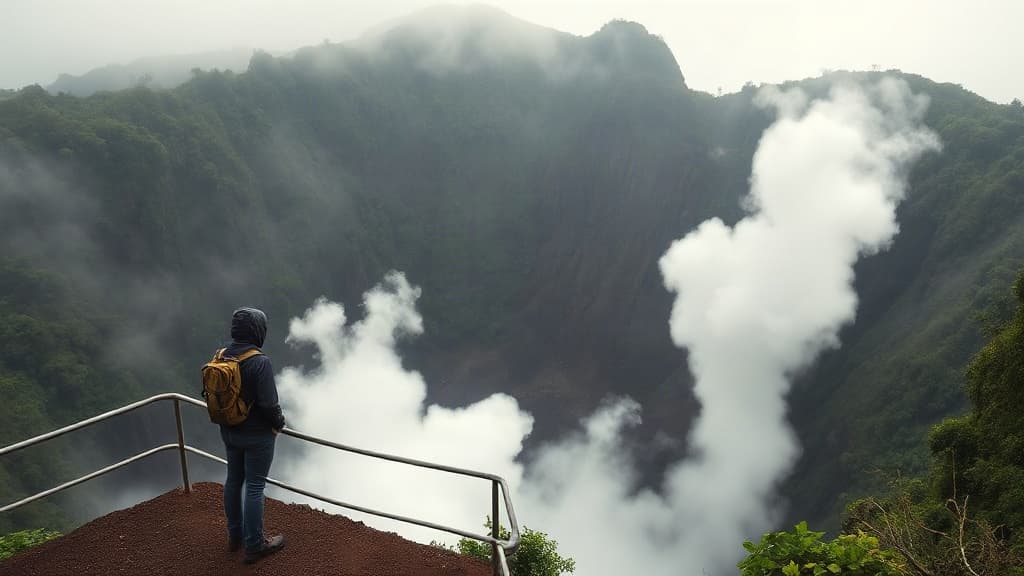
At a glance
- Poas entry fee
- $15 adult / $5 child (non-resident)
- Corcovado entry fee
- $15 adult / $5 child + mandatory guide
- Unauthorized-entry fine
- ~$3,080 (CRC 1,386,600) per person
- High-risk-zone fine
- ~$10,270 (CRC 4,622,000) for guide/operator
- Poas alert status
- Green alert since 7 May 2026, still erupting Aug 2026
- Fines in force since
- 30 April 2026
Poas Volcano National Park — Poas Volcano National Park · Corcovado National Park (Sirena) · Juan Santamaria International Airport, San Jose · Puerto Jimenez (Osa Peninsula gateway)
Poas Volcano has been erupting on and off since a green alert was declared on 7 May 2026, with the Volcanic Ash Advisory Center still logging ash events there as recently as 27 August 2026. The park hasn't closed for it — but since 30 April 2026, Costa Rica has been enforcing real fines, not warnings, against anyone who wanders off the official trail into the areas that alert exists to keep people out of.
The new fines are not theoretical anymore
Costa Rica's National System of Conservation Areas (SINAC) spent months raising the alarm before the enforcement actually started. Between late December 2025 and early January 2026 alone, officials documented 408 people entering protected areas through unofficial routes during the holiday period — nearly half of them, 200 people, at Irazu Volcano National Park. SINAC called the figure a likely undercount, since monitoring the full extent of the country's protected land is its own challenge.
The response, reported by Tico Times, took effect on 30 April 2026: a strengthening of the National Parks Service Act that puts real numbers behind unauthorized entry. Converted at the Central Bank of Costa Rica's early-August 2026 reference rate of roughly CRC 450 to the dollar (confirmed directly on Tico Times' exchange-rate coverage), the schedule breaks down as:
- Individuals who enter through an unauthorized point: CRC 1,386,600, about $3,080.
- Tour operators who promote or run unauthorized trips: CRC 3,235,400, about $7,190.
- Guides or operators who take visitors into high-risk zones (active volcanic areas, for example): CRC 4,622,000, about $10,270 — the same figure applies as the fee charged to the guide or operator responsible if a rescue is needed.
- A rescued individual pays CRC 2,311,000, about $5,140, toward the cost of their own rescue.
A US-focused travel advisory update cited by The Travel reaffirmed the same roughly-$3,000 individual fine as still active mid-2026, so this isn't a rule that quietly lapsed after the initial announcement.
Poas Volcano: open, active, and worth the day trip anyway
Poas is the park this new enforcement is most obviously aimed at. Costa Rica's Ministry of Environment and Energy and SINAC declared a green alert on 7 May 2026 after a spike in seismic and acoustic activity, and volcanologists at OVSICORI-UNA have kept recording eruptive pulses through the following months, including a reported eruption on 20 June and another ash advisory on 27 August. Environment Minister Franz Tattenbach put the policy in one line when the alert was declared: "Responsible tourism is key to protecting people's lives and conserving our natural resources."
Here's the part that surprises people: the green alert does not close the park. It's a preventive step — tighter monitoring, a faster emergency-response chain, and a public instruction to stay on official trails and away from informal routes, because those areas can carry toxic gas, ash fall, or a sudden phreatic explosion with no warning. Visit via the official entrance and you're visiting a normal, running national park; wander past a rope line toward the crater rim on your own, and you're now the reason SINAC's fine schedule exists.
Entry itself, per SINAC's own park page, runs $15 for non-resident visitors over 13 and $5 for non-resident children aged 2 to 12. Laguna Botos, the cold-water crater lake beyond the main viewpoint, is currently closed on SINAC's own listing — a reminder to check the park's current status right before you go rather than planning purely off an old guidebook. Poas sits under an hour and a half from San Jose by road, making it the easiest volcano day trip in the country.
Corcovado: the same rule, a much bigger consequence
Down on the Osa Peninsula, Corcovado National Park runs on a stricter version of the same principle: nobody enters without a certified guide, full stop. Time Out's 2026 coverage of the region notes rangers post at stations to check bags for plastic on the way in, and that the park caps visitor numbers to protect what's often called one of the most biologically intense places on Earth.
SINAC's own Corcovado page lists entry at $15 for non-resident adults and $5 for non-resident children, with a separate $4 camping fee at the San Pedrillo and Sirena ranger stations. If you stay at Sirena, lodging runs $30 a night, with breakfast at $20 and lunch or dinner at $25 each, all bookable only in advance. Getting there is part of the experience: there's no road network deep enough to drive in, so most visitors fly a small aircraft from San Jose to an airstrip near Puerto Jimenez or Drake Bay, then continue by boat or 4x4.
A guide isn't a suggestion at Corcovado — it's the legal condition of entry, and going without one now sits inside the same fine schedule built for Poas's restricted zones.
Getting connected before you're off the road
Costa Rica requires every prepaid SIM to be registered with the national telecom regulator SUTEL, passport in hand at the point of sale — confirmed directly by an independent SIM-buying guide covering the current process. An eSIM sidesteps that counter altogether, which matters more than it sounds on a trip built around two remote parks: you can have a working data connection to check Poas's current alert status or confirm your Corcovado reservation before you've even found a local shop that sells SIMs. Compare Roameo's eSIM plans by destination against what your home carrier would charge in roaming fees before you fly.
Most nationalities don't need a separate tourist visa to begin with. Costa Rica's Dirección General de Migración y Extranjería sorts passports into groups, and Group 1 — the US, Canada, the EU, the UK and most of the rest of the Americas — can enter visa-free, with immigration officers granting a stay of up to 180 days at their discretion, though a shorter stamp closer to 90 days is common. Check your own passport's group before you book, since Groups 2 through 4 face shorter allowances or a consular visa requirement.
Frequently Asked Questions
Is Poas Volcano National Park currently closed because of the green alert?
No. The green alert declared on 7 May 2026 is a monitoring and preparedness measure, not a closure — the park stays open through its official entrance. It's the unauthorized, off-trail routes toward the crater that carry both the safety risk and, since 30 April 2026, a real fine.
Can I visit Corcovado National Park without a guide?
No. SINAC requires every visitor to be accompanied by a certified guide to enter Corcovado, unlike Poas where independent visits are allowed on the official trail. Guides can be arranged through local guide associations or tour operators based in Puerto Jimenez or Drake Bay.
How much is the fine for entering a restricted area of a Costa Rican national park?
An individual entering through an unauthorized point faces a fine of roughly CRC 1,386,600, about $3,080 at mid-2026 exchange rates. Tour operators and guides who lead unauthorized trips or take visitors into high-risk zones like active volcanic areas face steeper fines, up to roughly $10,270.
Do I need a physical SIM card in Costa Rica, or does eSIM work at both parks?
An eSIM works the same way a physical SIM does on Costa Rica's networks and avoids the passport-registration counter that SUTEL requires for prepaid SIMs. Coverage near Poas, close to the Central Valley, is generally solid; Corcovado's Osa Peninsula is remote enough that connectivity is patchier regardless of SIM type, so download offline maps before you fly in.
Keep reading
Dubrovnik 2026: How the Cruise Ship Cap Changes Your Visit
Dubrovnik now caps cruise arrivals at two ships and 4,000 passengers with an 8-hour minimum port stay. Here's what that means for timing an Old Town visit in 2026.
Read more
Victoria Falls 2026: New Entry Fees, the KAZA Univisa Explained
Zimbabwe's side of Victoria Falls just got US$8 more expensive per visit, and Devil's Pool is open again. Here's what a 2026 trip actually costs on both sides.
Read more
Iceland Ring Road 2026: The New Km Tax on Every Rental Car
Iceland began charging a per-kilometre road tax on every rental car on 1 January 2026 — here is what it adds to a Golden Circle day trip or a full Ring Road lap.
Read more