
El Nido, Palawan in 2026: World's No.1 Beach, New e-Visa Rule
Entalula Beach just topped the World's 50 Best Beaches list, and US/Caribbean travelers can now e-Visa online. What El Nido costs and how to get there in 2026.
Destinations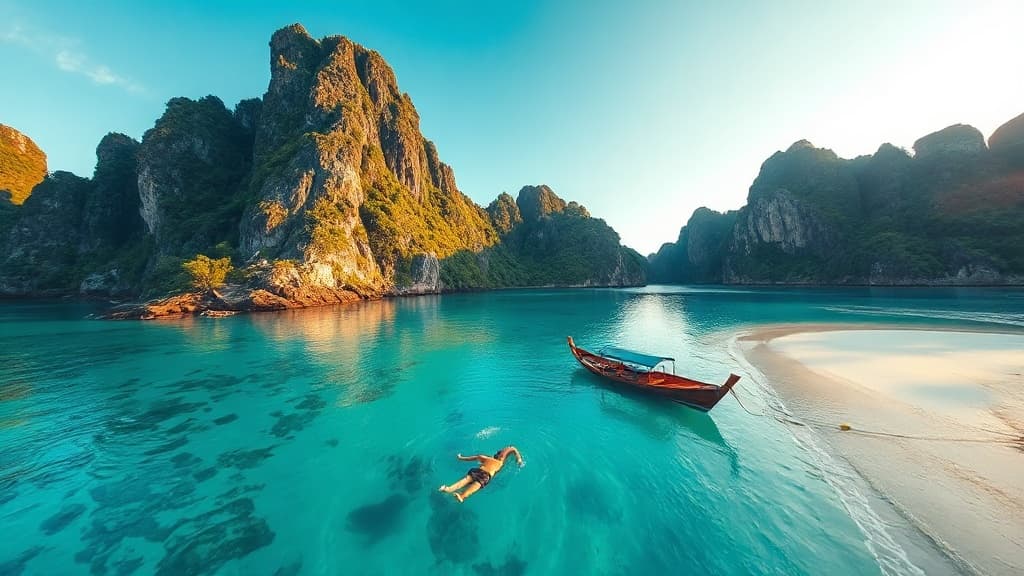
At a glance
- World ranking, 2026
- #1, World's 50 Best Beaches (Entalula)
- New e-Visa rule
- US + 19 Caribbean nations, online since 10 Aug 2026
- Most other nationalities
- Visa-free, 30-day stay
- Eco-Tourism Development Fee
- PHP 400 (~US$7), valid 10 days
- eTravel registration
- Free, within 72 hrs of arrival
- Best months to go
- November - April (dry season)
El Nido — El Nido · El Nido Airport (ENI) · Entalula Beach, Bacuit Bay · Big Lagoon, Miniloc Island · Puerto Princesa
Two things happened to El Nido within four months of each other in 2026. In April, Entalula Beach - a boat-only cove in the Bacuit Bay archipelago off El Nido, Palawan - was named the single best beach in the world by The World's 50 Best Beaches, beating out entries from Greece, Thailand and the Seychelles. Then, on 10 August 2026, the Philippines opened its e-Visa system to US nationals and residents of 19 Caribbean jurisdictions, letting them apply online through evisa.gov.ph instead of visiting an embassy in person. Neither change makes El Nido easier to reach physically - it's still a small airport and a bay full of limestone islands - but together they're the reason a trip that was already on a lot of bucket lists is now easier to book and, this year specifically, worth booking.
Why Entalula Beach, specifically
The World's 50 Best Beaches judges - a mix of the organization's own Beach Ambassadors and more than 1,000 travel professionals - score entries on eight criteria: uniqueness, wildlife, untouched nature, the "soundtrack of nature," ease of entering the water, calm water, lack of crowds, and the odds of getting perfect conditions. Entalula's own listing describes it as "Palawan's overlooked slice of heaven," and the access restriction is the point: the beach has no road, no pier for large boats and no resort built on it, so the only way in is by the same small outrigger bangkas that run El Nido's island-hopping tours. That's also what's kept it off the standard Tour A/B/C/D routes most visitors default to - ask your boatman specifically if you want to add it, since it isn't automatically included in every package.
Getting there: El Nido Airport or Puerto Princesa
El Nido has its own small airport (ENI, at Lio, about 15 minutes from town) with direct flights from Manila, which cuts out the overland leg entirely. The alternative - and usually cheaper - route flies into Puerto Princesa (PPS), Palawan's main airport, which has far more daily connections from Manila, then continues by van or shared transfer for roughly five hours north to El Nido. Neither route is quick: budget a half-day of travel either way, and if you're flying directly into ENI, book early, since the airport has a single small runway and limited daily capacity compared to Puerto Princesa.
Seeing El Nido: the tour system and what it costs
Almost everything worth seeing in Bacuit Bay - the limestone karsts, the hidden lagoons, the snorkeling reefs - is only reachable by boat, and El Nido organizes this through four standard island-hopping routes, Tours A through D, each covering a different cluster of islands. Tour A is the family-friendly option, built around the Big and Small Lagoons and Seven Commando Beach; Tour C is the more adventurous, farther-out route to Helicopter Island, Hidden Beach, Secret Beach and the abandoned cliffside Matinloc Shrine, and is better suited to confident swimmers, since some of its stops require swimming through narrow rock openings. A shared-boat seat on either tour runs around US$25-27 (roughly PHP 1,400) per person, including lunch, snorkeling gear and drinking water; private boats run several times that. Every visitor pays El Nido's Eco-Tourism Development Fee (ETDF) on top - PHP 400 for non-Palawan residents, PHP 200 for Palawan residents - which covers access to the municipality's tourist sites and is valid for 10 days across multiple tours, so you only pay it once per trip in most cases. Matinloc Shrine, on Tour C, adds a separate PHP 200 entry fee that the ETDF doesn't cover.
Bring cash. ETDF payments, tour balances and most small vendors in El Nido town run on cash rather than cards, and ATMs in town can run out on busy weekends - withdraw what you need for the whole stay when you land in Puerto Princesa or Manila if you're not confident about El Nido's ATM coverage.
Entry rules in 2026: who needs what
Most nationalities can enter the Philippines visa-free for an initial 30-day stay, provided your passport is valid at least six months beyond your stay and you're carrying a return or onward ticket - that's the Philippines' standard tourist policy per the official e-Visa portal, evisa.gov.ph. Nationals of Brazil and Israel get an extended 59 days. Two nationalities have separate, newer rules: Indian nationals get 14 days (or 30 days if holding a valid US, Japanese, Australian, Canadian, Schengen, Singapore or UK visa or permit) as of 8 June 2025, and Chinese nationals get 14 days through Manila or Cebu as of 16 January 2026. If your passport doesn't fall under any visa-exempt list, the 10 August 2026 change is the one that matters: US nationals and residents of 19 Caribbean countries and territories - including Jamaica, Trinidad and Tobago, The Bahamas, Barbados and the British Virgin Islands - can now apply for a Philippine e-Visa entirely online rather than visiting an embassy or consulate, following the Philippine Embassy in Washington's announcement on 7 August 2026.
Separately from any visa, every arriving and departing passenger (with a short list of exemptions for diplomats and certain visa holders) must register with the Philippines' eTravel system - a free online form completed within 72 hours of your flight, at etravel.gov.ph. It has nothing to do with your visa status and doesn't replace it; it's simply a mandatory arrival/ departure declaration, similar in spirit to Malaysia's MDAC or Thailand's digital arrival card.
When to book
Palawan's dry season runs November through April, per PAGASA's historical climate data, and is the window nearly every operator and guide recommends for reliable island-hopping weather - calmer seas, less cancellation risk on boat tours, and the clearest visibility for snorkeling. The rainy season runs roughly May through November, with rainfall peaking around September; boats still run in the shoulder months either side of the wet season, just with a higher chance of a rescheduled tour day. If you're chasing Entalula specifically alongside the rest of Bacuit Bay, a dry-season trip gives you the best odds of actually making it out to the smaller, harder-to-reach coves rather than getting weathered into the closer stops.
Once you've got flights and an ETDF-covered tour booked, sort connectivity before you land - El Nido's town Wi-Fi is patchy and mobile coverage thins out fast once you're out on the water. A Philippines eSIM gets you online the moment you touch down at either airport, and it's worth checking your phone against our device compatibility page before you fly, since not every handset supports eSIM.
FAQ
Is Entalula Beach included in the standard El Nido island-hopping tours?
Not automatically - it isn't one of the fixed stops on Tours A, B, C or D. Ask your tour operator or boatman to add it specifically, or book a private boat if you want it guaranteed on your itinerary.
Do US travelers now need a visa to visit the Philippines?
No - US passport holders remain visa-exempt for a 30-day tourist stay. The 10 August 2026 change lets US nationals apply online for other Philippine visa categories (such as longer stays or specific purposes) through evisa.gov.ph instead of visiting an embassy, which is a convenience change, not a new visa requirement for short tourist trips.
How much does an El Nido island-hopping tour cost in total?
Budget around US$25-27 for a shared-boat seat on Tour A or C, plus the PHP 400 Eco-Tourism Development Fee (once per trip, valid 10 days) and any site-specific entry fees, such as Matinloc Shrine's separate PHP 200 charge on Tour C.
What is eTravel and do I need it if I already have a Philippine visa or am visa-exempt?
Yes - eTravel is a separate, free, mandatory arrival/departure registration required of nearly all passengers regardless of visa status, completed online within 72 hours of your flight at etravel.gov.ph.
Keep reading

Agra and the Taj Mahal in 2026: India's New e-Visa Gateways
India just added 11 e-visa entry points, including the reopened Attari land border. What it means for planning an Agra trip, plus real Taj Mahal ticket prices.
Read more
Geirangerfjord in 2026: Norway's New Zero-Emission Fjord Rule
Since 1 Jan 2026, ships under 10,000 GT entering Geirangerfjord must run zero-emission. What that changes for a 2026 visit, and what it costs to see the fjord.
Read more
Cappadocia in 2026: Balloon Prices, BalonFest and Booking
Cappadocia's balloon festival just wrapped and 2026 flight numbers are record-setting. What a flight costs, why so many get grounded, and when to book.
Read more