
Iceland's Northern Lights Season: What It Costs in 2026
Iceland's aurora season reopens as the nights darken. The lodging tax, the studded-tyre window, the official forecast to trust, and what to book in August.
Travel tips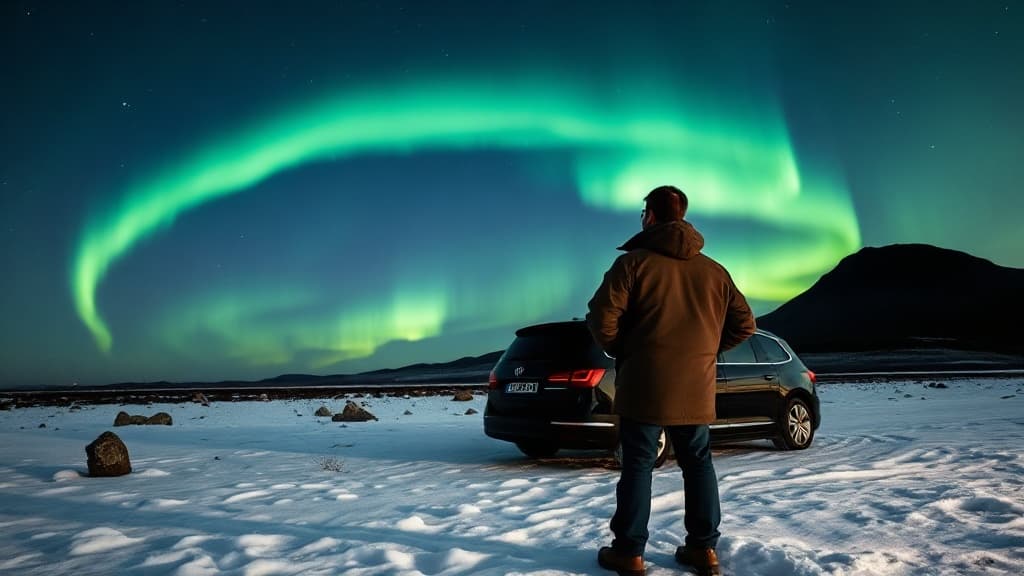
At a glance
- Lodging tax
- ISK 800 per unit per night (~US$6.50)
- Campsite pitches
- ISK 400 per unit per night
- Studded tyres legal
- 1 November - 15 April
- Seven-night stay adds
- About ISK 5,600 (~US$45) in tax
- EES live since
- 10 April 2026 at Schengen borders
Reykjavik — Reykjavik · Thingvellir National Park · Keflavik International Airport
Iceland's aurora season is not a marketing window, it is an astronomical one: the lights are there year-round and only become visible once the nights get properly dark again, which happens from late August into September. Two dated rules bracket the trip that follows. Studded tyres are permitted on Icelandic roads from 1 November to 15 April and prohibited outside that window, and since 1 January 2025 every hotel or guesthouse night has carried a lodging tax of ISK 800. If you are planning an aurora trip in August, those are the two numbers that shape the itinerary before any tour operator does.
The only aurora forecast worth refreshing
The Icelandic Meteorological Office publishes an aurora forecast at en.vedur.is, and it is the one to bookmark rather than any of the apps that repackage it. It gives an activity level on a scale of 0 to 9 for midnight, six days ahead, at four times of day, and — the part that actually decides your evening — it overlays a cloud-cover map where green areas are cloudy and white areas are clear. It also lists sunset, the start of darkness, sunrise and moonrise for Reykjavik.
The Met Office's own framing is the honest one: the aurora "requires dark and partly clear skies". A level 6 under total cloud shows you nothing. A level 2 under a clear sky over a dark stretch of coast can be memorable. In practice you are not chasing high numbers, you are chasing the white patches on the cloud map, which is why aurora trips in Iceland are driving trips.
On the solar side, NOAA's Space Weather Prediction Center put Solar Cycle 25's maximum at a smoothed sunspot number of 115 in July 2025, with the prediction panel's uncertainty window running from November 2024 to March 2026. That means the cycle is at or just past its peak as of 2026. Activity declines gradually from a maximum rather than switching off, so the next few winters remain good ones — but no forecast, ours included, can promise you a sighting on a given night, and any operator that does is selling something other than information.
What an Icelandic night costs before you book anything
Iceland Revenue and Customs sets the lodging tax, and from 1 January 2025 the rates are:
| Accommodation type | Rate | Approx. USD |
|---|---|---|
| Hotels and guesthouses (licence categories II-IV) | ISK 800 per unit, per night | ~US$6.50 |
| Campsites and motorhome or caravan pitches | ISK 400 per unit, per night | ~US$3.25 |
| Cruise ships on domestic voyages | ISK 400 per unit, per night | ~US$3.25 |
| International cruise ships (infrastructure fee) | ISK 2,500 per passenger, per started day | ~US$20 |
Conversions use the mid-market rate of about US$0.00809 to the krona on 2 August 2026. The important structural detail: the hotel rate is charged per lodging unit, not per person, so a couple sharing a room pays ISK 800 for that night, not ISK 1,600. The cruise infrastructure fee is the exception and is charged per passenger. Booking platforms do not always show the tax in the headline price, so a seven-night hotel stay quietly adds around ISK 5,600, roughly US$45, at check-out.
The two dates that bracket a winter drive
Winter tyres are required on Icelandic roads through the cold months, and studded tyres are legal from 1 November to 15 April. Outside that window studs are prohibited. Most rental companies fit compliant tyres as standard during the period at no extra charge, but it is worth confirming on the booking rather than at the desk, particularly for a late-October or mid-April trip that straddles a boundary.
Road conditions are published by the Icelandic Road and Coastal Administration at umferdin.is, which absorbed the old road.is address. The interior highland routes — the F-roads — are closed for the entire aurora season and are not an option for a winter trip regardless of the vehicle. Even on the ring road, a section can close on a few hours' notice for wind or drifting snow, and a closed section in Iceland is closed, not a suggestion.
This is where an aurora itinerary differs from most trips: your route is decided the same afternoon, by a cloud map and a road map, both of which live on the internet.
The safety layer Iceland expects you to use
SafeTravel is run by ICE-SAR, the Icelandic Association for Search and Rescue, and it is the country's official traveller-safety service rather than a commercial site. Its advice for a self-driven winter trip is specific and worth following literally:
- The emergency number is 112, for the whole country.
- Leave a travel plan with someone capable of acting on it if you do not check in.
- Install the SafeTravel app, which carries real-time weather and road conditions and can share your GPS location with emergency services.
- Subscribe to alerts for hazards and closures at safetravel.is before you set out, not once you are stuck.
Every item on that list assumes a phone with data. That is not an argument for any particular product, it is simply how the Icelandic system is designed: the forecast, the road status, the alerts and the location sharing are all online services, and a traveller parked on a dark road at 23:00 waiting for a clear patch is exactly the person who needs them working.
Coverage on the ring road, honestly
Iceland has three mobile operators: Siminn, Nova and Syn, which retired the Vodafone Iceland brand in 2024. All three run 4G across the populated parts of the country, with 5G concentrated around Reykjavik and the larger towns. Coverage along the ring road and the main tourist routes is generally good by the standards of a country this empty; coverage in the highlands, in fjord shadows and on remote gravel spurs is not, and no operator or reseller can change that geography.
A travel eSIM roams on those same networks, which means it is a convenience decision rather than a coverage decision: you land at Keflavik with data already working instead of finding a shop. Roameo's Iceland eSIM plans start at US$3.49, and if you are unsure whether your handset takes an eSIM at all, check it on the compatibility page before you buy anything. What no eSIM can do is give you signal in a place that has none, so download offline maps of your route and screenshot your accommodation address regardless.
Two practical notes for the cold. Lithium batteries lose usable capacity fast below freezing, so a phone that shows 40% in a warm car can die within minutes on a windy headland — keep it inside a jacket between shots and carry a power bank. And if you are shooting the aurora on a tripod for long exposures, that is exactly when you want the phone that is also your map and your emergency line to still have charge.
The Schengen paperwork, briefly
Iceland is in the Schengen Area, so the European border changes apply. The Entry/Exit System went live across Schengen external borders on 10 April 2026, which means biometric registration on arrival for non-EU travellers instead of a passport stamp. ETIAS, the online travel authorisation for visa-exempt nationalities, is expected in the last quarter of 2026 according to the European Council's timeline. If you hold a passport that needs it, it will be an online form and a fee before departure rather than anything at the border — check the official EU pages for your nationality closer to the trip.
What to book in August, in order
- Pick the month first. September and March give you dark nights with milder weather and open roads; November to January give the longest darkness and the worst driving.
- Book accommodation, remembering ISK 800 per room per night on top of the quoted rate.
- Book the car, and confirm in writing that winter tyres are included for your dates if you are travelling between 1 November and 15 April.
- Bookmark en.vedur.is for the aurora and cloud forecast and umferdin.is for road conditions — you will use both daily.
- Install the SafeTravel app and set up your data before you fly, so night one is not spent troubleshooting.
Frequently Asked Questions
When does Iceland's northern lights season start?
Once nights are dark enough, which is from late August into September, and it runs through to April. The Icelandic Met Office's forecast at en.vedur.is publishes aurora activity on a 0 to 9 scale alongside a cloud-cover map, and both need to cooperate — the aurora requires dark and partly clear skies, so cloud cover decides more evenings than solar activity does.
How much is Iceland's tourist accommodation tax?
Since 1 January 2025 it is ISK 800 per lodging unit per night at hotels and guesthouses in licence categories II to IV, and ISK 400 for campsites and motorhome pitches. It is charged per unit rather than per person, so a shared room is taxed once. International cruise passengers pay a separate ISK 2,500 per-person infrastructure fee for each started day in Icelandic waters.
Do I need winter tyres to drive in Iceland in aurora season?
Yes for the winter months, and studded tyres are permitted from 1 November to 15 April and prohibited outside that window. Most rental companies fit compliant tyres as standard during the period, but confirm it on your booking if your dates straddle either end. Check road status at umferdin.is daily — the highland F-roads are closed all winter.
Will my phone work in the Icelandic countryside?
Along the ring road and the main tourist routes, usually. Iceland's operators are Siminn, Nova and Syn, with 4G across populated areas and 5G mainly around Reykjavik. In the highlands, fjord shadows and remote gravel roads there are real gaps that no SIM or eSIM can fill, so carry offline maps, leave a travel plan with someone, and remember the emergency number is 112.
Keep reading
Iceland Ring Road 2026: The New Km Tax on Every Rental Car
Iceland began charging a per-kilometre road tax on every rental car on 1 January 2026 — here is what it adds to a Golden Circle day trip or a full Ring Road lap.
Read more
Book Before You Fly: 2026's Timed-Entry Tourist Attractions
Machu Picchu, Mount Fuji, the Acropolis and the Alhambra now sell out before you land. Here is what to book, how far ahead, and what to show at the gate.
Read more
Milford Track Sold Out in 30 Minutes. Here's Your Plan B
New Zealand's most famous walk emptied its 2026/27 bunks in half an hour on 13 May. The cancellation window, cheaper alternatives and what a hut costs.
Read more