
Booking Seoul for Autumn 2026: K-ETA, Tickets and Timing
August is when a November Seoul trip gets booked. Here's the 2026 K-ETA fee and exemption window, Gyeongbokgung ticket prices, and when the leaves actually peak.
Guides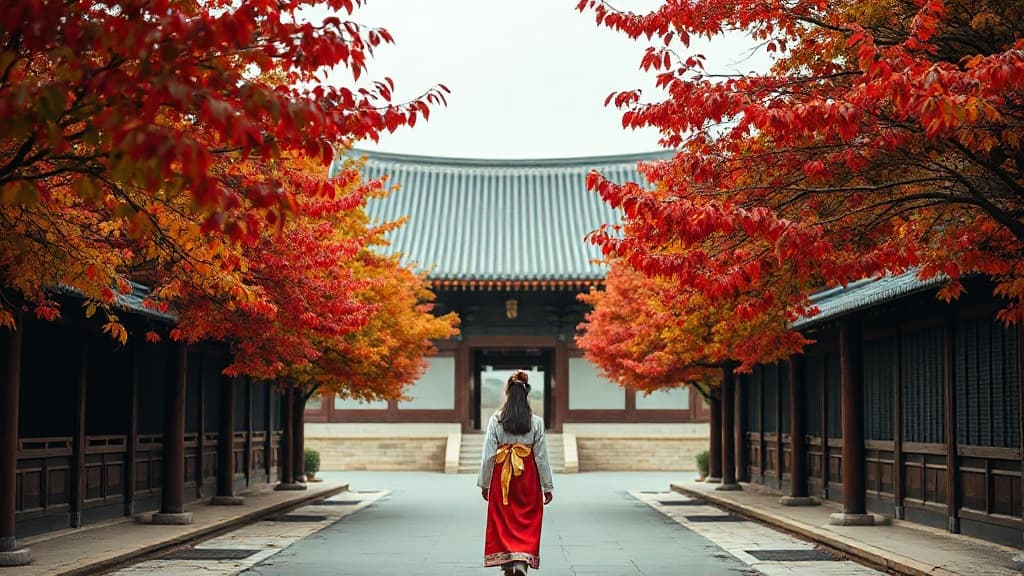
At a glance
- K-ETA fee
- KRW 10,000 (~US$8), non-refundable
- Exemption runs to
- 31 December 2026 for select nationalities
- Gyeongbokgung entry
- KRW 3,000 adult, KRW 1,500 ages 7-18
- Seoul foliage peak
- Mid-November, weeks after Seoraksan
- Palace closed
- Tuesdays
Gyeongbokgung Palace — Gyeongbokgung Palace · Seoraksan National Park · Incheon International Airport
Book a Seoul trip for the leaves and time it wrong, and you'll land to bare branches or a still-green city. Seoul's own autumn color doesn't peak until mid-November — a full three to four weeks after Seoraksan's mountains turn — and August, right now, is the window when most travelers are locking in flights and hotels for that trip. Before you book, there's a second question worth settling first: whether your passport still needs South Korea's K-ETA travel authorization in 2026, because a temporary exemption covering select nationalities runs only through the end of this year.
K-ETA: who's exempt in 2026, and what it costs if you're not
South Korea's Electronic Travel Authorization (K-ETA) is normally required before a visa-free entry for travelers from countries on the visa-waiver list. Since 2023, the Ministry of Justice has run a rolling temporary exemption for select nationalities so they can skip the K-ETA application entirely and enter with just a passport; that exemption has been renewed each year and, per law firm coverage of the Ministry of Justice's own notice (Erickson Immigration Group, Fragomen), currently runs from 1 January through 31 December 2026. The exempted list has included Australia, Canada, Germany, Japan and the United States among others — if your passport is on it, you can enter without applying or paying anything in advance. If it isn't, you still need to apply through the official k-eta.go.kr portal before you fly. The fee, per K-ETA's own site, is KRW 10,000 (roughly US$8), non-refundable regardless of whether your application is approved, plus a card-processing surcharge of a few percent at checkout. Approved K-ETA authorizations are typically valid for multiple entries over a set period, so it's a one-time cost per validity window, not a per-trip fee — but check your own passport's status on the official portal directly rather than assuming last year's exemption list still applies, since the list and its end date are reviewed annually.
K-ETA is also not the same thing as a visa, and it's worth not conflating the two when you're planning a booking. K-ETA is an entry authorization layered on top of an existing visa-free arrangement — it doesn't grant a longer stay or different rights than the underlying visa-waiver program already does, and it doesn't apply at all to travelers whose nationality requires a full visa to enter South Korea in the first place. If your passport needs an actual visa rather than K-ETA, that application goes through a Korean embassy or consulate, not the k-eta.go.kr portal, and runs on its own separate timeline that's worth starting well ahead of an August booking for a November trip.
When Seoul's autumn colors actually peak
Korea's foliage moves from north to south and from mountain to city over about six weeks, which is the detail that trips up a lot of first-time autumn bookings. Seoraksan and Odaesan, the northern mountain parks, peak first — roughly late September into mid-October, with Seoraksan itself typically cresting around 20-30 October. Central Korea, including Nami Island and Gapyeong, follows in late October to early November. Seoul city itself is last: the color inside the city typically doesn't peak until mid-November, when tree cover reaches roughly 70 percent turned, according to travel-blog coverage of the 2026 seasonal calendar drawing on Korea Meteorological Administration-style forecasting. If your itinerary is Seoul only, a mid-to-late November date is the better bet than October; if you want to combine Seoul with Seoraksan or Nami Island in one trip, plan the mountain leg first and the city leg roughly three weeks later.
Gyeongbokgung Palace: what it costs to get in
Gyeongbokgung, Seoul's largest and most-visited royal palace, charges a standard adult admission of KRW 3,000, with a reduced KRW 1,500 rate for children aged 7 to 18. Entry is free for anyone 65 or older with valid ID, and — a detail that surprises a lot of first-time visitors — free for anyone wearing a hanbok, the traditional Korean dress, which is also why hanbok rental shops cluster around the palace's main gates. The palace is closed on Tuesdays, so build that into a multi-palace itinerary if you're also planning to see Changdeokgung or Deoksugung on the same trip. Twice a year the palace also runs a limited night-viewing season with separately ticketed evening sessions — the 2026 spring run was 13 May-14 June, with an autumn run typically following in the September-November window — but those tickets are sold separately from standard daytime admission and are worth checking for on the palace's official booking channel closer to your travel dates if an evening visit interests you.
Combining Seoul with Seoraksan on one trip
If you want both the mountain peak color and the city's later peak in one itinerary, know the logistics before you book: there is no direct train between Seoul and Sokcho, the gateway town for Seoraksan National Park, in 2026 — the standard route is an intercity express bus. Multiple booking platforms and travel guides checking current fares in 2026 put the Seoul-to-Sokcho express bus at roughly KRW 17,000-25,000 (about US$13-19) one-way, with a journey time of around 2.5-3 hours from Seoul's Express Bus Terminal or Dong Seoul Terminal. Buses run frequently through the day, so this isn't a route that needs booking weeks in advance the way a long-haul flight does — but building in the bus transfer time matters when you're trying to catch Seoraksan near its own late-October peak and still have time to loop back to Seoul for its mid-November color. A sensible sequence for a two-stop autumn trip is Seoraksan first, Seoul second, rather than the reverse, since that follows the color south the same way the season itself does.
Putting the booking timeline together
For a trip built around Seoul's own foliage peak, working backward from mid-November gives you roughly three months of lead time from today to lock in flights, confirm your K-ETA status (or apply for one, allowing a few days for approval), and book palace-adjacent accommodation before autumn demand tightens hotel availability in Jongno and Bukchon. None of that requires guessing at connectivity once you land: a prepaid South Korea eSIM activates before your flight touches down at Incheon, so you're not hunting for a telecom counter with a queue of other arriving travelers. Check your phone's eSIM support on our compatibility page before you book — as a reseller, Roameo doesn't run the Korean network itself, so actual signal and speed still depend on the local carrier your eSIM connects to.
FAQ
Do I still need K-ETA to visit South Korea in 2026?
It depends on your passport. A temporary exemption covering select nationalities — including Australia, Canada, Germany, Japan and the United States — runs through 31 December 2026, per Ministry of Justice notices reported by immigration law firms. If your country isn't on that list, you still need to apply and pay the KRW 10,000 (~US$8) fee through the official k-eta.go.kr portal.
When do the leaves actually peak in Seoul city itself?
Mid-November, later than the mountain parks. Seoraksan typically peaks around 20-30 October, and Nami Island/Gapyeong follow in late October to early November — Seoul's own city-center foliage is usually last, cresting around mid-November.
How much does it cost to enter Gyeongbokgung Palace?
KRW 3,000 for adults and KRW 1,500 for children aged 7-18, with free entry for visitors 65 and older and for anyone wearing a hanbok. The palace is closed on Tuesdays.
Keep reading
Seoraksan Heullimgol Valley 2026: Free Access Ends September 30
Heullimgol Valley's free entry ends Sept 30, 2026, then a 5,000-hiker cap begins as Seoraksan's foliage peak forecast lands Oct 16-25. Here's how to book it.
Read more
Hallasan Autumn 2026: Reservations and Trail Times
Book Hallasan's November foliage window, choose Seongpanak or Gwaneumsa, and follow the stricter October cutoffs for a safe Baengnokdam hike on Jeju Island.
Read more
Busan K-Tour Pass 2026: Price, Benefits and Pitfalls
Busan's new K-Tour Pass costs KRW 15,000. See what its rail discount, free attraction, transit card and missing fine print mean for your trip in 2026.
Read more